High security · Springwater
Safe Opening & Combination Change
The bookkeeper who set the office safe's code retired in a hurry, and the float cash for tomorrow's registers is sitting behind a keypad nobody else in the building can operate.
In plain words
Mechanical and electronic safe locks call for genuinely different work. A mechanical dial is opened by manipulation or decoding, reading resistance through the spindle as the wheel pack lines up one wheel at a time. An electronic keypad is approached through that model's own documented recovery options first, since some keep a way back in that avoids opening the case, while others have none and a reset connection has to be made at the lock body inside the container. Knowing which lock is on the safe before arrival shapes which tools and which approach get used.
How the visit goesA customer's rifle safe at the range has a dial that simply will not respond to the combination written on the sales receipt from years ago.
Safe Opening & Combination Change
How the visit goes
Mechanical dial or electronic keypad?
The two lock families are opened in entirely different ways, so telling them apart comes early. A mechanical dial relies on a wheel pack turned into alignment by hand, reading resistance and feel rather than any battery or circuit. An electronic keypad instead depends on a stored code and a power source; some models add a reset or override sequence, though many need that connection made at the lock body inside the container rather than from outside. Some commercial safes carry both, a keypad for daily use with a mechanical dial as a backup, and each half is assessed on its own terms. Confusing the two wastes time trying an approach the lock was never built to respond to.
Handling a broken key, handle or spindle
Not every safe problem is a combination problem. A snapped key is extracted the same careful way a broken door key would be, without pushing it further into the lock. A stripped or broken handle is removed and matched to a replacement of the same fitting, or repaired where the internal parts allow it. A spindle that has sheared inside the door is drawn out and replaced so the dial once again turns the wheel pack rather than spinning freely on its own. Each of these is diagnosed and resolved on its own terms alongside whatever combination work the visit also involves.
A little care keeps the lock reliable
A mechanical dial benefits from being turned through a full combination cycle occasionally even when the safe is not otherwise in use, since a dial left untouched for years is more likely to develop the stiffness that led to this visit. An electronic keypad benefits from a battery change on a set schedule rather than waiting for a low-battery warning to appear, since a dead battery at an inconvenient moment is the more common failure than the lock itself. Wiping the keypad and dial face of dust occasionally, without any liquid cleaner, keeps both types responding the way they should.
Safe Opening & Combination Change
In the van
Manufacturer reset tool
Replacement dial and ring
Combination change key
Manipulation and tension tools
Repair plug and patch plate
Safe Opening & Combination Change
What affects the quote
Damage from a prior break-in attempt
Pry marks, drill attempts or a tripped relocker from an earlier incident mean assessing and repairing that damage in addition to the combination work the visit was booked for.
Whether drilling turns out to be necessary
Manipulation, decoding and manufacturer reset paths are tried first; drilling, a repair plug and any replacement lock only enter the picture once those routes are exhausted.
Number of new codes needed afterward
Setting one combination for a single owner is the simplest case; programming separate codes for several staff members on an electronic lock takes correspondingly more time.
What to have ready
- Do you own the safe, or manage it for someone else?
- Roughly how old is the safe, if you had to guess?
- Does the handle turn normally, or does it feel stuck?
Safe Opening & Combination Change: questions
QuestionsDo drop safes or under-counter cash safes work the same way as a larger floor safe?
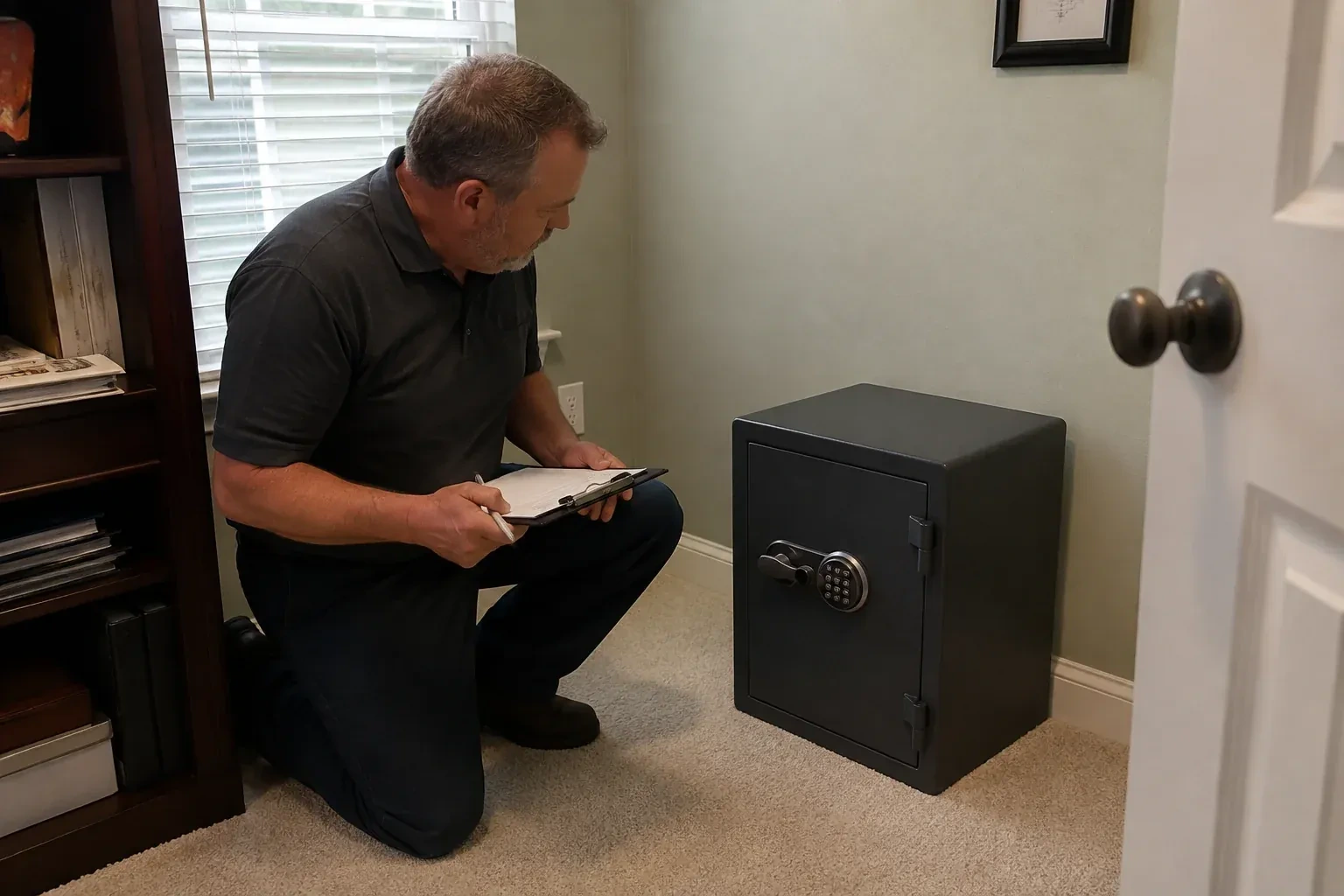
The identification step is the same regardless of size, but the lock inside is not assumed from the safe's size: a small drop safe or under-counter unit can carry anything from a basic keypad to a high-security lock, so each is identified on its own before manipulation, reset or a combination change proceeds, with the same care around authority and aftercare applying equally.
Is a mechanical dial or an electronic keypad the better choice for a business safe?
Each suits a different way of working. A mechanical dial has no battery to fail and a long service life, but only ever holds one combination at a time. An electronic keypad allows separate codes for different staff and an audit trail on some models, at the cost of needing battery changes. Either can be fitted with a genuinely high security rating; the choice usually comes down to how many people need independent access.
Can the same visit both open the safe and service it?
Yes. Once the safe is open, the lock is inspected for wear, corrosion or damage, repaired or replaced if needed, and reset to a new combination in the same visit. Any bolt work or handle issue found along the way is addressed at the same time rather than requiring a separate appointment.