Change or rekey · Springwater
Vintage Mortise Lock Service
You bought a house with its original hardware and a bag of loose keys.
In plain words
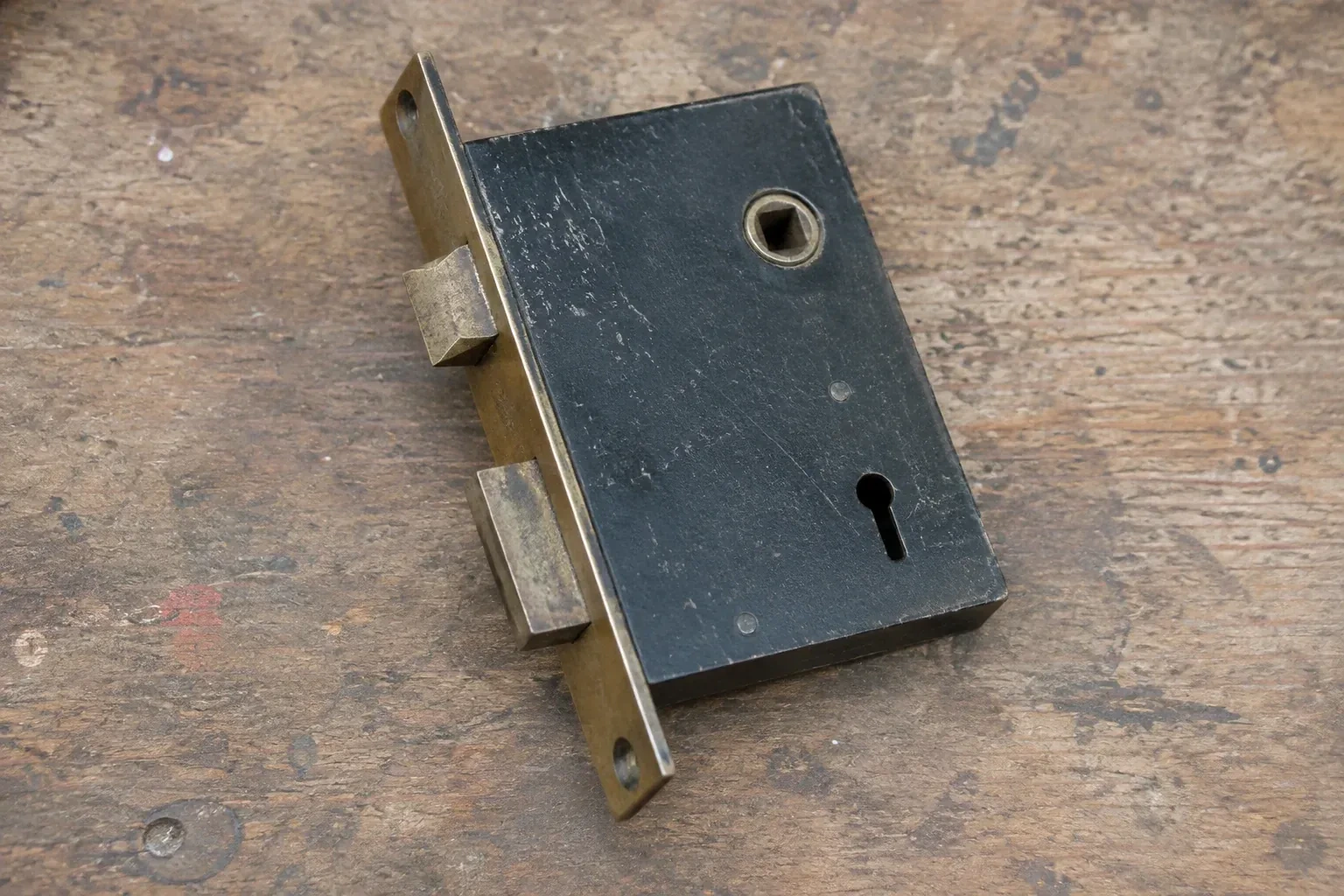
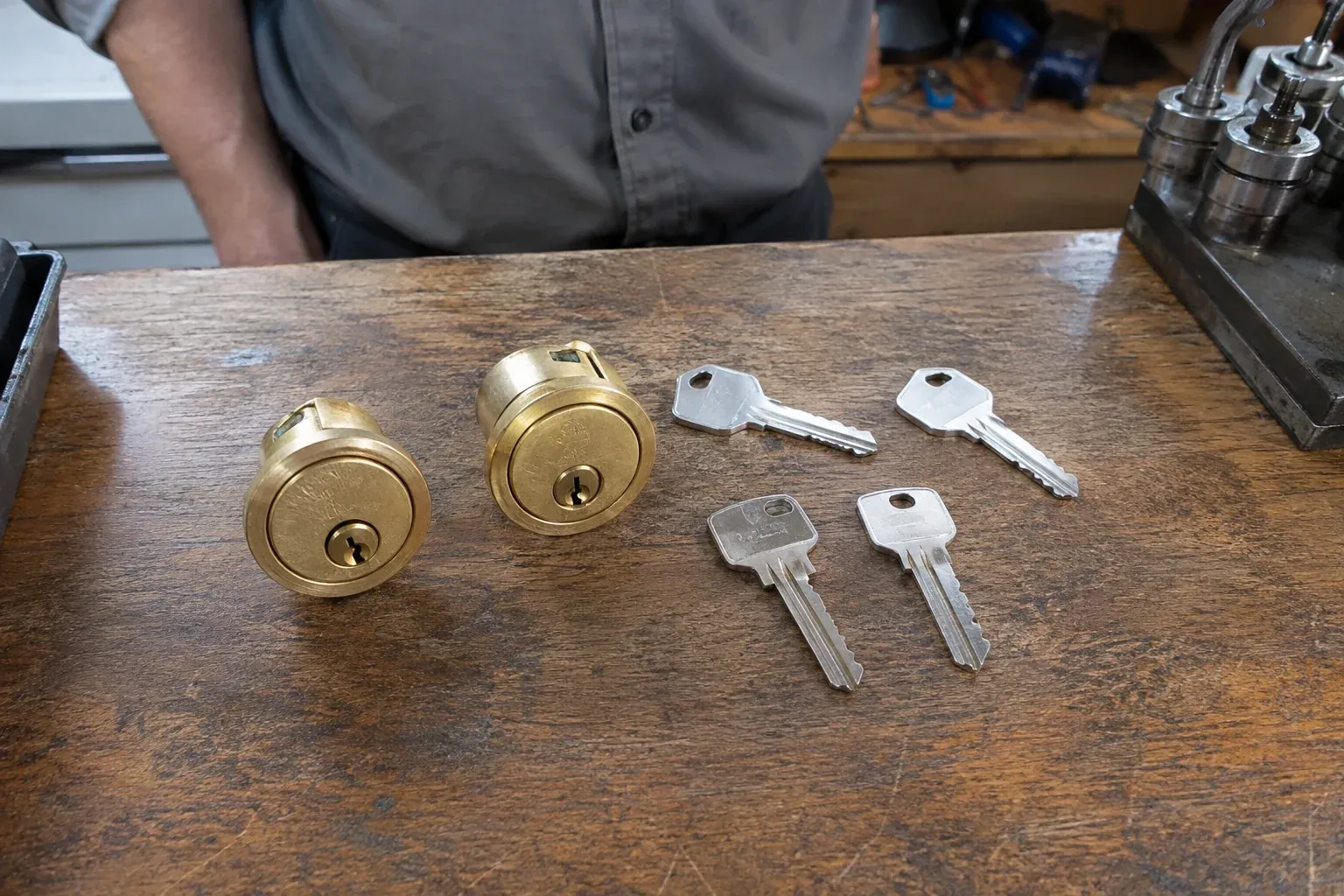
Keys are the part of the job people expect to be impossible, and they rarely are. A bit key, the skeleton key style used on older doors, is cut and filed on the bench to the wards and levers of your particular case, so a lost key can be replaced from the lock itself. A round cylinder on a later mortise lock is rekeyed like any modern cylinder, or exchanged for a new cylinder of matching thread and cam if it is worn out. Either way the service ends with keys in your hand that turn the original lock, and a spare made while the case is on the bench.
How the visit goesThe brass knob on the front door of your century home turns, but nothing happens on the other side. The latch stays tucked in, the door swings free, and the only thing holding it shut is the deadbolt and a bit key that has worn down to a nub.
Vintage Mortise Lock Service
How the visit goes
Condition of the wood around the pocket
The mortise pocket and the screw holes in the door edge carry the whole lock, so their state is part of the assessment. The locksmith probes the faceplate screws for grip, looks for cracks running from the pocket into the stile, and checks whether an earlier repair enlarged the pocket or packed it with something soft. Stripped holes, a split edge or a case that shifts when the knob is turned change the plan: dowelling and re-drilling, a hardwood filler, or longer screws may be needed before the rebuilt case can be trusted. Finding this now avoids surprises once the lock is back in the door.
Reassembly and setting the trim
The case slides home and is screwed off, then the cylinder or keyhole escutcheon goes on, followed by the spindle, knobs and rosettes. The spindle is trimmed to length so the knobs sit against the door without pinching, and the set screws are tightened so there is no free play before the latch moves. The thumb-turn is aligned with the deadbolt tail so it throws with a light touch. Paint is cleared from the faceplate and strike edges where it was catching. Then the door is closed and the whole lock is worked from both faces with the key, the knobs and the turn, several times, listening for the latch to seat.
Keys that fit the lock, and a spare
You are handed keys made to the restored lock, counted into your hand, and each one is tried in the door before the locksmith drives away. For a bit-key lock that means keys filed to your case; copying one needs the right blanks and equipment, which most hardware counters do not stock, so the locksmith keeps the record needed to make more. For a cylinder lock it means keys cut to the new combination, with any old keys now useless. Keep one spare somewhere other than the door, ideally with a neighbour or in a lockbox, and treat bit keys gently: they bend in a pocket and a bent key is how most of these locks become stiff again.
Vintage Mortise Lock Service
In the van
Hub followers and lever packs
Bit key blanks
Cylinder set screw
Light lock oil
Spindle and knob set screws
Vintage Mortise Lock Service
What affects the quote
Making the inside key-free
Fitting a thumb-turn or interior release to a deadbolt that was keyed on both sides is its own small item, and one most owners of an entry door choose to include.
How many keys you want
Bit keys are made individually by hand and cylinder keys are cut per copy, so the count you ask for is a line of its own. Decide who in the household needs one before the visit.
Replacement cylinder
When a pin-tumbler cylinder is past rekeying, a new mortise cylinder of the right thread and cam is fitted. A standard cylinder and a high-security one are different hardware and are quoted as such.
What to have ready
- Is the trouble worse with the door closed than with it open?
- Does the door take a skeleton-style bit key or a flat key in a round cylinder?
- What does the knob do when you turn it: return, sag, or not come back?
Vintage Mortise Lock Service: questions
QuestionsWhat information helps before you come out?
Whether the door takes a skeleton-style bit key or a flat key in a round cylinder, roughly when the house was built, what the knob and bolt are doing, and whether the trouble is worse with the door closed. A photo of the faceplate in the door edge and one of the keyhole side is worth a great deal. Mention how many doors are involved and how many keys you would like afterwards.
Can my interior doors be serviced too, and can one key work all of them?
Usually yes to the first, and to the second once the locksmith checks the locks. Interior mortise latches with privacy turn buttons are lighter versions of the entry lock and respond to the same clean and re-spring. Interior locks in a house were sometimes supplied to one bit key, and where the key sections, warding and levers actually match, the locksmith can restore that arrangement so a single key opens several bedroom and bathroom doors. It is a practical thing to have when a child locks a bathroom from inside.
What does the service visit involve, step by step?
The locksmith checks your authority to request the work, examines the door and lock, and tells you what it needs. The knobs, plates and cylinder come off, the case slides out of the door edge and is opened on a bench, cleaned, re-sprung and repaired. Keys are made or the cylinder rekeyed, the door pocket is tidied, everything goes back on, and the strike is adjusted. You test the finished lock from both sides.
Related services
- Deadbolt InstallationThe front door has a handsome lever and a keyed knob, and that is all.
- Lock Replacement & UpgradeThe keys the seller handed over came in a sandwich bag: six unlabelled copies for two locks of different makes from different decades.
- Smart Lock InstallationThe rental turns over every few months and each time you drive across town to swap keys, then wonder whether copies were made.