Car keys · Springwater
Motorcycle & Scooter Keys
The key turns half a rotation in the ignition, catches, then the blade lets go with a small snap.
In plain words
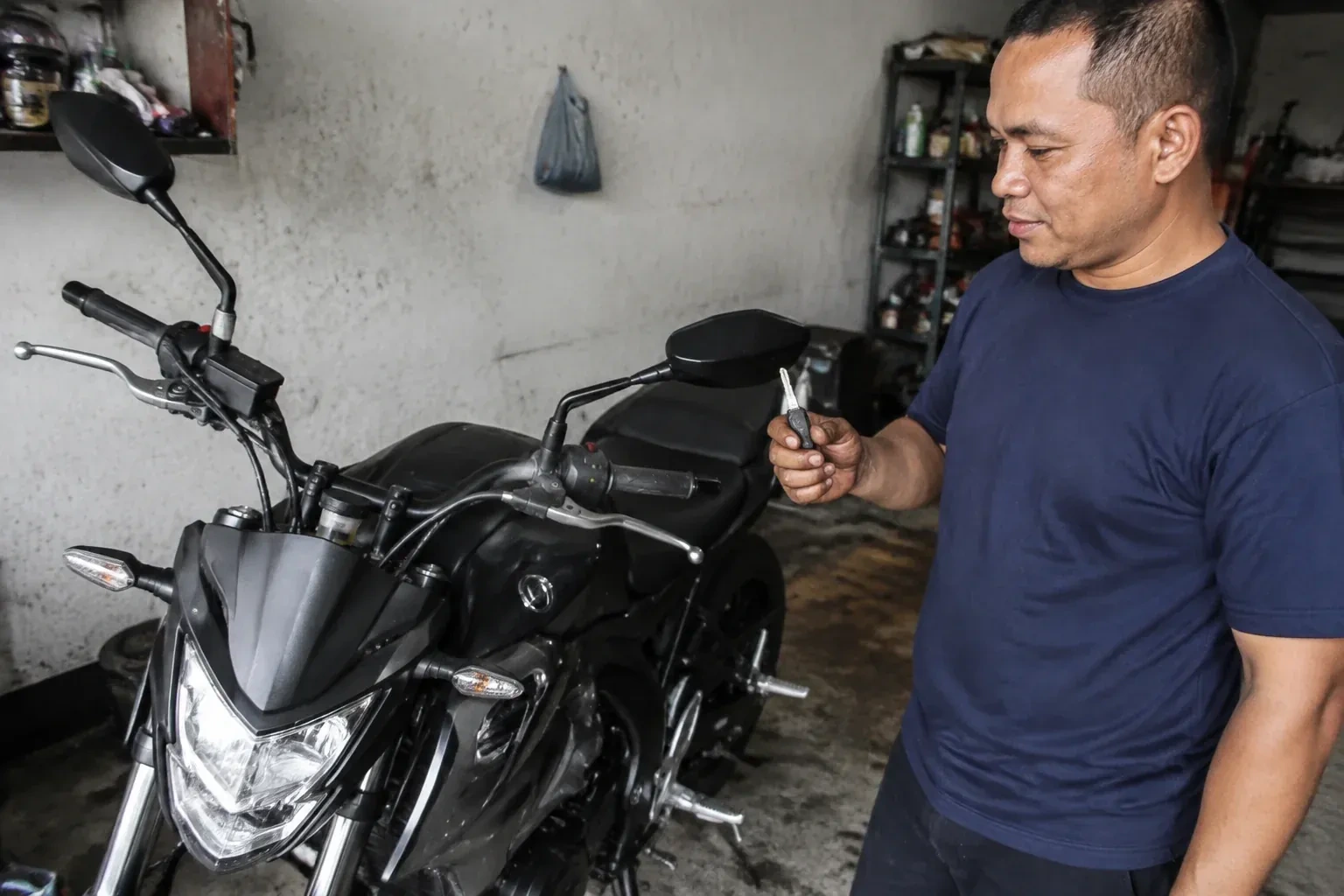
A machine bought without a full history often arrives with one worn key and no idea what, if anything, opens the seat or the fuel cap. Key service in that situation starts by identifying every lock on the machine and testing whichever key came with it against each one, then decoding or cutting whatever the existing key does not already cover. The result is a full, known set of keys for the machine rather than a single blade of uncertain origin.
How the visit goesAfter a winter under a cover, the steering lock will not budge. The key seats fully in the barrel, but turning it meets a wall of resistance that no amount of wiggling moves past.
Motorcycle & Scooter Keys
How the visit goes
Where the current key situation stands
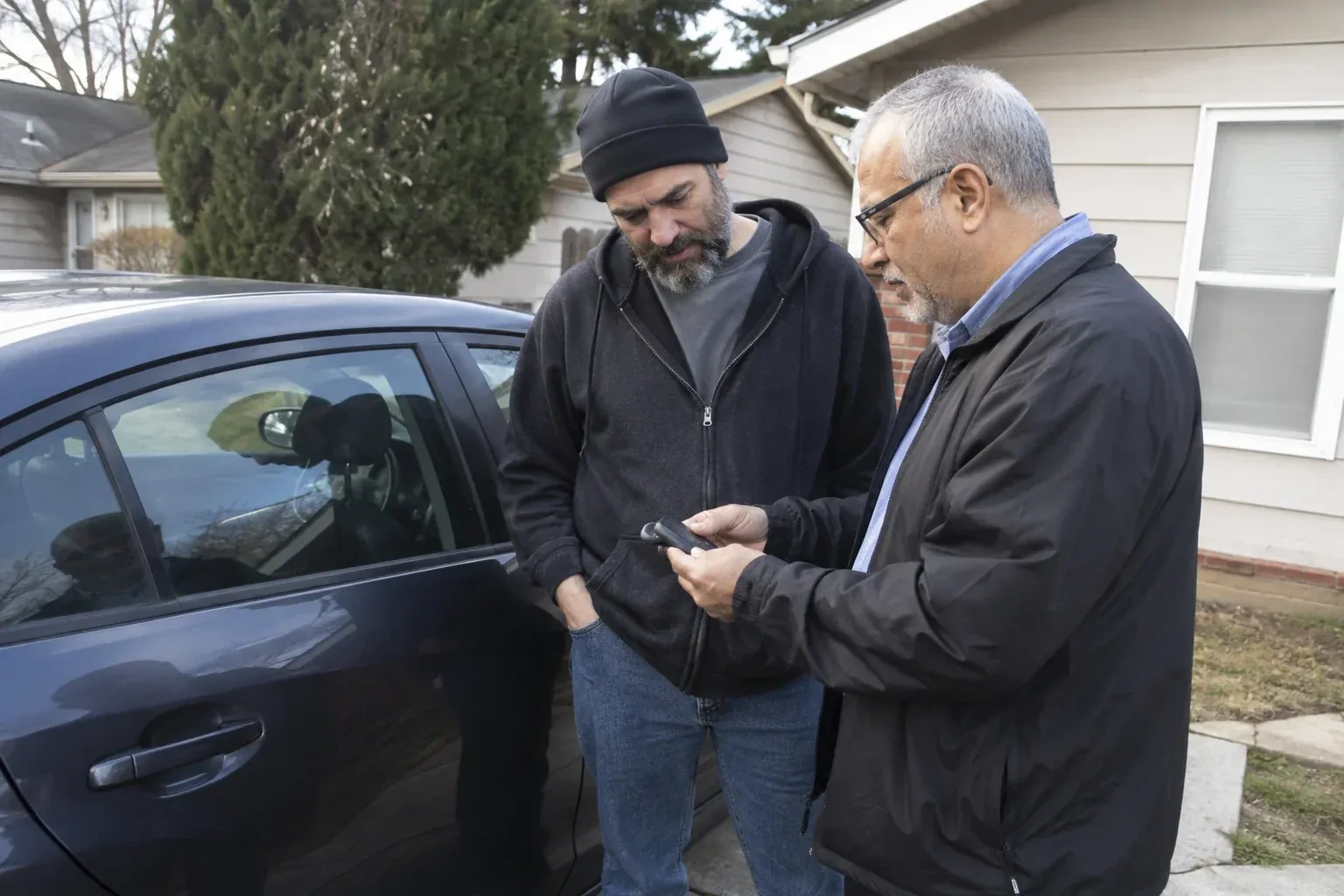
The next question is about the key itself rather than the lock. A key lost somewhere away from the machine is a different situation from one still at home but broken, and a key that has simply worn thin over years of use is different again from a copy that never cut cleanly in the first place. Each answer changes the approach: a broken or worn key can often be read directly, a lost key means working from the lock alone, and a poor duplicate is more reliably replaced from a proper code than copied again.
Decoding a lock with no key at all
Without any key to copy, the lock has to speak for itself. The locksmith picks the cylinder and reads each wafer's resting depth with feeler tools or a small scope, or uses a decoder built for that keyway, translating what is found into a cutting code. A key is then cut to that code and tested in the lock before being trusted on the ignition proper. This route takes longer than copying an existing key, since every wafer has to be read individually, but it produces a key that matches the lock exactly rather than an approximation.
Looking after a wafer lock
A wafer lock rewards a little occasional attention. Cleaning matters more than lubricant for a wafer lock like this; where the maker calls for it, a puff of the specified lubricant into the keyway once or twice a year keeps the wafers moving freely. Wiping the key itself clean before use, especially after a wet ride, keeps grime from being carried into the lock on every insertion. These are small habits, but they are the difference between a lock that turns the same way for years and one that slowly stiffens.
Motorcycle & Scooter Keys
In the van
Torx and security bits
Wafer lock decoder
Manufacturer-approved lock cleaner or lubricant
Motorcycle key blanks
Fob shells and batteries
Motorcycle & Scooter Keys
What affects the quote
Make, model and age of the machine
Make, model and age decide how common the keyway and blank are. A widely used platform is usually the more straightforward case; an uncommon or older machine can take longer to source parts for.
Weather affecting a seized lock
A lock seized by cold, ice or dried-out grease from a season of storage takes patient thawing and working before a key can be tested against it, which a winter call reflects.
Condition of the existing lock
A clean, well-maintained lock accepts a new key with little extra work. One affected by corrosion or grit may need cleaning or light service before a key can be tested reliably against it.
What to have ready
- Do you have registration or a bill of sale on hand?
- What is the make, model and year of the machine?
- Does the engine crank but fail to start with the current key?
Motorcycle & Scooter Keys: questions
QuestionsWhat is the difference between decoding a lock and picking it?
Picking manipulates the wafers to open the lock without necessarily learning their depths, useful when the goal is just to turn the lock once. Decoding reads each wafer's actual depth, usually with a scope or a feeler-style tool, so that information can be turned into a cut key. For key service the lock is generally decoded rather than only picked, since the point is producing a working key, not just a single turn.
Should I get a whole new ignition switch or just a new key?
That depends on the lock's condition rather than the key alone. If the wafers and springs inside are still sound, a correctly cut key restores normal operation without any hardware changed. A lock with worn-oval wafers, a cracked housing, or damage from an earlier forced attempt is better replaced outright, since a new key cannot compensate for parts that have physically worn or broken.
Why does the number of wafers in a lock matter?
Each wafer represents one depth the key has to hit precisely for the lock to turn, so a lock with more wafers has more combinations and takes a little longer to decode or pick than a simpler one. Most motorcycle locks use around five wafers, and manufacturers sometimes space the depth increments further apart specifically to reduce the chance that an unrelated key happens to fit. This is why an ordinary-looking key rarely works in an unrelated bike.
Related services
- Car Key ReplacementThe engine cranks, catches for a second and dies, and a small key-shaped light keeps blinking on the dash.
- Spare Car Key DuplicationOne key opens the car, starts the car, and rides in one pocket every day.
- Key Fob ProgrammingA fob went missing weeks ago somewhere between a coat pocket and a parking lot, and a spare has covered the gap since.