Commercial · Springwater
Commercial Rekeying
Two people left over the summer and the keys they handed back came up one short.
In plain words
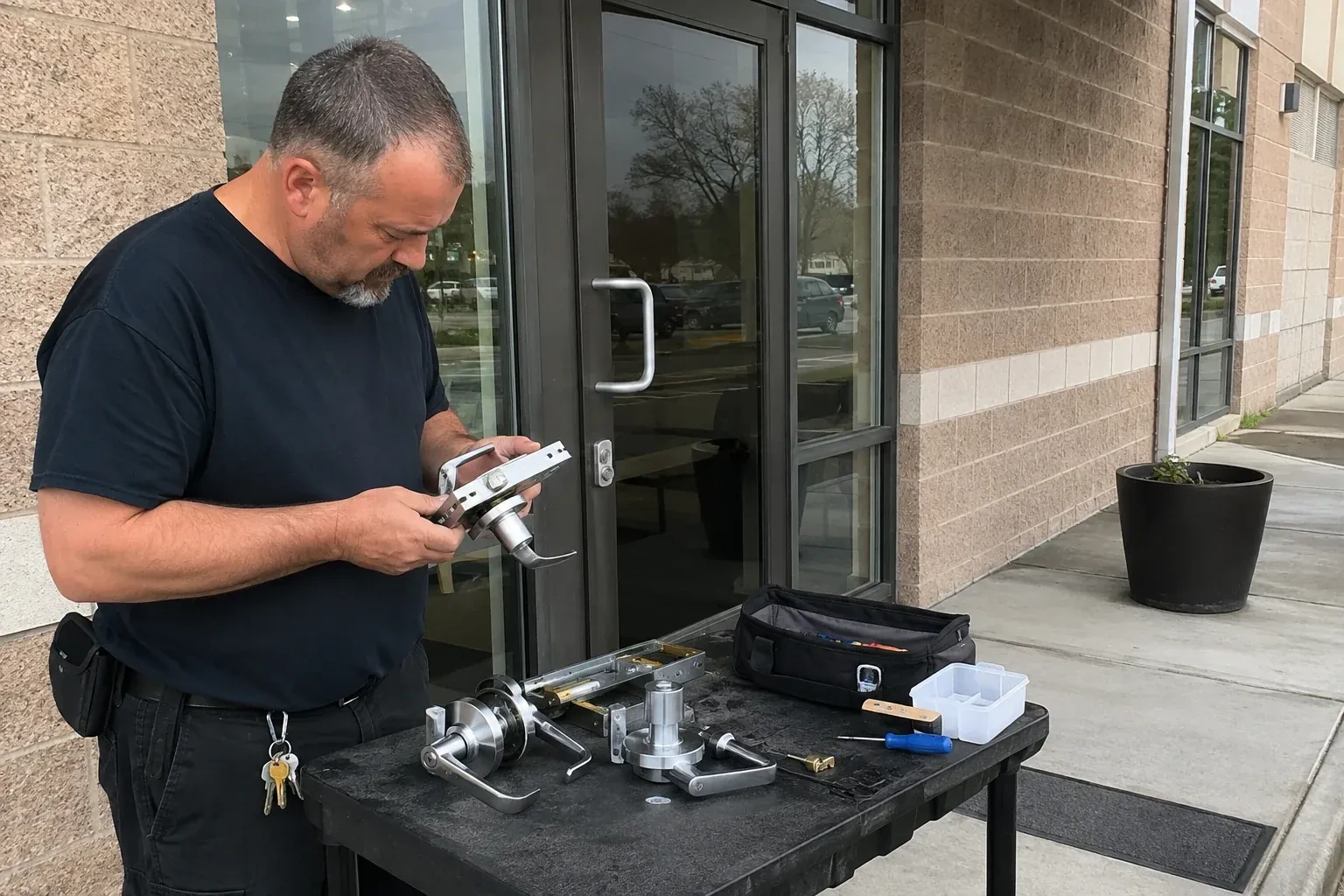
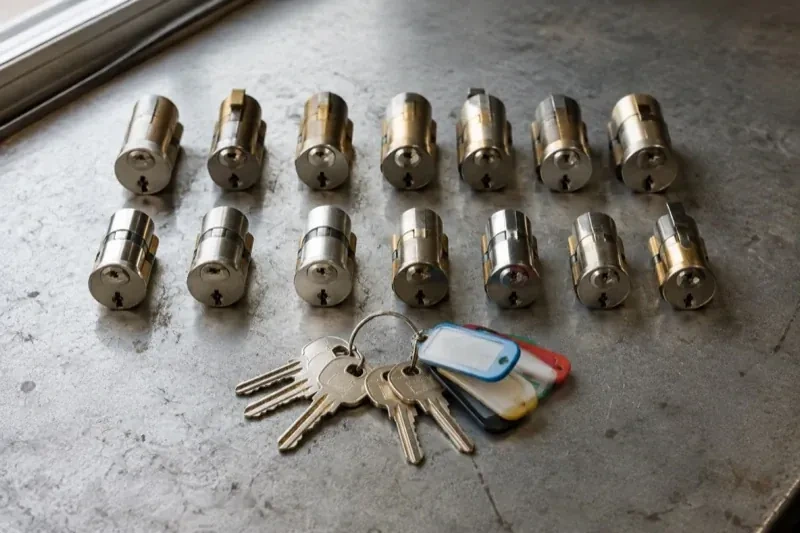
For most business doors, rekeying is the sensible middle path between doing nothing and buying new hardware. Commercial cylinders are built to be repinned many times, and a lever set, mortise lock or storefront cylinder in decent condition has years left in it. Rekeying keeps the finish, the door preparation and the handles you already have and changes only the small brass pins inside. Where a cylinder is worn, corroded by winter salt or too light for the room behind it, the locksmith says so and offers a replacement for that door alone; the rest are rekeyed to the new plan.
How the visit goesA key turned up in the parking lot with the shop's name on its fob. It came back to you, which is lucky, but it means keys are leaving the building on rings you have never seen, and the shop's locks have not changed since opening day.
Commercial Rekeying
How the visit goes

Which doors are the landlord's
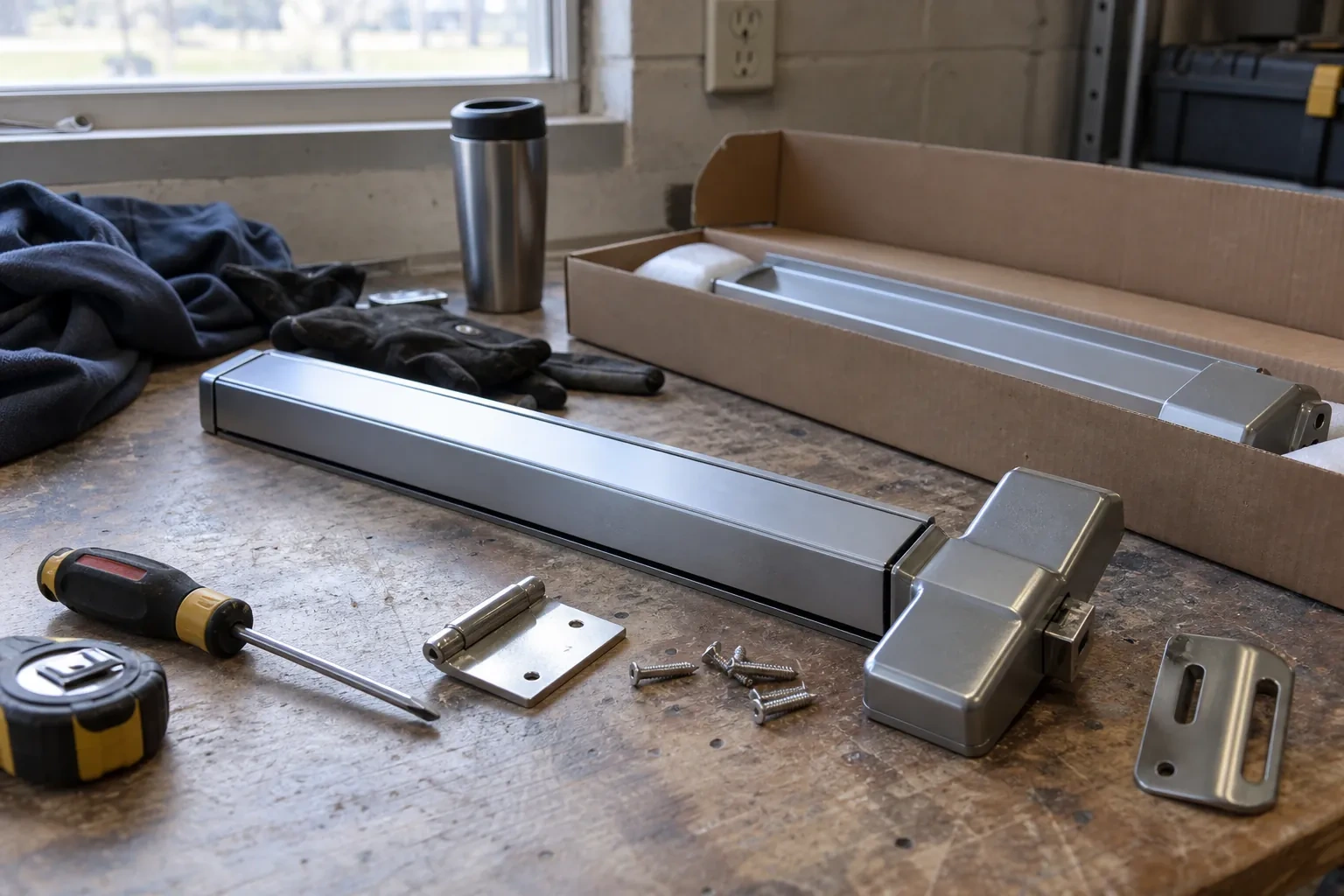
In a plaza, an office building or a multi-tenant industrial unit, some doors on your floor plan are not yours to rekey. Corridor doors, electrical and mechanical rooms, shared loading doors and the building's fire exits usually sit on the landlord's master system, and a suite entrance may be required to accept the landlord's key as well as yours. The locksmith sorts the openings into two columns before starting: those the lease puts under your control, which get the new plan, and those that stay as they are or need the property manager's say-so. Where a suite door must accept both a tenant key and the building master, it is pinned to do exactly that.
Padlocks, cabinets and the mailbox
A business is more than its doors, and the same visit brings the smaller locks into the plan. Rekeyable padlocks on the compound gate, the propane cage or the roll shutter can be pinned to the same key as the back door, so the opening crew carries one key instead of four. Filing cabinets, the till drawer, a medicine or chemical cupboard and the display cases can be keyed alike for the staff who use them or kept separate for the manager. The lobby mailbox, which often still answers to a key from two tenants ago, gets a fresh cylinder or is repinned where its design allows. Each small lock is added to the chart alongside the doors.
A routine for the next departure
Turnover stops being a security event once there is a procedure for it. When someone leaves, their key is collected against the register and ticked off; if it cannot be produced, the chart shows exactly which cylinders that key opened, and only those are dealt with. Businesses that chose interchangeable cores can go further: the manager takes the control key from the safe, swaps the affected core for a spare in less time than a coffee break, and the locksmith repins the removed core at leisure for the next time. Either way the response is measured and specific, and the front door is never left answering to a key that walked out with a former employee.
Commercial Rekeying
In the van
Dry graphite or PTFE lubricant
Cylinder removal and spanner tools
Rekeyable padlocks
Mortise cylinder set screws and cams
Master pins
Commercial Rekeying
What affects the quote
No existing chart or keys
When nobody knows what the current keys open, the locksmith reads and records each cylinder before planning the new keying, and that reconstruction is time in the quote.
Interchangeable cores versus repinning
Cores swapped with a control key are the shortest work on site, while cylinders that must come apart on a bench take longer. Supplying spare cores for the manager to hold is priced as its own line.
Landlord and base-building coordination
Suite doors that must accept both your key and the landlord's master, or work that needs the property manager on site, add coordination the quote allows for.
What to have ready
- Which doors, if any, belong to the landlord or a shared corridor?
- Which staff need to open which doors on a normal day?
- Does your lease say anything about changing locks or giving the landlord a key?
Commercial Rekeying: questions
QuestionsWill every old key stop working once you are done?
Every old key that operated a cylinder included in the plan will stop working, and the locksmith proves it by trying old keys at each door before leaving. Old keys keep working only at openings you chose to leave alone, which are written on the chart so there is no confusion. If a master key existed, it is tested too, since a forgotten master is the most common way an old key stays alive.
Should we rekey every time an employee leaves?
Rekey when a key has not come back or when the departure was unfriendly; when a key is returned and the register confirms it, the cylinders it opened are as secure as before. Businesses that want a response to every departure without a visit each time fit interchangeable cores and swap them in-house. Whatever the trigger, dealing with only the cylinders that key opened keeps the response proportionate.
Can all our doors be put on a single key?
Yes, if the cylinders share a keyway or can be fitted with ones that do. Keying everything alike is popular with small shops because staff carry one key and spares are simple. The trade-off is that one key then opens the cash room as readily as the front door. Many businesses choose a middle path: the doors everyone uses on one key, the sensitive rooms on another, and an owner's master that opens both.
Related services
- Access Control InstallationHead office wants a record of who opens the branch and when, tied to an actual name rather than a shared code scrawled on a sticky note taped under the till.
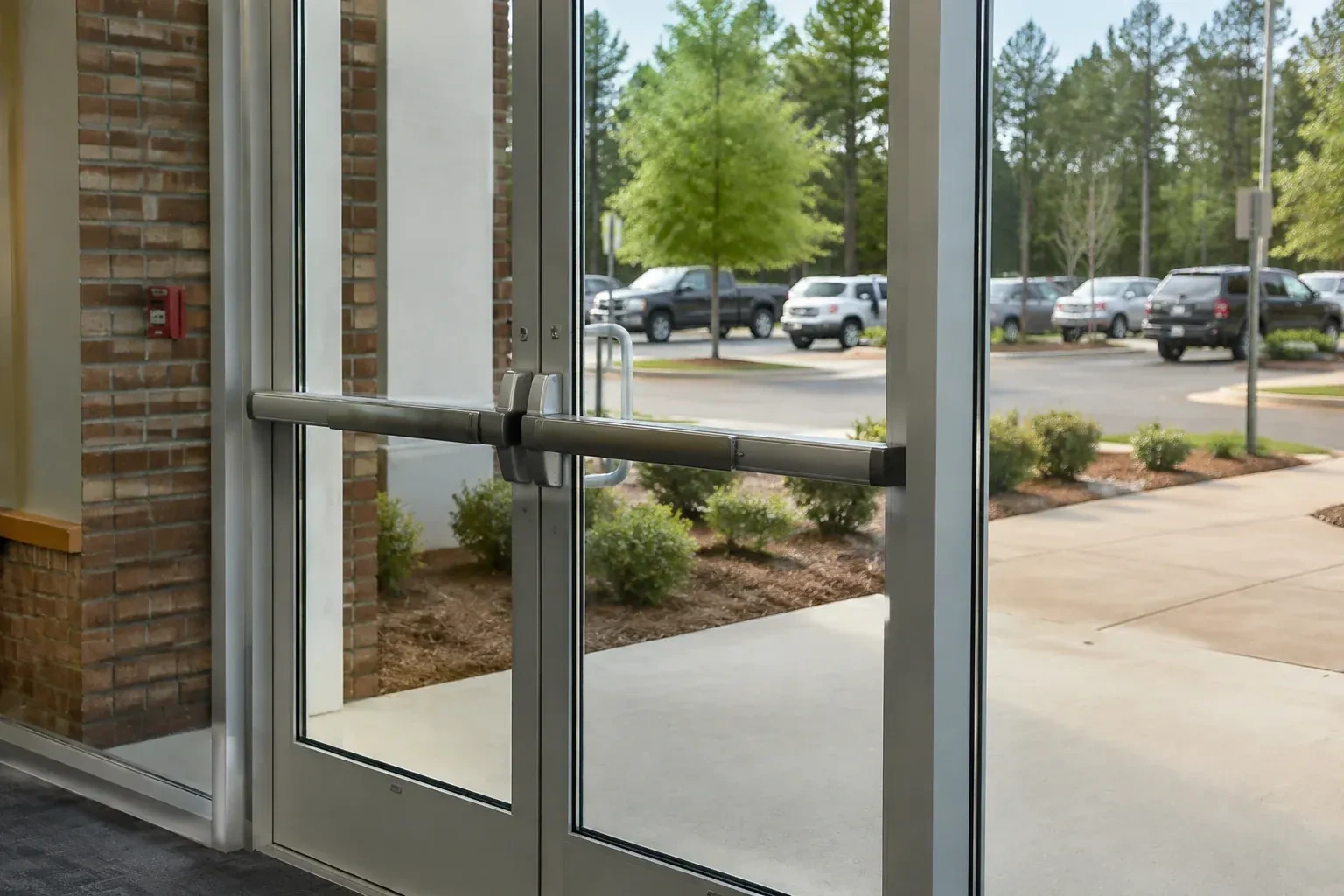
- Panic & Exit HardwareThe crossbar on the loading-dock door barely returns anymore.
- Commercial-Grade Lock ReplacementAt closing time the hookbolt on the storefront door catches the keeper only on the second or third try, and one employee has started giving the door a shoulder to force it home.