Commercial · Phelpston
Commercial Rekeying in Phelpston
Two people left over the summer and the keys they handed back came up one short.
In plain words
Losing a master key exposes every door it opened, and a commercial rekey brings that exposure back to zero. The locksmith first works out which level the missing key sat at: a single change key affects one or two cylinders, while a master reaches every lock in its group. Only the affected cylinders are repinned, which keeps the rest of the system intact and the response proportionate. Where a keying chart exists the work is precise; where the chart has been lost, the visit begins by reading and recording the existing cylinders so the new plan starts from facts rather than memory.
How the visit goesThe manager's key ring went missing somewhere between the bank and the car, and the master on it opened every door in the building. Until the cylinders are changed, whoever finds it is holding the run of the place.
Commercial Rekeying
How the visit goes

The state of the cylinders and the doors
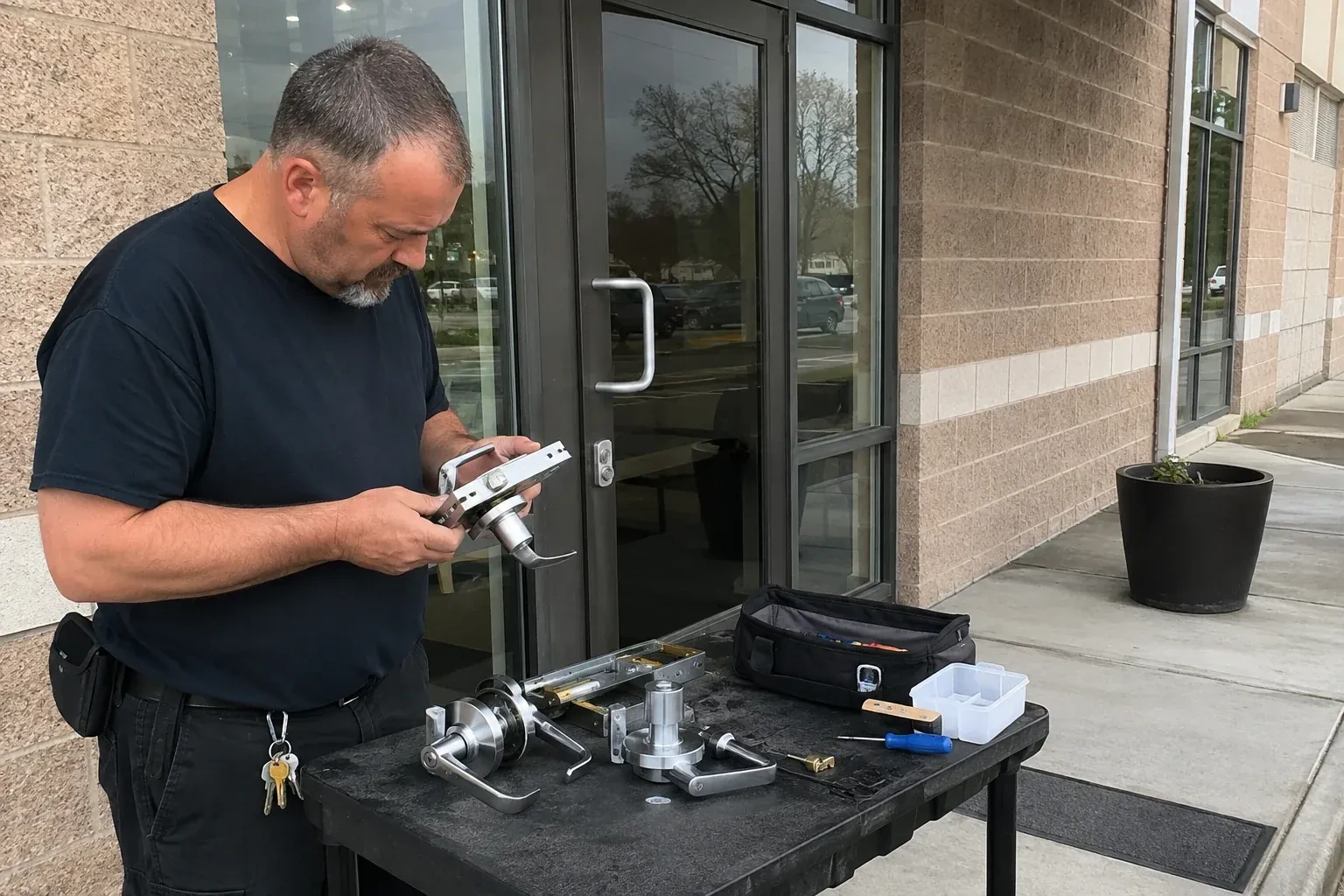
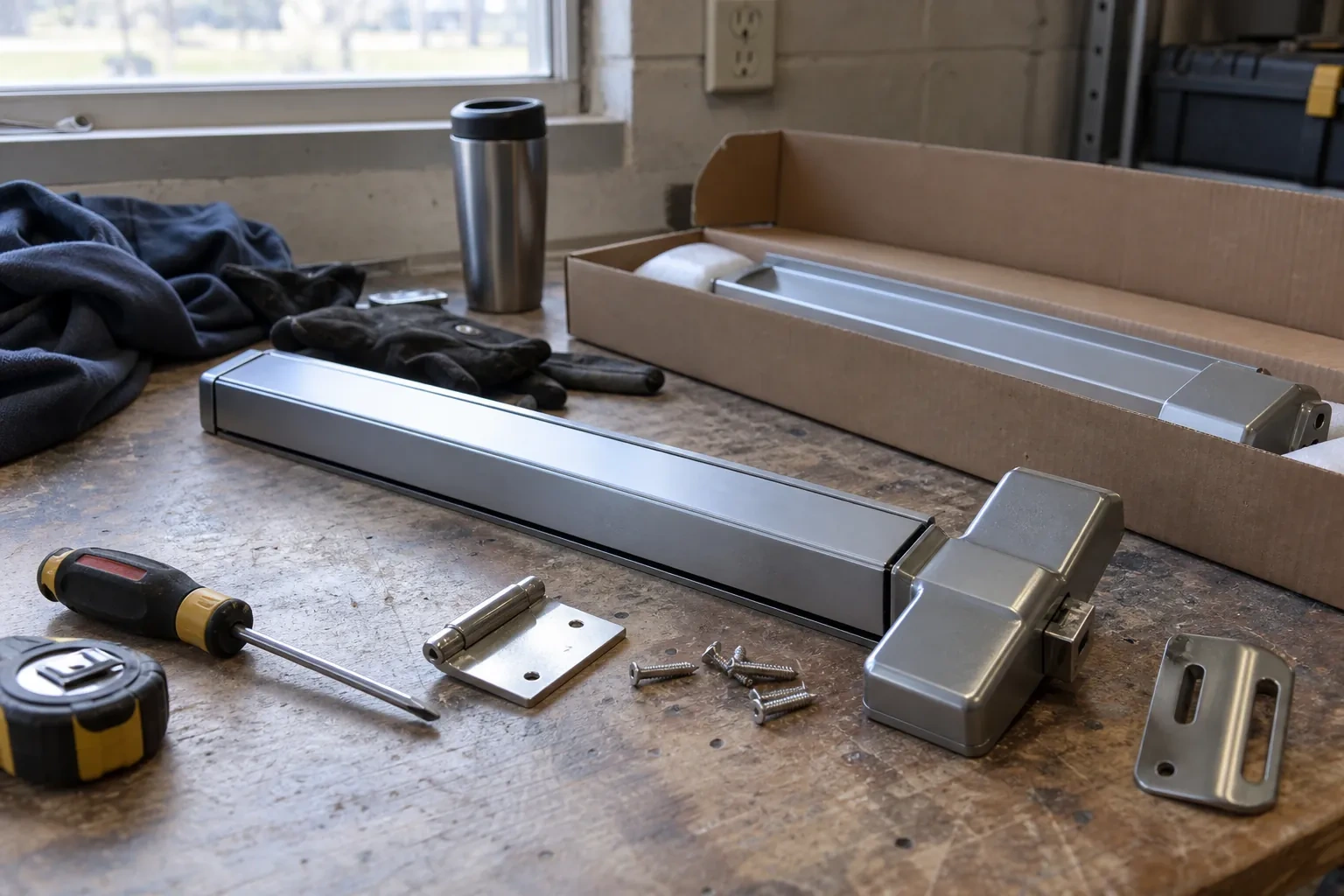
A cylinder about to be repinned is examined the way a mechanic looks over a part before rebuilding it. The plug should turn smoothly with the right key, the pins should spring back cleanly, and the face should be free of the green bloom that salt spray leaves on storefront hardware after a few winters. The locksmith also checks how the door closes: a strike that no longer lines up, a closer that slams, or a deadlatch that fails to catch will keep a freshly rekeyed door from locking properly. Most cylinders pass and are repinned; a worn or corroded one is pointed out so you can choose a replacement for that opening.
Swapping interchangeable cores
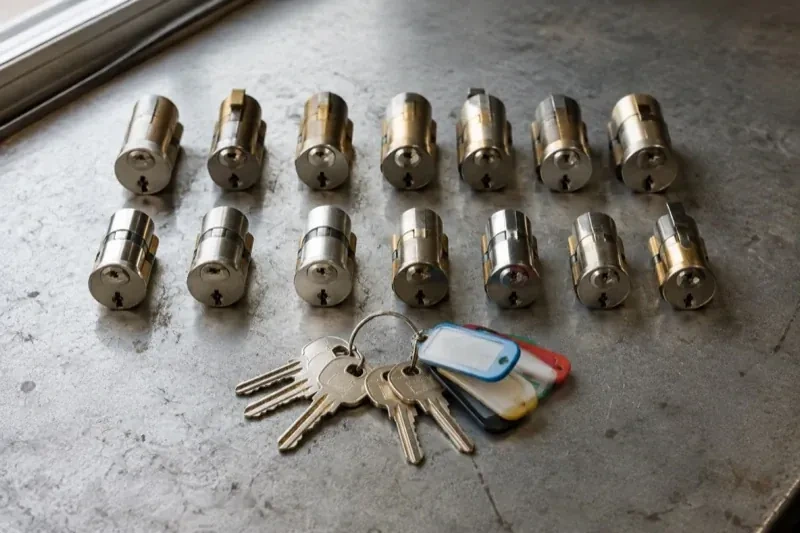
Where the business already runs on interchangeable cores, the door hardware never comes apart. The control key goes into the figure-eight core, turns a few degrees, and the whole core slides out of the lever or padlock in one piece. A freshly combinated core goes in the same way, the operating key is tried, and that door is done. The old cores travel back to the bench to be repinned for another opening or held as spares. This is what makes cores so well suited to businesses with steady turnover: a single control key, kept in the manager's safe rather than on a ring, is all it takes to change a lock.
Keys counted into named hands
Alongside the chart comes a key register: each key's stamped code, the person it was issued to, the date, and a line for the date it comes back. Filling it in as keys are handed out on the first morning takes ten minutes and pays off at every departure afterwards, because the question becomes 'return key A-07' rather than 'did she have a key?'. Spare keys are counted too and kept somewhere locked rather than in the drawer where the old tangle lived. When the register and the chart agree with the keys on the hook, the business knows exactly who can open it, which is the whole point of the exercise.
Commercial Rekeying
In the van
Dry graphite or PTFE lubricant
Cylinder removal and spanner tools
Rekeyable padlocks
Mortise cylinder set screws and cams
Master pins
Commercial Rekeying
What affects the quote
Doors out of alignment
A door whose cam, strike or closer needs adjusting so the freshly rekeyed cylinder throws the bolt fully is corrected during the visit, and that adjustment is a separate item.
Upgrades chosen on the day
Some businesses use the visit to move to interchangeable cores, add a lockbox for the alarm company or fit a heavier cylinder on the cash room. Each is a separate line you can accept or leave.
Interchangeable cores versus repinning
Cores swapped with a control key are the shortest work on site, while cylinders that must come apart on a bench take longer. Supplying spare cores for the manager to hold is priced as its own line.
What to have ready
- Who at the business has the authority to approve changing the locks?
- Do you have a current list of who holds keys?
- How many keys do you need cut, and for whom?
Commercial Rekeying: questions
QuestionsWill every old key stop working once you are done?
Every old key that operated a cylinder included in the plan will stop working, and the locksmith proves it by trying old keys at each door before leaving. Old keys keep working only at openings you chose to leave alone, which are written on the chart so there is no confusion. If a master key existed, it is tested too, since a forgotten master is the most common way an old key stays alive.
Should we rekey every time an employee leaves?
Rekey when a key has not come back or when the departure was unfriendly; when a key is returned and the register confirms it, the cylinders it opened are as secure as before. Businesses that want a response to every departure without a visit each time fit interchangeable cores and swap them in-house. Whatever the trigger, dealing with only the cylinders that key opened keeps the response proportionate.
Can all our doors be put on a single key?
Yes, if the cylinders share a keyway or can be fitted with ones that do. Keying everything alike is popular with small shops because staff carry one key and spares are simple. The trade-off is that one key then opens the cash room as readily as the front door. Many businesses choose a middle path: the doors everyone uses on one key, the sensitive rooms on another, and an owner's master that opens both.
Related services
- Access Control InstallationHead office wants a record of who opens the branch and when, tied to an actual name rather than a shared code scrawled on a sticky note taped under the till.
- Panic & Exit HardwareThe crossbar on the loading-dock door barely returns anymore.
- Commercial-Grade Lock ReplacementAt closing time the hookbolt on the storefront door catches the keeper only on the second or third try, and one employee has started giving the door a shoulder to force it home.