Lockouts · Phelpston
Home Lockout Service in Phelpston
It is minus fifteen, the wind is coming across the driveway, and the key will only go halfway into the deadbolt.
In plain words
Winter creates its own kind of lockout. Meltwater runs into a keyway during the day and freezes overnight, a weather-exposed cylinder stiffens in the cold, and a door that shrank in January may drop its bolt out of line with the strike. A home lockout visit in these conditions is as much about the door as the lock: the locksmith thaws and frees the cylinder without forcing it, checks whether the bolt or the frame is the real obstacle, and opens the door in a way that leaves the hardware sound. A little dry lubricant and a tube of de-icer usually finish the job.
How the visit goesAfter a week of humid weather the back door has swollen in its frame. The key turns, you can feel the bolt trying to move, but it is jammed hard against the strike plate and the door refuses to open.
Home Lockout Service
How the visit goes
Confirming you belong at the door
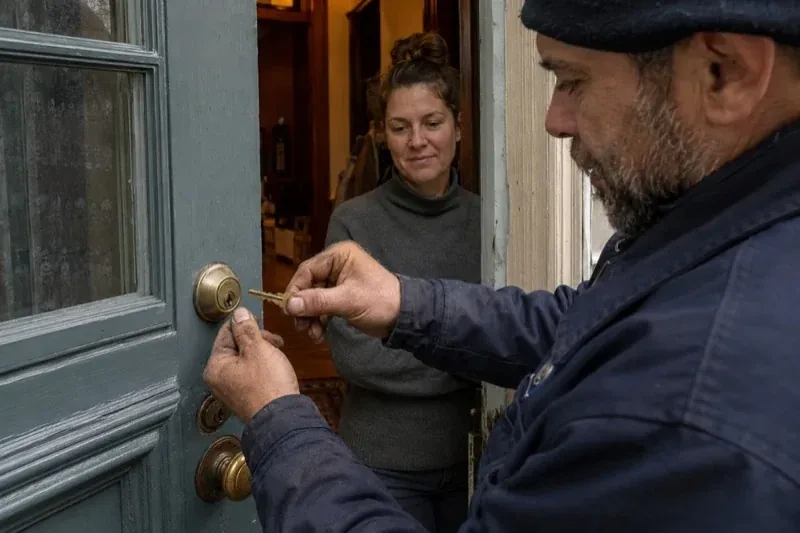
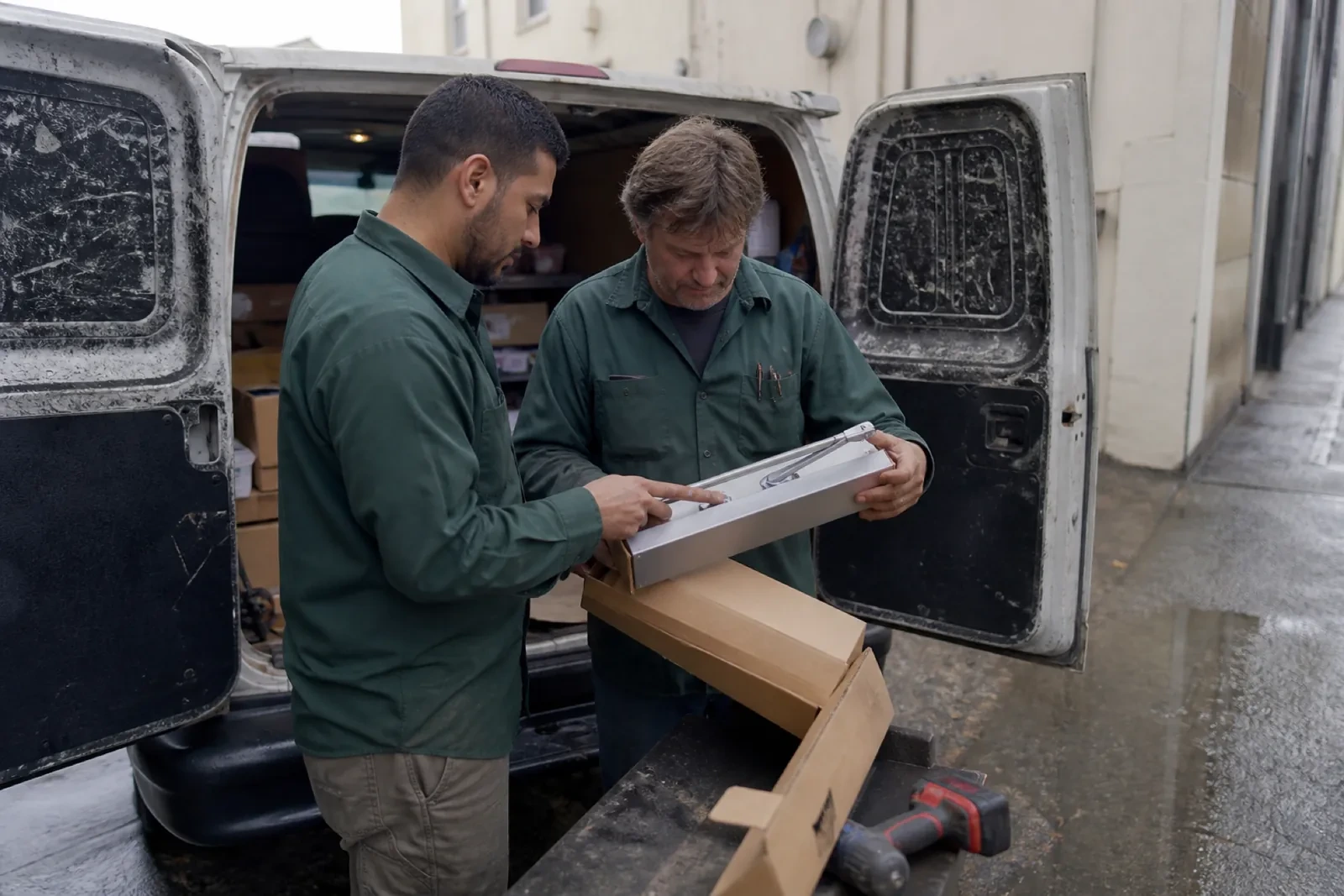
Before any tool comes out, the locksmith confirms that the person asking for entry has the right to it. Photo identification with the address on it is the simplest route. When the card shows an old address, a lease, a property tax notice, a utility bill on your phone or a call to the property manager fills the gap. If everything that proves it is inside, the locksmith notes that and completes the check once the door is open, before leaving. This is a courtesy to every household on the street as much as to you, and good locksmiths treat it as the first step of the job rather than an obstacle.
Opening, then closing the loop on a lost key
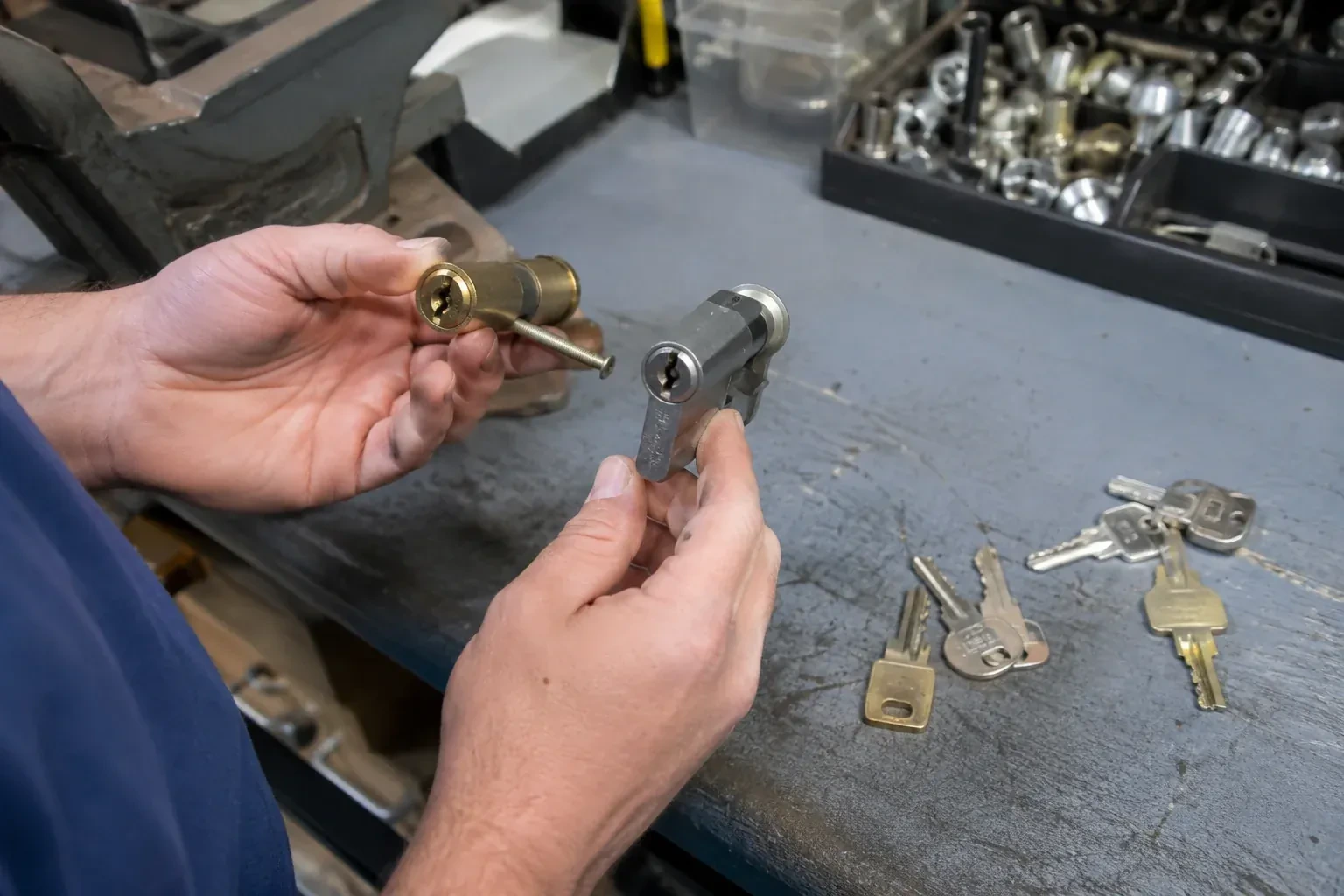
When the key is genuinely gone, the work has two halves. The first is the opening, done the usual way with picks, a decoder or a bypass. The second is making the missing key useless. The locksmith removes the cylinder, uses a plug follower to slide the plug out without spilling the springs, replaces the bottom pins to a new combination, and reassembles it so a freshly cut key operates it and the old one does not. Each exterior lock that shared the old key is treated the same so the house stays on one key. New keys are cut from the new pinning, tested in every door, and counted into your hand.
A plan for the next time keys go missing
Most people leave a lockout with a resolution never to repeat it, and a few habits make that real. A spare key with a trusted neighbour or nearby relative is the classic answer. A small combination lockbox fixed somewhere discreet, with the code shared only with people you trust, is a step up and avoids the flowerpot and the door frame, which are the first places anyone looks. Households with keypad or smart locks can add a family member's code so a lost key is an inconvenience rather than an evening on the porch. The locksmith can fit a lockbox or program a code while still on site if you ask.
Home Lockout Service
In the van
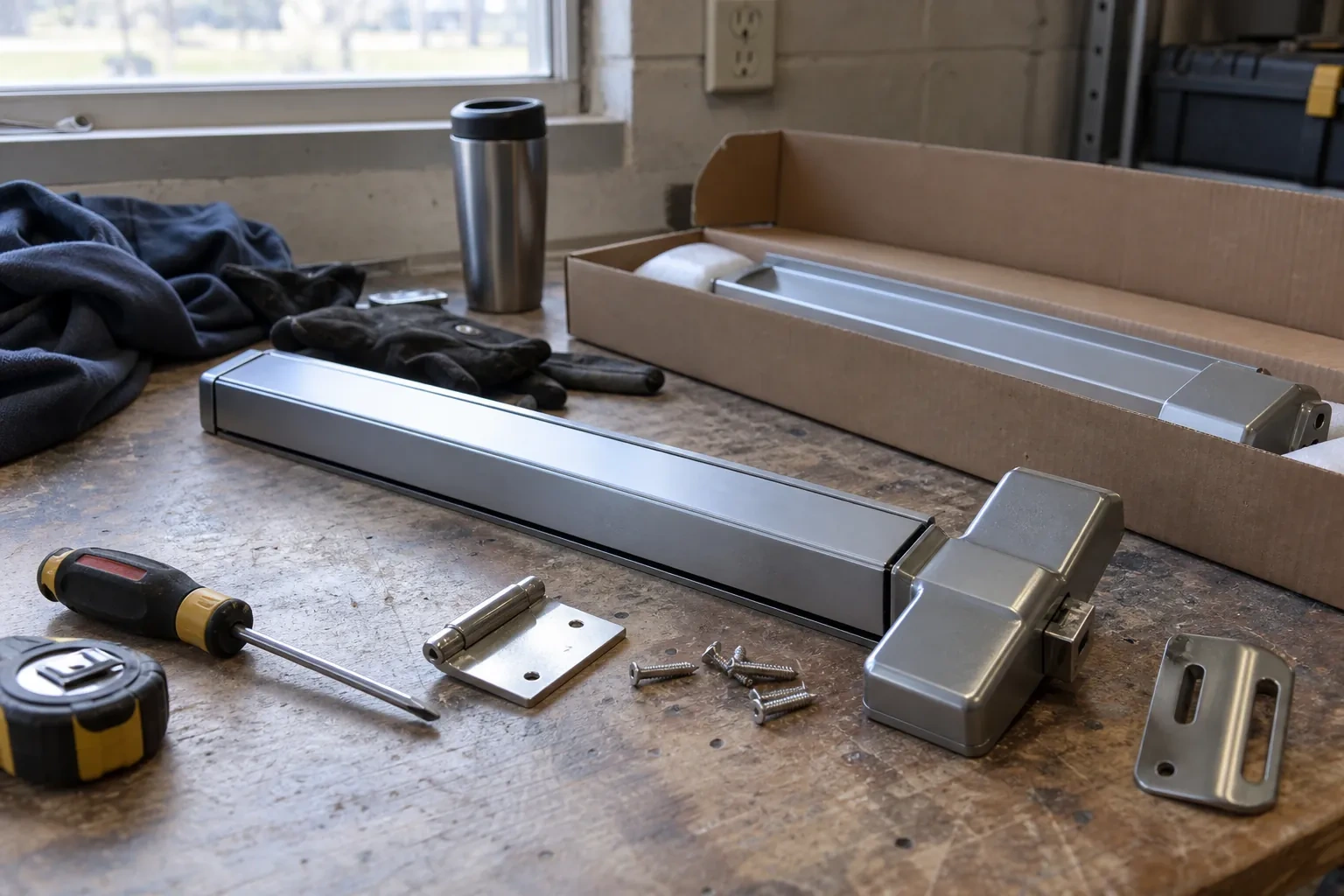
Strike plate and long hinge screws
Cylinder decoder
Key blanks and key cutter
Replacement cylinder or deadbolt
Plug follower and repinning kit
Home Lockout Service
What affects the quote
Whether the key is inside or lost
If the key is inside, the visit ends when the door opens. If it was lost out in the world, rekeying and fresh keys usually follow, and that is separate work priced on its own.
Weather on the day
A cylinder frozen solid or a door iced to its frame takes patient thawing before any opening can begin, so a winter call in a cold snap is quoted with that extra time in mind.
Type and grade of the lock
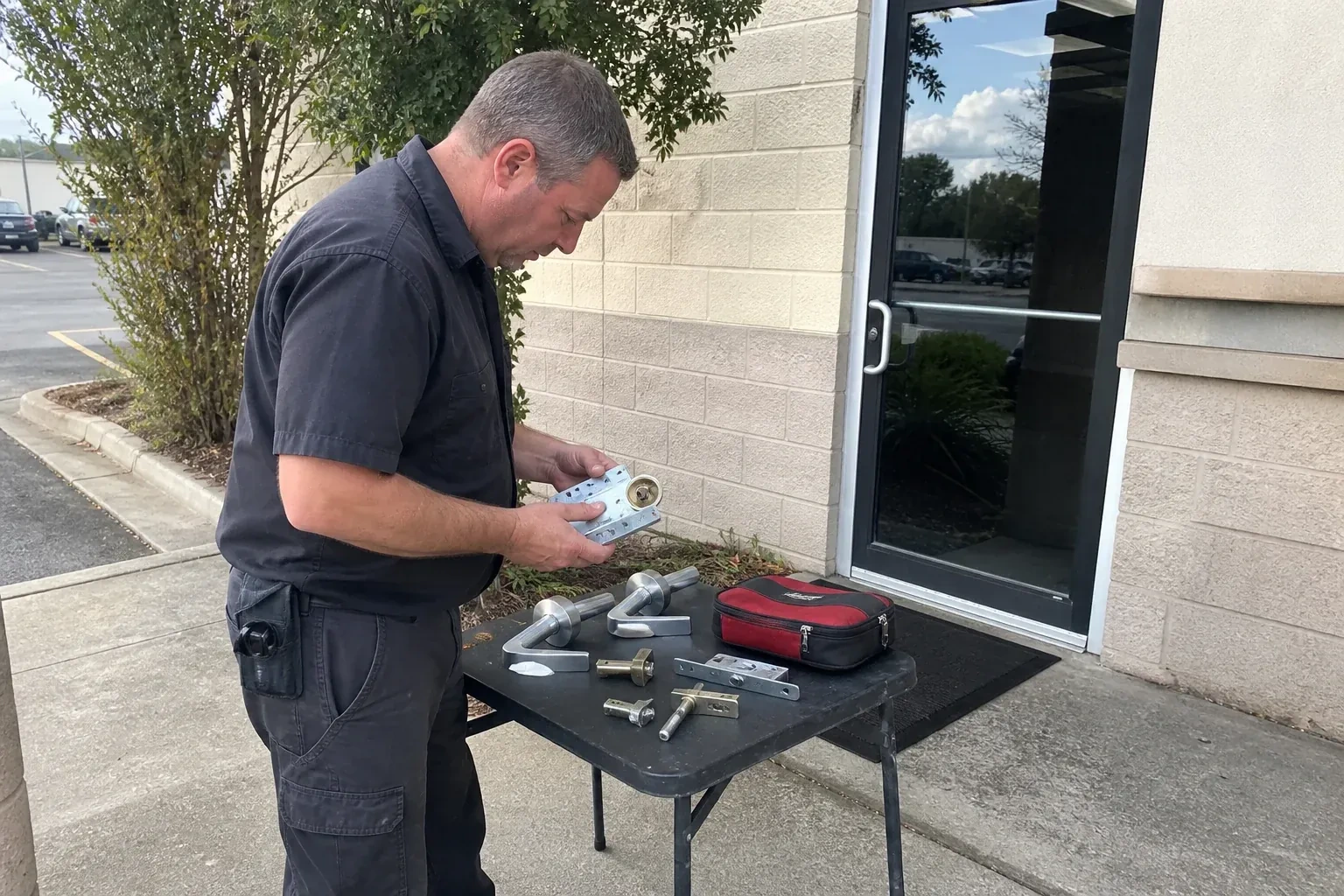
A builder-grade knob latch, a residential deadbolt, a mortise case in an older home and a high-security cylinder each take different tools and different amounts of time to open, and that difference shows in the quote.
What to have ready
- If the key is lost, would you like the locks rekeyed during the same visit?
- Do you have photo identification with you, or is it inside?
- Has anyone already tried to open the door with a card or tool?
Home Lockout Service: questions
QuestionsWhat happens if my identification is not convincing enough on the spot?
The work pauses rather than proceeds, and the locksmith helps you find another route: a neighbour or building manager who can confirm you live there, a document on your phone, a family member who can bring paperwork, or completing the check inside after entry when the documents are behind the door. Verification protects you as much as anyone, because the same standard applies to whoever might one day claim to live at your address.
How long does a home lockout usually take once the locksmith arrives?
The opening itself is often the shortest part of the visit; verifying identification, examining the lock and testing the door afterwards take a share of the time too. A standard knob or deadbolt on a well-fitting door is generally a matter of minutes, while a high-security cylinder, a frozen lock or a swollen door takes longer. If a cylinder has to be drilled and replaced, or locks are rekeyed while the locksmith is there, allow extra time for that work.
Is a double-cylinder deadbolt a good idea after a lockout?
A deadbolt keyed on both sides is sometimes suggested for doors with glass beside them, but on a main escape door it means finding a key to get out. A door people use to leave the home should open from the inside without a key or special knowledge, especially in an emergency. A single-cylinder deadbolt with a thumb-turn, paired with a reinforced strike and a proper glass film if needed, keeps both security and a clear way out.