Lockouts · Springwater
Broken Key Extraction
You were locking up on the way out when the key broke in the lock.
In plain words
What you have when the locksmith leaves matters as much as what was removed. The fragment is out and shown to you. The cylinder has been cleaned of grit, its pins and springs checked, and dressed with the lubricant its maker specifies. A new key has been cut from the key code or by reading the cuts on the two halves with a gauge, not copied from a worn original, and tested from both sides with the door open and closed. If the key broke because the lock was on its way out, a rekey or a replacement cylinder is offered as its own decision, explained first.
How the visit goesIn the parking lot your car key snapped in the driver's door. You are holding the plastic head with the buttons on it, the metal blade is inside the lock, and the spare is on a hook at home.
Broken Key Extraction
How the visit goes
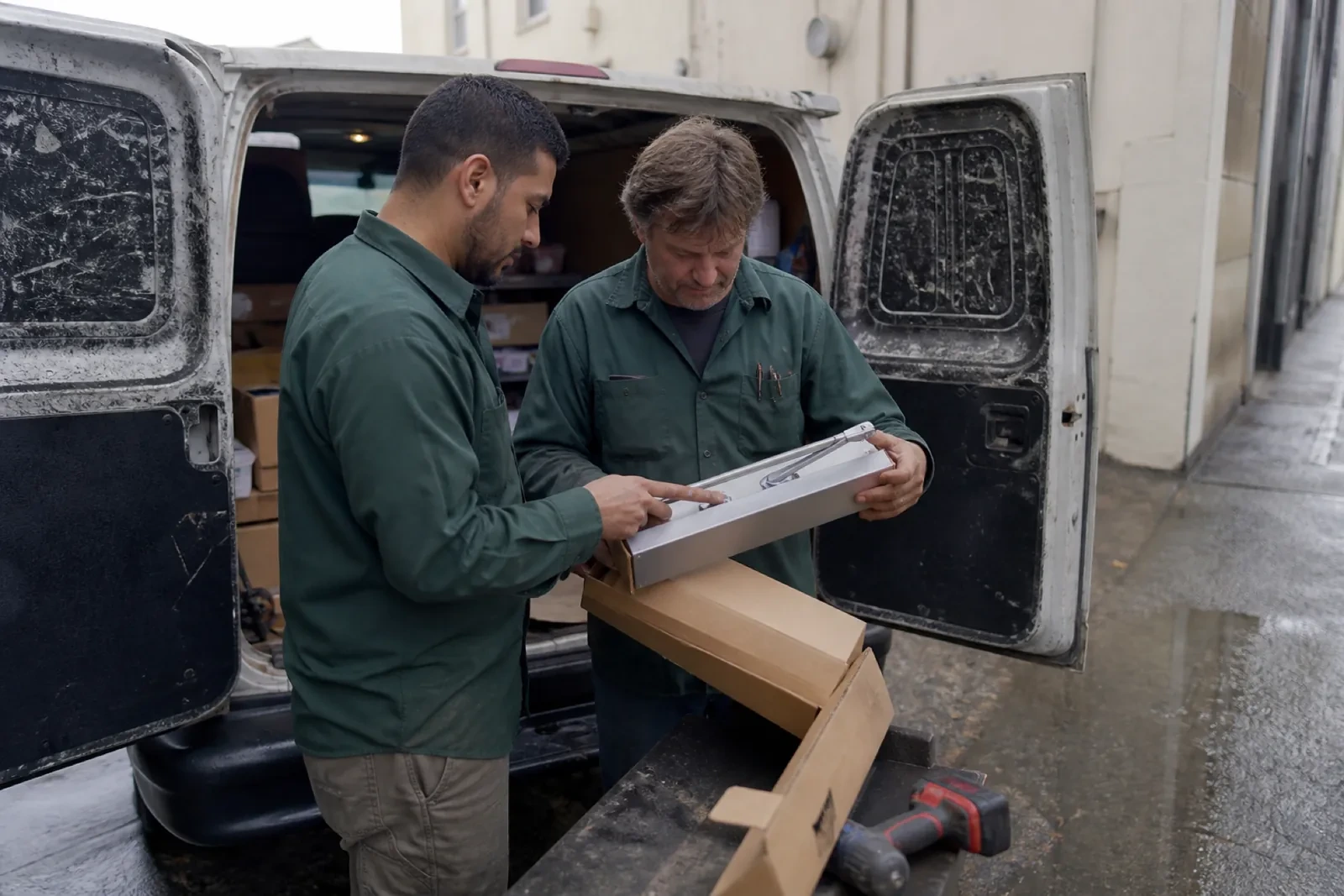
What happened in the second before it broke
Your account of the break is evidence. A key that snapped while you were turning against resistance points to ice, a binding bolt or a swollen door. One that broke as you pushed it in suggests grit or a damaged pin in the keyway. A key that had been sticking for weeks and finally gave up hints at worn pins or a loose cylinder cap. A key that simply cracked at a deep cut with no drama was probably fatigued metal. Each story leads to a different check after the piece is out, so a few honest sentences about the moment save guesswork later.
Drawing it out with a hook extractor
Every keyway has grooves, called wards, that run along its length above and below the blade. A hook extractor is a slim strip of spring steel thin enough to ride in one of those grooves beside the fragment. The locksmith slides it in past the broken piece, rotates it slightly so the barbed tip catches a cut in the blade, and draws it back out in a straight line. The pins are lifted clear as the piece passes them, exactly as they are when a key is withdrawn. It is a patient, felt process, and the cylinder is untouched by it.
Your car key, rebuilt rather than replaced
For a vehicle, the head of the key that carries the transponder chip and remote buttons has usually been saved, and a new blade cut and fitted to it, so the car recognizes the key as it always did. The door lock and ignition have been tested with it, and the ignition wafers checked for damage from the break. It is a good moment to have a second complete key made, since a car with one key is a car one snap away from a tow. Lightening the key ring so it does not hang on the ignition adds years to both key and cylinder.
Broken Key Extraction
In the van
Key blanks and code cutter
Compressed air for the keyway
Hook key extractors
Tension tool for resetting the plug
Spiral key extractors
Broken Key Extraction
What affects the quote
Anything added since the break
Glue, a second key or marks from a screwdriver mean clearing and sometimes repair before extraction can start, and that added time is named in the quote.
Condition of the cylinder
Worn pins, a loose cap, grit or corrosion found after the piece is out may call for a service, a rekey or a new cylinder, each explained and quoted separately.
Vehicle key electronics
Fitting a new blade to a chip head, or moving the chip and remote into a new shell, is separate from the extraction and quoted as such, as is any ignition check.
What to have ready
- Is the door or vehicle locked or unlocked right now?
- Did the key turn part of the way before it snapped?
- Do you still have the other half of the key?
Broken Key Extraction: questions
QuestionsIs a broken key a sign the whole lock is worn out?
Sometimes, and the visit answers it. A key that failed from its own fatigue in a clean, smooth cylinder says nothing against the lock. A key that broke because the pins were worn flat, the cap had loosened or the keyway was full of grit says the cylinder needs a service or a rekey. One that broke in a corroded, pitted plug is telling you the lock is due for replacement.
Can you extract a key from a padlock, mailbox or filing cabinet?
Yes. Small cylinders in padlocks, mailboxes, desk drawers, filing cabinets and cam locks on lockers hold a fragment the same way a door does, and the same slim hooks and spirals fit them. Their keyways are narrower, so it is finer work. Where a padlock is not worth saving, the locksmith will say so and offer a cut-off and a new padlock keyed to your preference instead.
How long does the extraction usually take?
It depends on how the piece is sitting. A protruding fragment in a plug at rest can be out in moments. A deep piece behind lifted pins takes patient work with hooks and spirals. A glued or corroded fragment may mean removing the cylinder and freeing it from behind. Cutting and testing the new key, and any door adjustment, add their own time. The locksmith gives a sense of it after the first look.