Car keys · Springwater
Car Key Replacement
The engine cranks, catches for a second and dies, and a small key-shaped light keeps blinking on the dash.
In plain words
Car key replacement means producing a key that works your specific vehicle when the original is lost, broken, stolen or no longer recognized. On many modern cars that is more than cutting metal: the blade fits the locks, a transponder is taught to the immobilizer before the engine will run, and any remote or proximity function is paired separately; some current vehicles instead use a phone key or key card with no cut blade at all. An automotive locksmith confirms your entitlement, identifies the exact key system from the VIN, cuts the blade to code, programs the electronics and tests every function before handing it over.
How the visit goesMinus twenty outside, the fob button does nothing, and the door keyhole has a crust of road salt over it because you have not used a metal key in that car since the day you bought it.
Car Key Replacement
How the visit goes
Proof that the car is yours to key
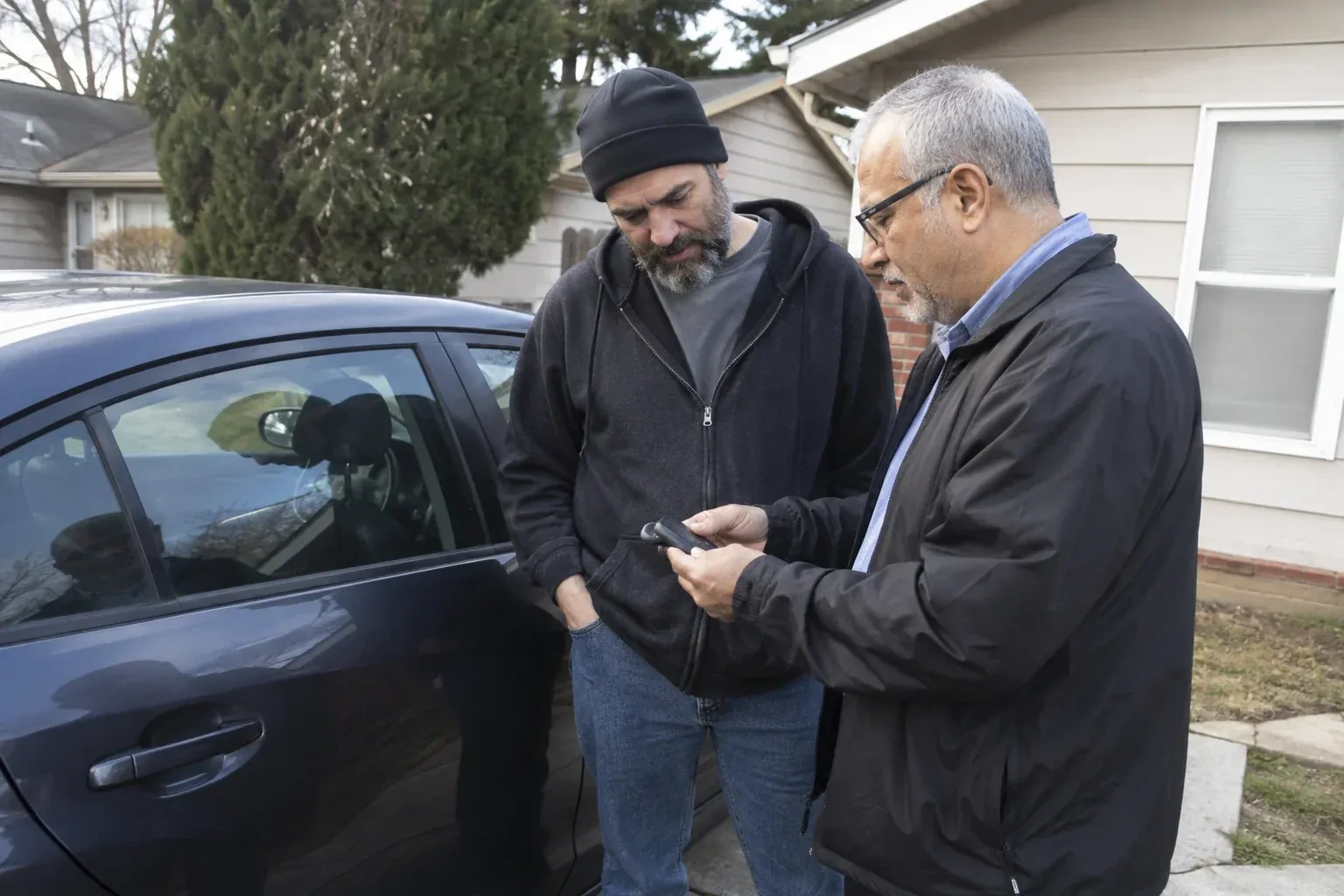
Before a blank leaves the van, the locksmith confirms that the person asking for a key is entitled to one. Government photo identification is the first piece. The second is a document tying that person to this vehicle: the vehicle permit with the VIN on it, an insurance slip, a lease, or fleet paperwork for a company car. The VIN on the paper is compared with the one stamped on the dash and printed on the door label. A car bought last week and still in the seller's name, an estate vehicle or a family member's car each has its own paper trail, and mentioning it on the phone means the right document is at hand.
Programming the transponder through the diagnostic port
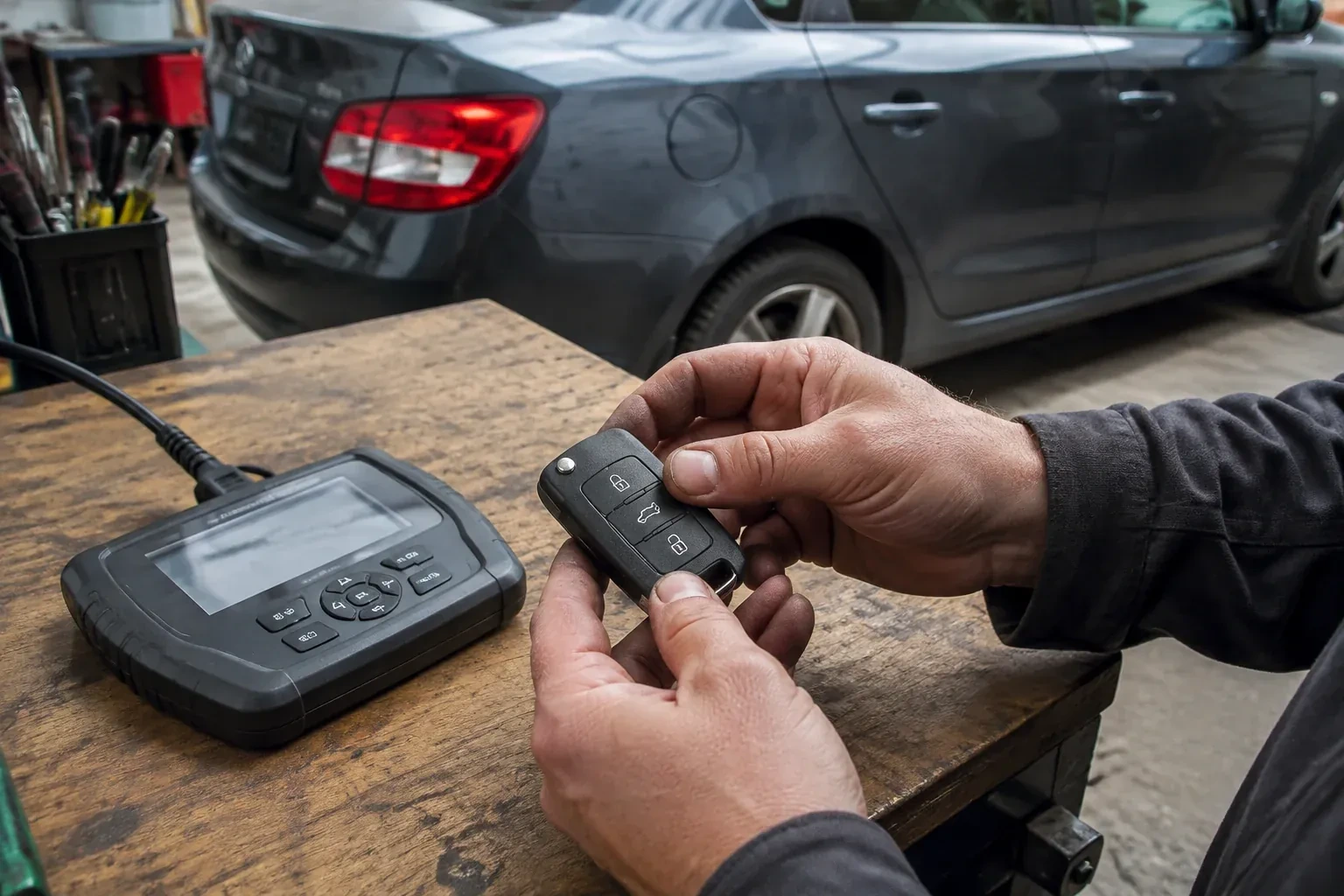
With the blade cut, the electronic half of the job begins. On a vehicle with OBD-programmable keys, the locksmith connects a programming tool to the diagnostic port under the dash, selects the exact vehicle and immobilizer system, and starts a session that introduces the new transponder to the car. Some systems accept the key in moments; others enforce a security wait timer, or ask for a PIN that the tool reads from the vehicle or that is obtained through the manufacturer's secure-data route. The key is cycled in the ignition or held to the start button when prompted, and the tool confirms the number of keys the car now recognizes.
A record of what your key actually is
A car key has an identity of its own: a blade profile, a transponder type, a remote frequency and a part number, and sometimes a key code printed on a tag. The locksmith notes these for you, along with the count of keys stored in the car, so the next spare can be prepared from the details rather than from scratch. Keep the note with your insurance papers rather than in the car. If the vehicle ever changes hands, the record also lets the new owner have the old keys erased and fresh ones made without guesswork about what the car uses.
Car Key Replacement
In the van
Proximity fob with emergency blade
Transponder key blank
Vehicle battery maintainer
Laser-style milling cutter
Transponder chip
Car Key Replacement
What affects the quote
Battery and access to the car
A flat vehicle battery needs a maintainer during programming, and a locked car with no key has to be opened before the diagnostic port can be reached. Both are small items that the quote names plainly.
Security data for the vehicle
Some cars give up their programming PIN through the tool; others require the code to be retrieved from manufacturer secure data, which involves a registered request. That step is quoted when the VIN shows it applies.
Extracting a broken key
Drawing a snapped blade out of a door or ignition cylinder without harm to the lock is a separate piece of work, done before the new key is cut, and it appears on the quote as its own line.
What to have ready
- Has the car's battery been flat or disconnected recently?
- Where is the car parked right now, and is it locked?
- What is the year, make and model, and can you read the VIN from the windshield or the permit?
Car Key Replacement: questions
QuestionsMy fob is cracked but still works. Do I need a whole new key?
Usually not. A cracked case often protects a healthy circuit board and transponder, and those can be moved into a new shell of the same pattern with a freshly cut blade. Because the electronics are unchanged, nothing needs programming, and the rebuilt key behaves exactly as before. A new key is the answer when the board is corroded, a button has died or the chip has been damaged.
Can you make a key if every key to the car is gone?
Often, yes, for vehicles with a supported conventional key system: the car is opened, a blade is produced by decoding the door lock or retrieving the factory key code, and the immobilizer is reset so the missing keys are erased before new ones are stored. A key-card or phone-key vehicle, or one needing a dealer procedure, follows its own route instead, which is why the VIN is asked for on the first call.
How long should I allow for the visit?
It depends on the starting point. Adding a spare to a car with a working key is often the shortest kind of visit. An all-keys-lost job on a newer vehicle takes longer, because the car has to be opened, the lock decoded, the immobilizer reset and any security timer waited out. Milling a high-security blade and pairing a proximity fob add their own steps. The locksmith gives you a realistic window once the VIN and the situation are known.
Related services
- Spare Car Key DuplicationOne key opens the car, starts the car, and rides in one pocket every day.
- Key Fob ProgrammingA fob went missing weeks ago somewhere between a coat pocket and a parking lot, and a spare has covered the gap since.
- Transponder Key ProgrammingThe remote fob has gone silent, the doors won't unlock with a button press, and the little emergency blade tucked inside it has not been used since the day the car was bought.