Lockouts · Springwater
Business Lockout Service
The heavy glass door has been scraping the threshold for weeks.
In plain words
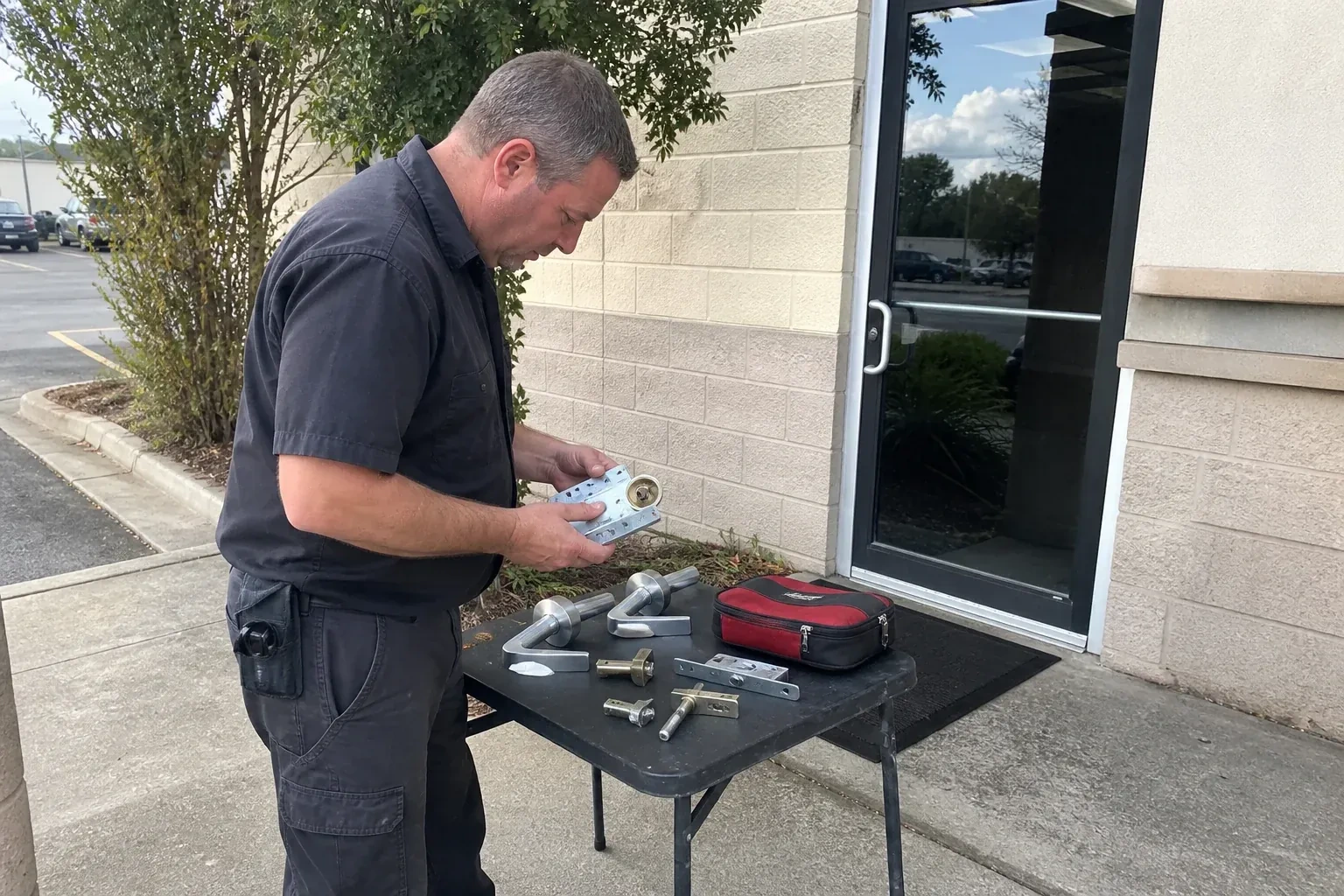
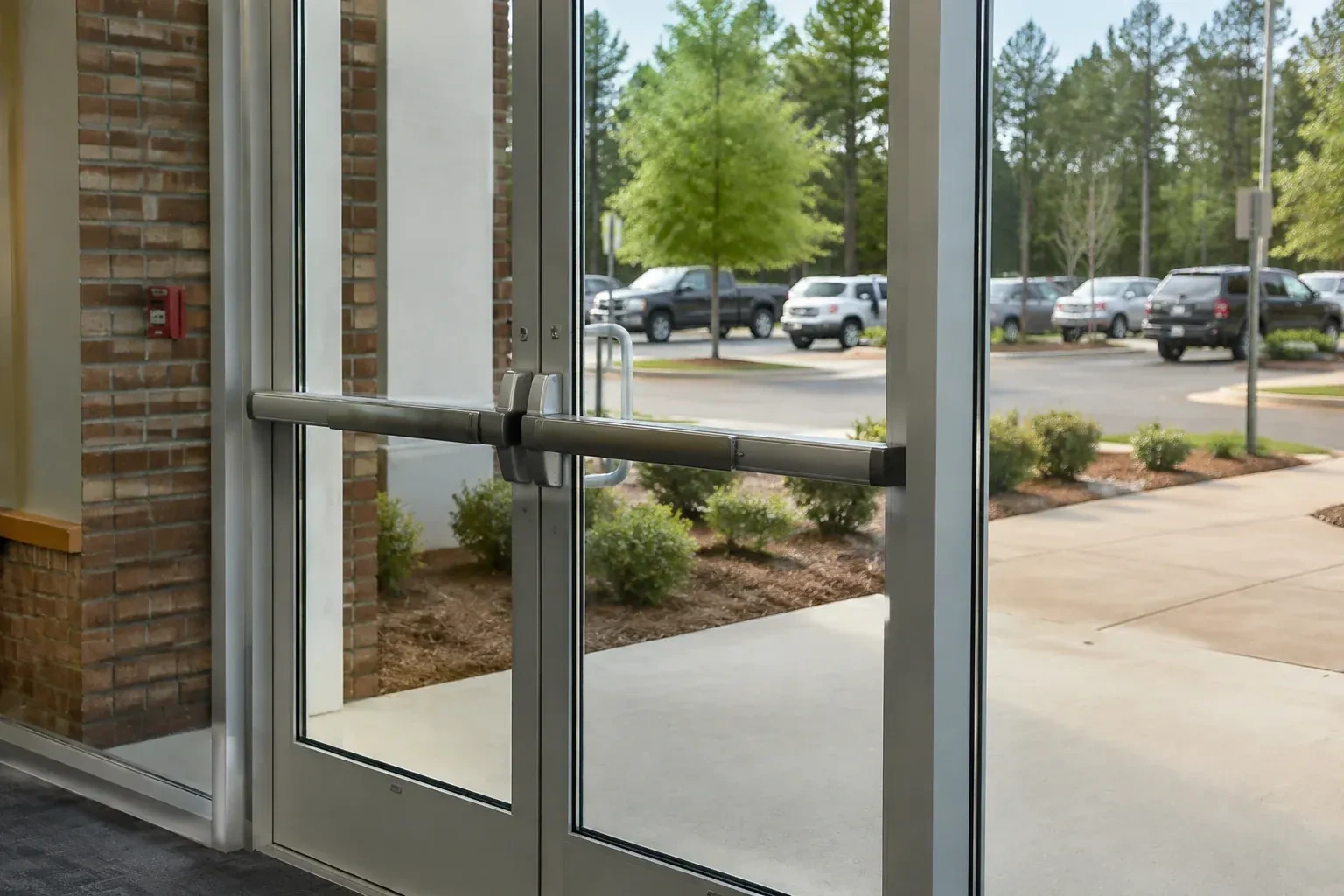
Commercial doors carry hardware that most homes never see, and reading it correctly is the first skill of a business lockout. An aluminium storefront door usually has a narrow mortise cylinder driving a hookbolt deadlock or a paddle-operated deadlatch. An office suite is more likely to have a lever lockset that stays locked from the corridor side, sometimes with a removable core. A rear door may carry an exit device with a keyed trim outside, and a steel door in a plaza often hides a full mortise lockset. Each of these opens differently, and choosing the technique that suits the mechanism is what keeps the hardware intact.
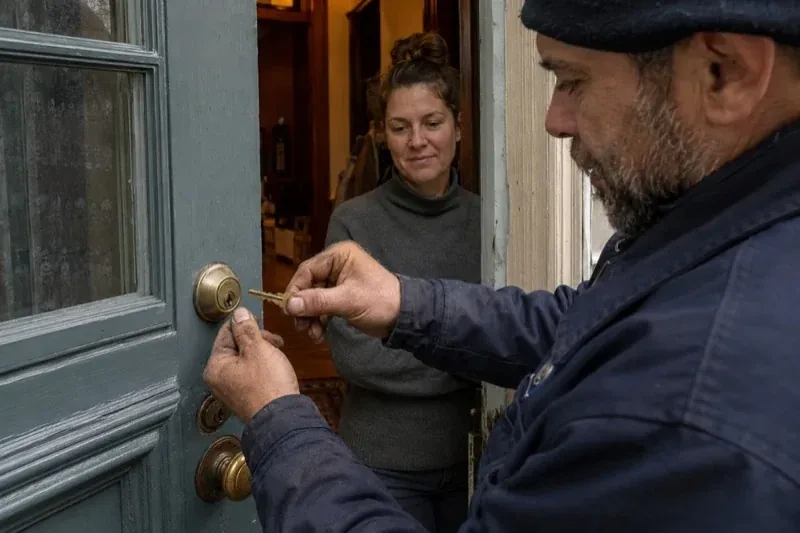
How the visit goesIt is ten to nine, three staff are on the sidewalk with their coffees, and the key that has opened the glass front door for six years will not turn. The cylinder feels gritty, the door is locked, and the first customer is already parking.
Business Lockout Service
How the visit goes
What happened to the key
The story of the key shapes everything after the door opens. A key sitting in an absent manager's pocket means the lock is sound and only entry is needed. A key that was lost on transit or never returned by a former employee is still out there, and the visit should end with that key made useless. A key that turned without result points to a worn cam or a failed deadlatch spring, and a key that snapped calls for careful extraction before any opening. A lock that worked at closing and refuses at opening suggests cold, grit or a dropped door rather than a cylinder fault. A minute on this saves a repeat call.
Extracting a snapped key and finding out why
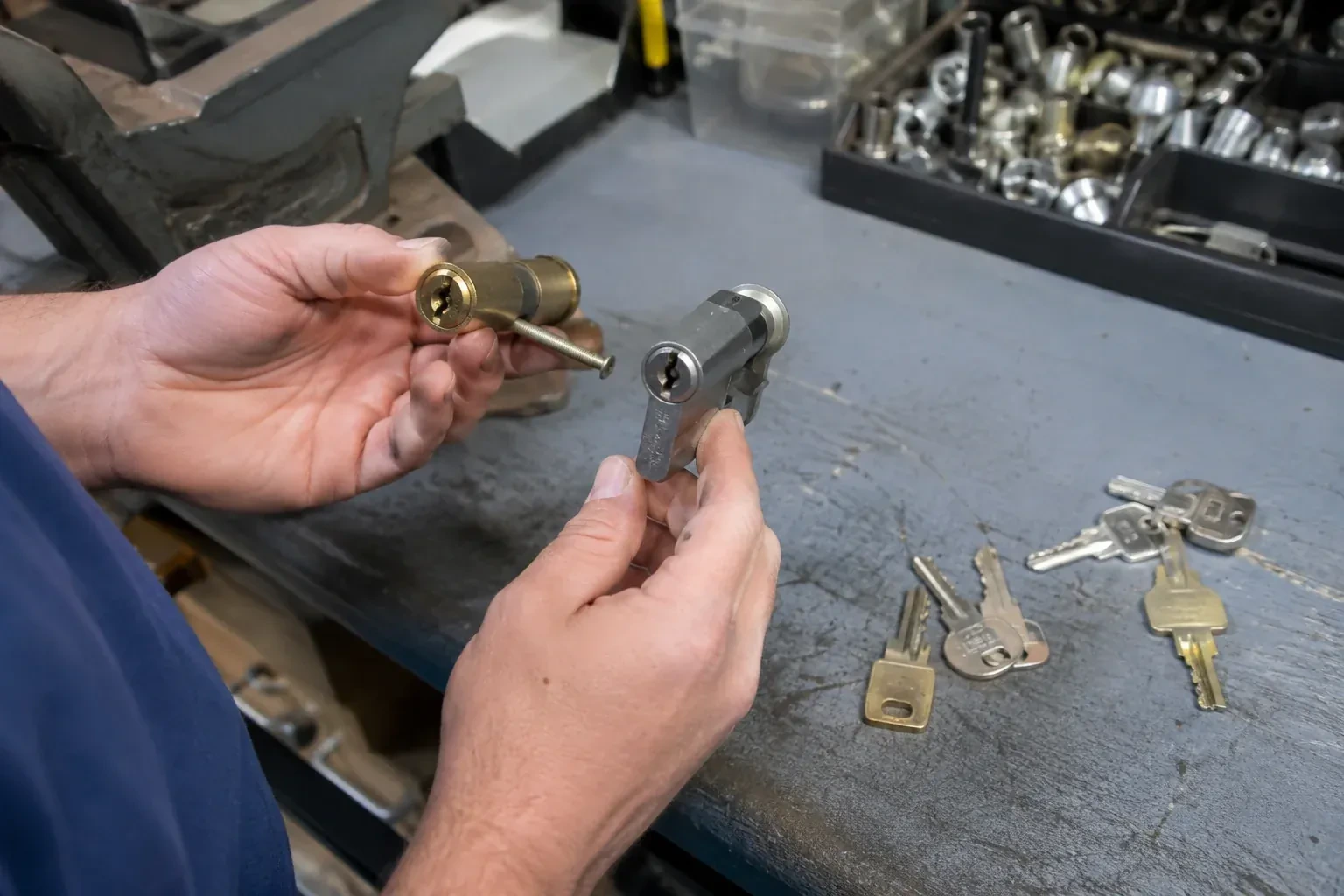
A key that broke off in a commercial cylinder is drawn out with extractor tools that grip the blade and pull it toward the face, never pushing it deeper. With the fragment out, the cylinder is picked or decoded and the door opened. The two halves of the key are then compared with a fresh blank, because a key rarely breaks in a healthy lock: a bent or thin copy, a cylinder full of grit, or a stiff cam behind it is usually the cause. The cylinder is cleaned and lubricated with a dry product, the cam checked for wear, and a new key cut from the code or from the pieces rather than from another tired copy.
A keyholder plan so one absence never closes you
Most business lockouts trace back to a single keyholder, and the visit is the natural moment to fix that. Two named people should be able to open the premises, with a third who can be reached. A combination lockbox in a discreet spot, its code known to the opening staff and changed when someone leaves, covers the day the keyholder is stuck in traffic. For electrified doors, a second administrator on the access system means a forgotten code is an inconvenience, not a closure. Writing the opening and closing routine on one page, with the alarm company's number and the locksmith's, turns the next surprise into a short phone call.
Business Lockout Service
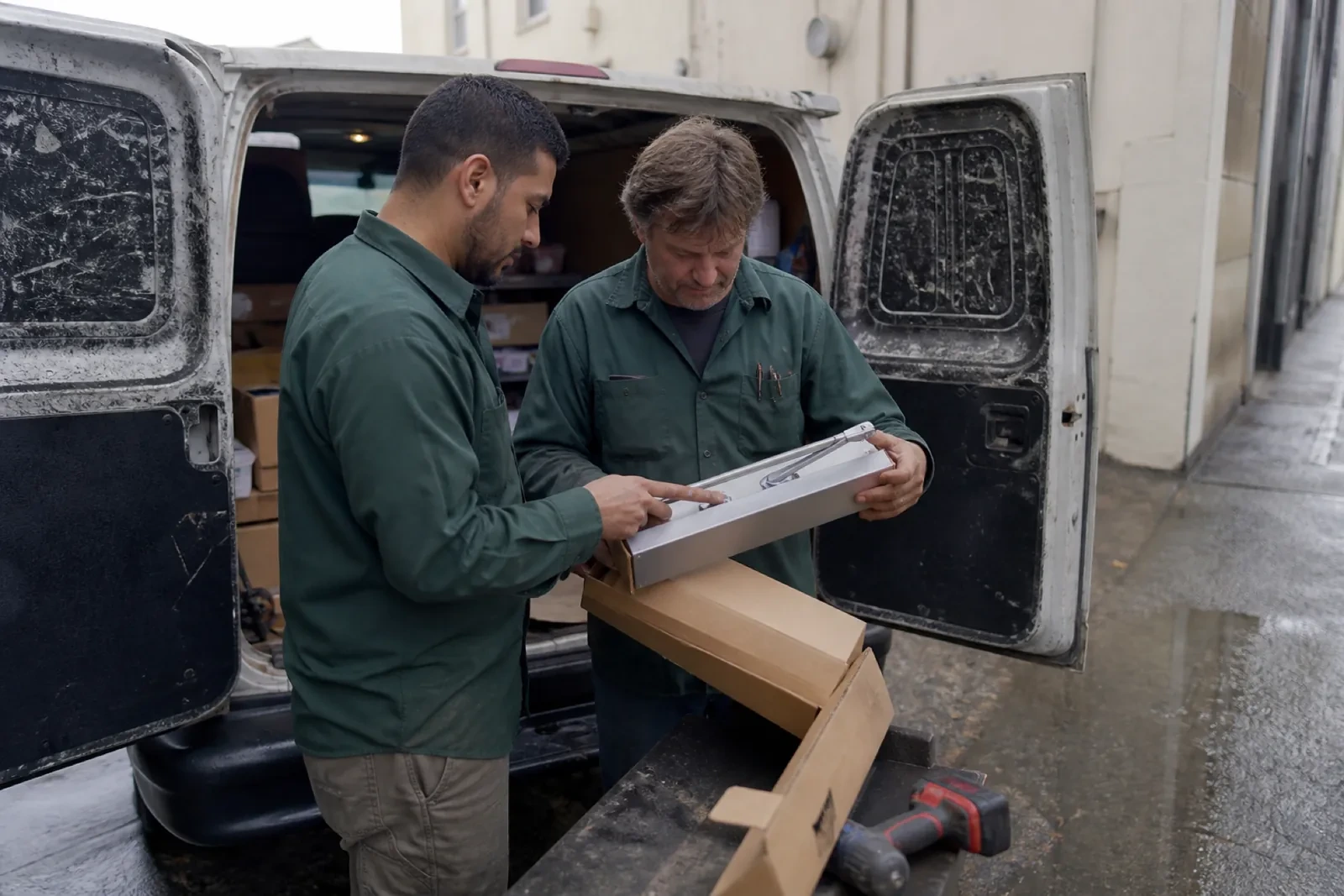
In the van
Strikes, pivot shims and closer adjustment tools
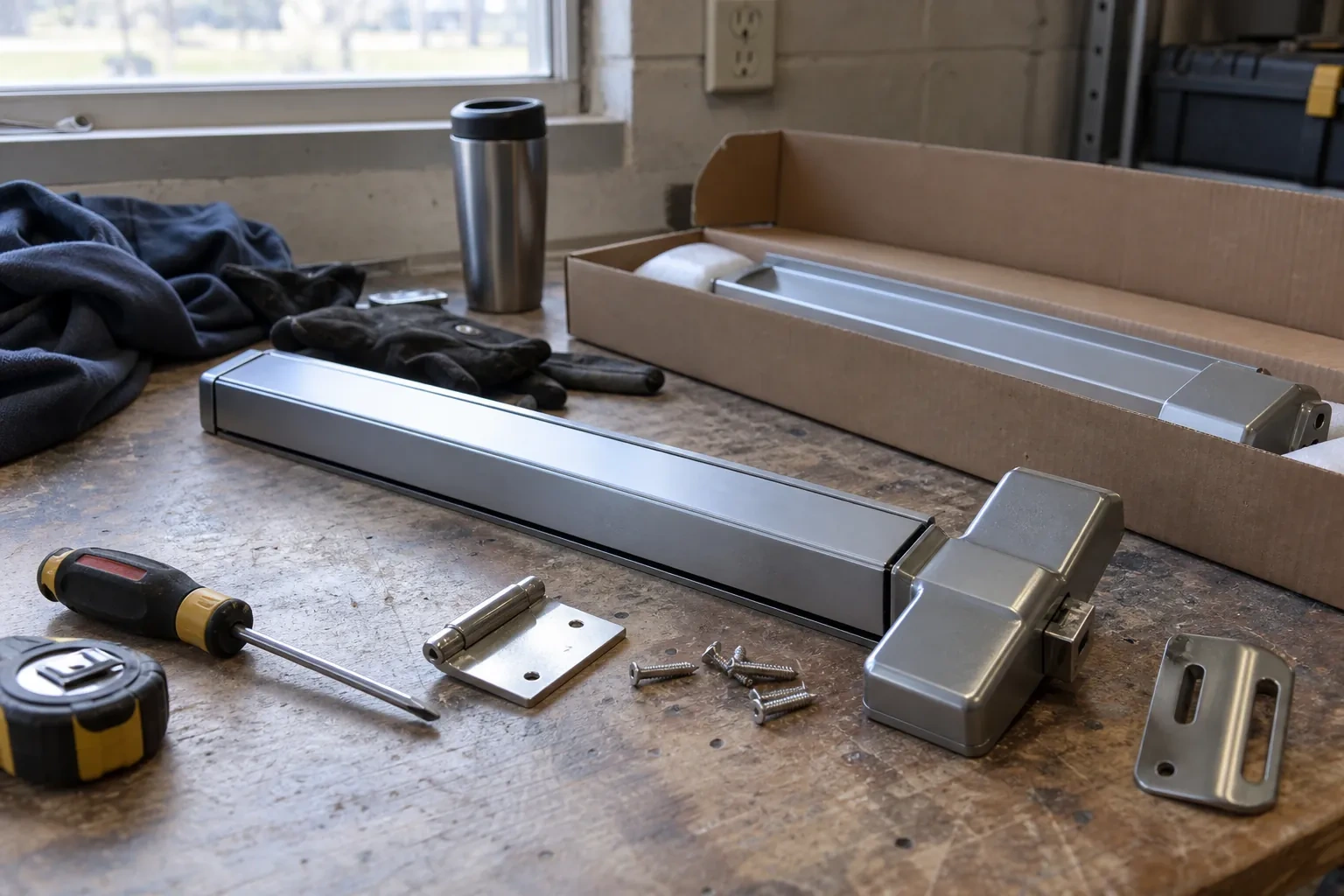
Exit device trim cylinders and dogging keys
Cylinder decoder and plug spinner
Commercial pick and tension tools
Storefront deadlatch and hookbolt bypass tools
Business Lockout Service
What affects the quote
Keys cut and recorded
Each new key is cut and counted individually. Two for the owners and four for the opening staff is a different line from one spare, and restricted blanks are priced above ordinary ones.
Access control and alarm coordination
Restoring power to a strike, opening an override cylinder, re-enrolling fobs and waiting for an alarm station or access provider to respond are each small tasks the quote names separately.
How many doors are involved
One front door is the simplest visit. A front door, a rear exit device, a roll-up padlock and a cash office add hardware to open and, often, cylinders to key alike afterwards.
What to have ready
- Is there an alarm on the door, and who holds the code and the monitoring password?
- Are there other doors, a roll-up shutter, a gate or a padlock you also need opened?
- Has the door been dragging, scraping the threshold or failing to latch at closing recently?
Business Lockout Service: questions
QuestionsHow do you confirm I am allowed to have the business opened?
Through identification and a link to the premises. An owner shows photo identification with the lease, business registration or a document addressed to the company at that address. A manager or employee is confirmed by a call to the owner, head office or property manager on a number the locksmith can verify. If everything is inside, the check is finished after entry, before the locksmith leaves.
Our alarm is armed. What happens when you open the door?
The opening is planned around it. Before any work, the person with the alarm code is ready to disarm, and where a monitoring company is involved they can be told to expect an entry at that address. If the contact trips anyway, the authorised person speaks to the station with the account password. Nothing about the alarm is bypassed; the door is opened, the system is disarmed normally, and the event is logged like any other.
Can you also deal with the back door, the roll-up shutter and the gate?
Yes. A business lockout covers every opening the premises relies on: the rear service door with its exit device, a roll-up shutter and its padlock, the compound gate, a mailbox in the lobby and interior doors such as the cash office or server closet. Mention each one when you call so the right padlock shackles, cores and cylinders are in the van, and so cylinders that should share a key are handled together.