High security · Wyebridge
Safe Opening & Combination Change in Wyebridge
The bookkeeper who set the office safe's code retired in a hurry, and the float cash for tomorrow's registers is sitting behind a keypad nobody else in the building can operate.
In plain words
Mechanical and electronic safe locks call for genuinely different work. A mechanical dial is opened by manipulation or decoding, reading resistance through the spindle as the wheel pack lines up one wheel at a time. An electronic keypad is approached through that model's own documented recovery options first, since some keep a way back in that avoids opening the case, while others have none and a reset connection has to be made at the lock body inside the container. Knowing which lock is on the safe before arrival shapes which tools and which approach get used.
How the visit goesA customer's rifle safe at the range has a dial that simply will not respond to the combination written on the sales receipt from years ago.
Safe Opening & Combination Change
How the visit goes
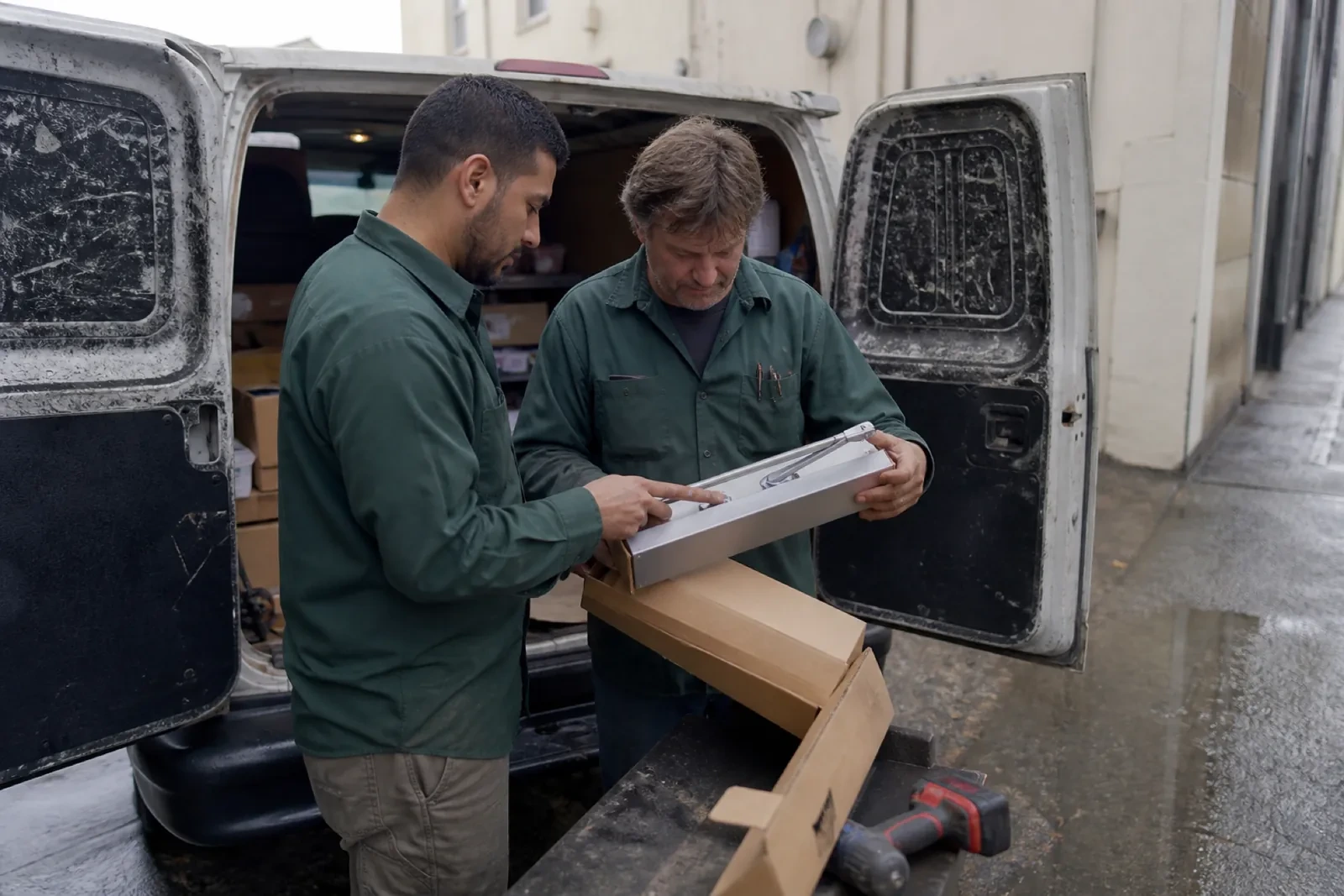
Confirming who has the authority to open it
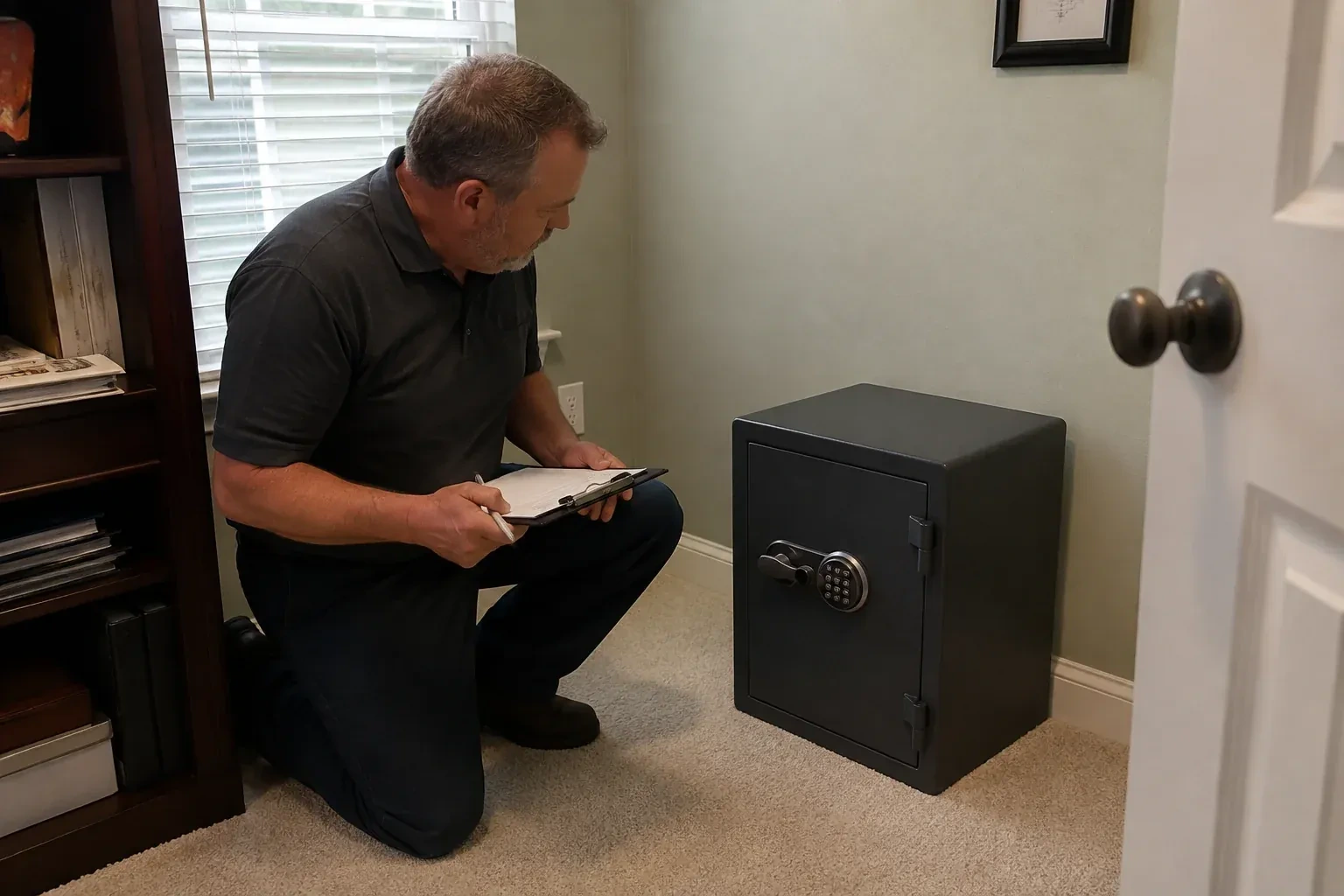
Before any tool touches the safe, the locksmith establishes who has the right to be inside it. For a business this is usually straightforward: an owner, manager or authorized employee identifies themselves and their connection to the account. For an estate, a secondhand purchase or a change of ownership, proof such as a bill of sale, a property transfer or an executor's documentation fills the same role. This step is treated as routine good practice rather than an obstacle, because it protects the current owner from a later dispute over who authorized access to a safe's contents just as much as it protects anyone else with an interest in it.
Drilling through a chosen, repairable point
When manipulation, decoding and the electronic reset path all fail to open the safe, drilling is explained to the owner before it begins, aimed at a specific point the lock manufacturer's own service documentation identifies as both reachable and safe to repair afterward. A borescope is used through the drilled hole to view the lock's internal parts directly and manipulate or bypass them without further damage. The aim is to affect nothing beyond that single hole, patched or plugged as one of the last steps of the visit, though the number of holes needed and any effect on the safe's rated protection level depends on its construction and is addressed with the manufacturer's approved repair method.
Confirming what belongs behind the door
For a safe used to store firearms, the visit is a natural moment to confirm the storage arrangement inside still matches what the applicable federal requirements for a business expect, since those rules cover the container, the room around it and how access is limited to authorized people. For a safe holding cash, records or client property, checking that nothing was disturbed while the lock was being worked on, and that the new combination is set before anything is put back, closes the loop on the same visit rather than leaving it for later.
Safe Opening & Combination Change
In the van
Manufacturer reset tool
Replacement dial and ring
Combination change key
Manipulation and tension tools
Repair plug and patch plate
Safe Opening & Combination Change
What affects the quote
Number of new codes needed afterward
Setting one combination for a single owner is the simplest case; programming separate codes for several staff members on an electronic lock takes correspondingly more time.
Security rating of the existing lock
A higher-rated lock, such as a UL Group 1 mechanical lock, generally takes longer to manipulate or decode than a basic Group 2 lock, and that time is reflected in the visit.
Contents that affect how carefully the opening proceeds
Cash, business records, prescription logs or firearms each carry their own handling expectations once the door opens, which can shape how the visit is planned and quoted.
What to have ready
- Is the safe bolted down, built in, or freestanding?
- What brand and model is the safe, if you know it?
- Has the safe ever been drilled or serviced before?
Safe Opening & Combination Change: questions
QuestionsDo drop safes or under-counter cash safes work the same way as a larger floor safe?
The identification step is the same regardless of size, but the lock inside is not assumed from the safe's size: a small drop safe or under-counter unit can carry anything from a basic keypad to a high-security lock, so each is identified on its own before manipulation, reset or a combination change proceeds, with the same care around authority and aftercare applying equally.
Is a mechanical dial or an electronic keypad the better choice for a business safe?
Each suits a different way of working. A mechanical dial has no battery to fail and a long service life, but only ever holds one combination at a time. An electronic keypad allows separate codes for different staff and an audit trail on some models, at the cost of needing battery changes. Either can be fitted with a genuinely high security rating; the choice usually comes down to how many people need independent access.
Can the same visit both open the safe and service it?
Yes. Once the safe is open, the lock is inspected for wear, corrosion or damage, repaired or replaced if needed, and reset to a new combination in the same visit. Any bolt work or handle issue found along the way is addressed at the same time rather than requiring a separate appointment.