Commercial · Wyebridge
Panic & Exit Hardware in Wyebridge
The crossbar on the loading-dock door barely returns anymore.
In plain words
Sometimes the hardware is already there and simply needs honest attention. A crossbar that has stiffened, a dogging function that no longer holds, or a strike that has drifted out of line are common finds on a device that has been in service for years. The locksmith services what can be serviced, adjusts what has moved, and replaces only the parts that have genuinely worn out, so a functioning exit device is not swapped wholesale when a cleaning, an adjustment and new fasteners would restore it.
How the visit goesA padlock went on the stockroom's back door years ago for security and nobody has thought about it since, until the walkthrough this week pointed out that the same door is the room's only other way out.
Panic & Exit Hardware
How the visit goes

Confirming why the door needs this hardware
The visit starts with the reason exit hardware is being discussed at all: an occupant load that has crossed a threshold, a fire inspector's note, a new use for the room, or an existing device that has stopped working the way it should. Confirming this first decides everything downstream, because a door required to have a releasing device is treated differently from one where an owner simply wants easier egress. Whoever is responsible for the building is asked directly what triggered the visit, and the answer is recorded alongside the door it concerns before any hardware is chosen.
Adding electrified functions
Where the plan includes access control or an alarm, the wiring is run and terminated to the device without touching its mechanical exit function: a request-to-exit switch reports that the pushpad or crossbar was actuated, electric latch retraction lets an authorized signal release the latch for entry, and an alarm module sounds locally when the crossbar is used. On a fire-rated opening, electric latch retraction is arranged to relatch automatically the instant a fire-alarm signal comes in, since a fire door has to keep its active latch and cannot rely on a mechanical dogging function to do that.
Electrified functions folded into the building's other systems
Any request-to-exit signal, latch retraction or alarm added during the visit now does its own specific job rather than one combined function: an alarm module can sound locally on its own power the moment the crossbar is used, latch retraction lets an authorized signal release the latch for entry, and a request-to-exit signal tells the access-control panel that the pushpad was actuated. None of them alone proves who passed through or from which side, and the exit function itself remains entirely mechanical underneath, so a power interruption still leaves the door able to be pushed open by hand from the inside.
Panic & Exit Hardware
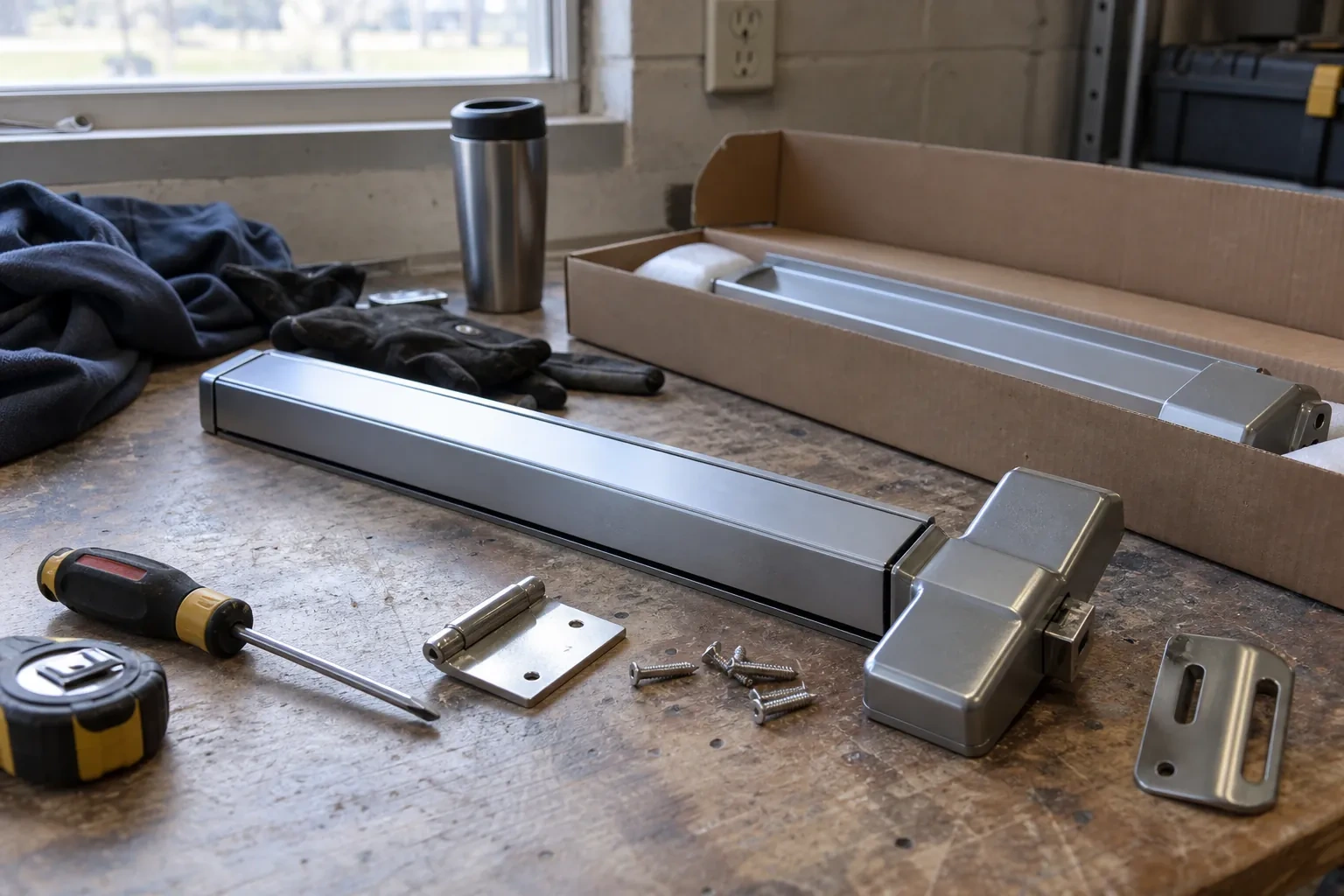
In the van
Dogging key or keyed cylinder
Force gauge
Coordinator for door pairs
Rated exit device
Request-to-exit switch
Panic & Exit Hardware
What affects the quote
Occupancy and code documentation needed
A project with a fire inspector's note or a building official's requirement attached usually needs a more detailed written record than a straightforward upgrade an owner requests on their own initiative.
Electrified functions added
A request-to-exit switch or electric latch retraction adds wiring, a power source and coordination with the building's other systems, while a standalone alarm module can run on its own battery; each is priced alongside the mechanical installation itself.
Number of keys or dogging cylinders
Cutting keys for the outside trim and providing a dogging key or keyed dogging cylinder for the device is counted individually, the same way any keyed hardware is.
What to have ready
- Are any doors currently propped open during business hours?
- Who should hold the dogging key once the work is finished?
- Is any door part of a pair with a second leaf?
Panic & Exit Hardware: questions
QuestionsWhat counts as panic hardware?
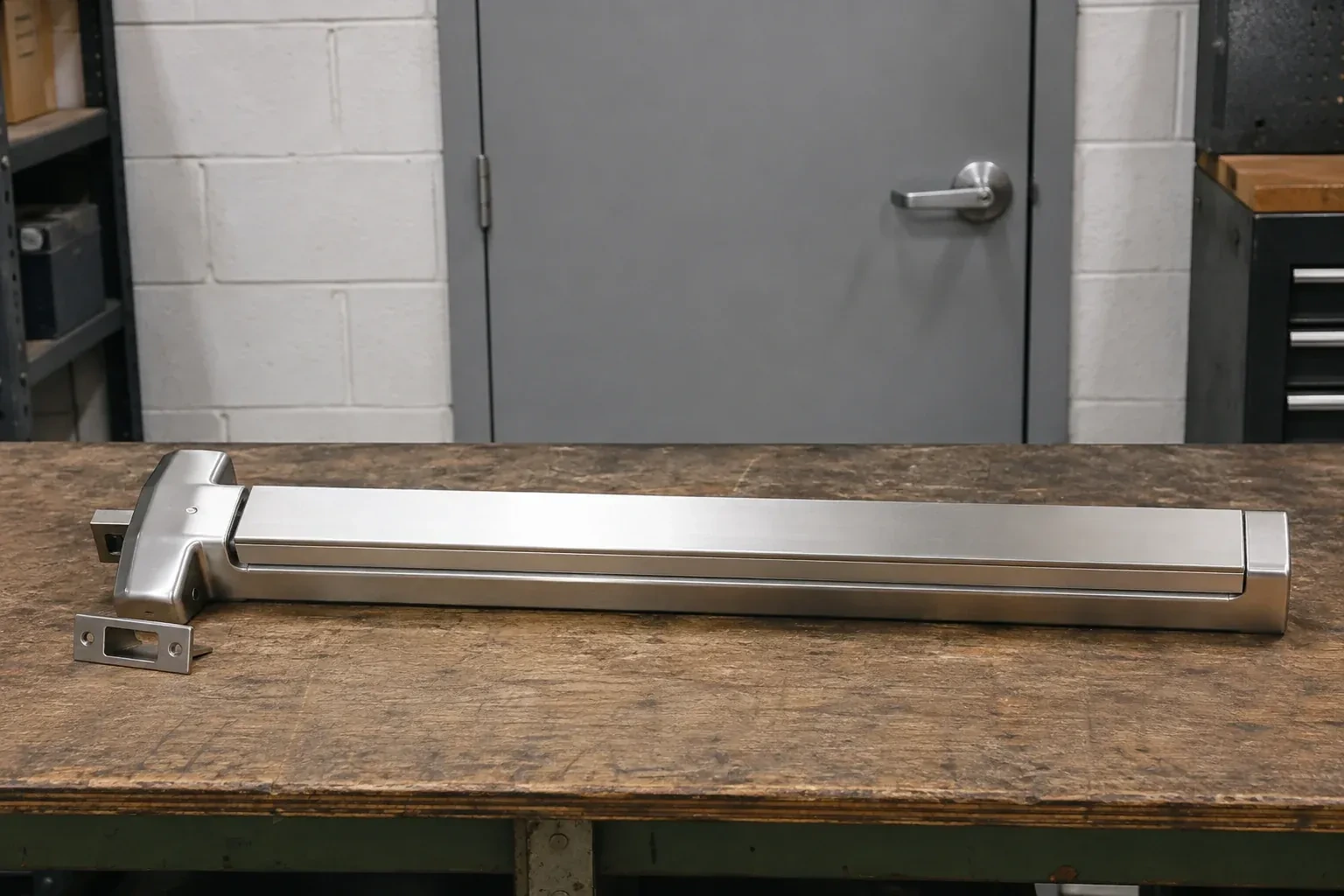
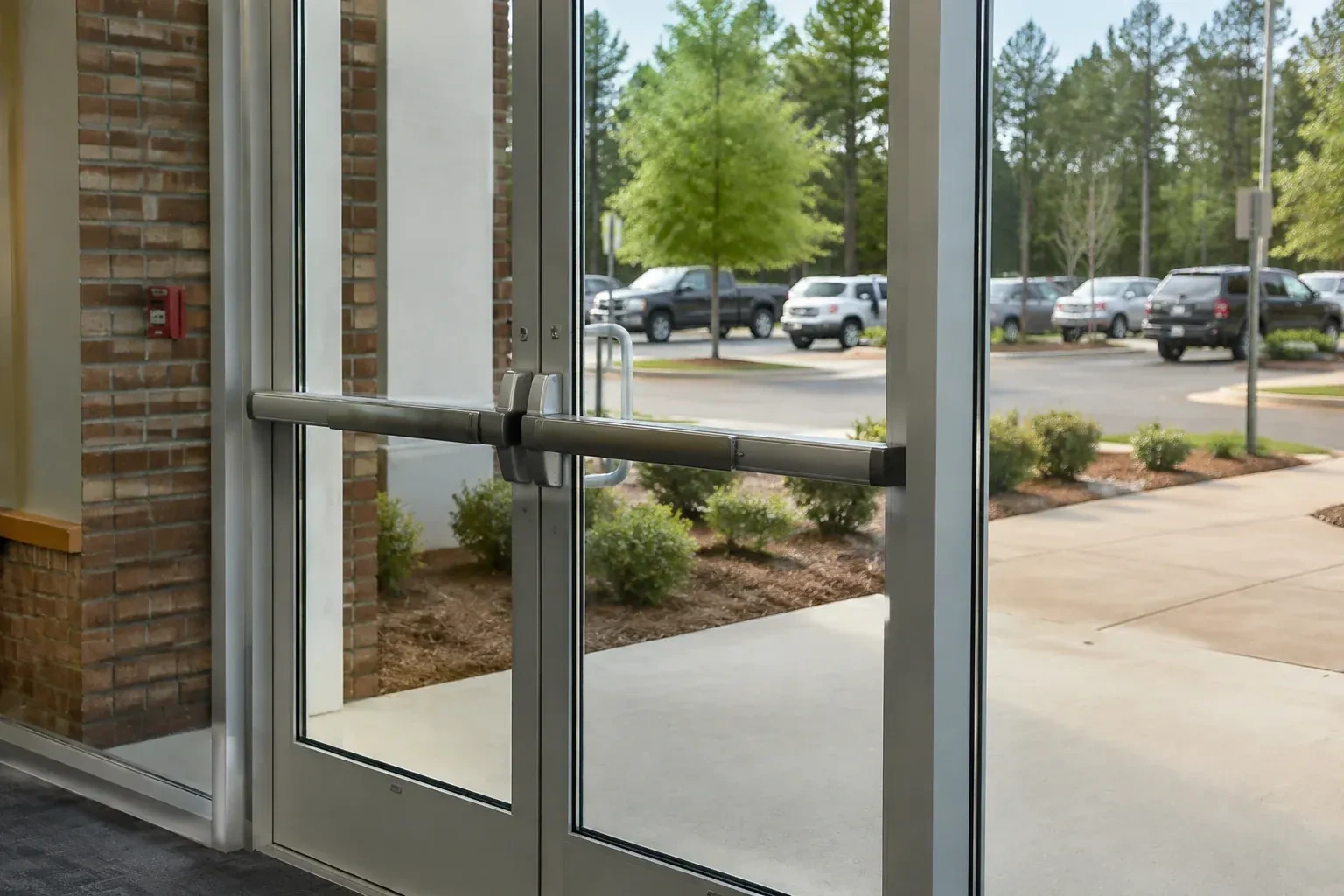
Panic hardware is a door-latching device, usually a crossbar or touchpad running most of the door's width, that releases the latch the moment someone pushes on it from the inside. It is built and tested so a light, even push anywhere along the bar opens the door, which is why it is chosen for doors serving rooms with enough people that fumbling for a key during an exit is not acceptable.
What should I have ready before the visit?
Knowing the intended use of the room, roughly how many people it holds, whether any doors are already fire-rated, and whether any of them are part of a pair helps the locksmith bring the right devices. If a fire inspector or building official has already given a note about the opening, having that note or its reference number on hand keeps the visit focused on what was actually flagged.
What if the existing device is old and no replacement part is available?
Where a specific replacement part cannot be sourced for an older device, the practical route is usually to replace the whole exit device with a current one built for the same door, rather than leave a partially working device in place. This is decided case by case once the existing hardware and door preparation have been examined, since the new device still has to suit the same opening.
Related services
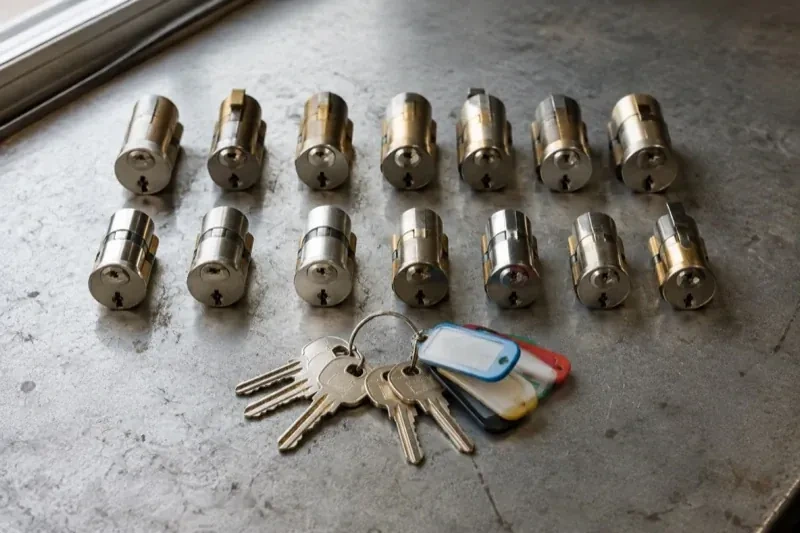
- Master Key System DesignA property manager taking over a small commercial building inherits a shoebox of keys with no labels and no chart.
- Access Control InstallationHead office wants a record of who opens the branch and when, tied to an actual name rather than a shared code scrawled on a sticky note taped under the till.
- Commercial-Grade Lock ReplacementAt closing time the hookbolt on the storefront door catches the keeper only on the second or third try, and one employee has started giving the door a shoulder to force it home.