High security · Wyebridge
Safe Installation & Servicing in Wyebridge
A dinner service ends with a stack of bills and a handful of credit slips, and right now they sit in an unlocked cash box on a shelf until morning, because nobody has gotten around to anything sturdier.
In plain words
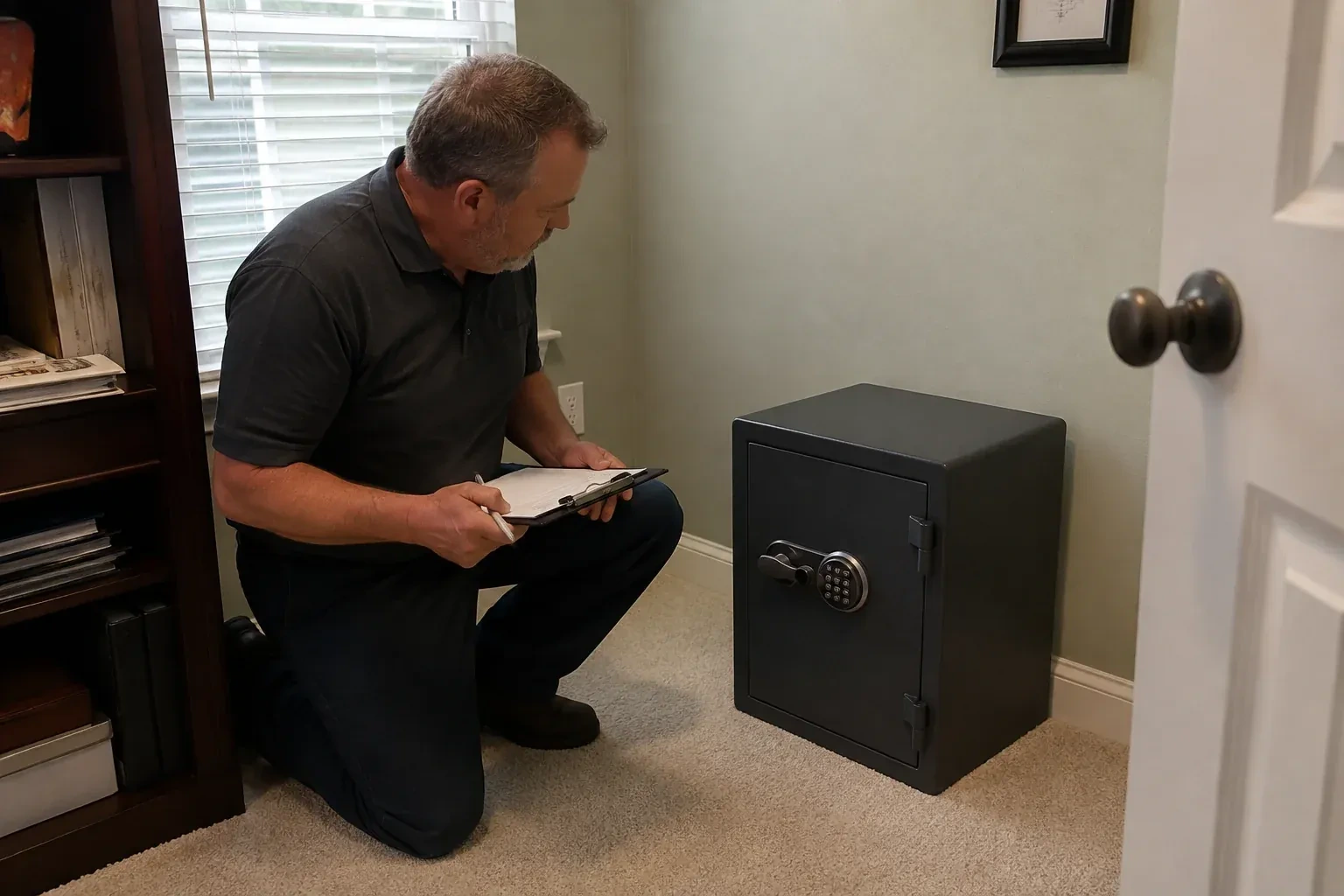
A safe that is not bolted down is not really a safe, just a heavy box that a thief can carry to somewhere quieter to open. Anchoring is the part of installation that turns a portable object into a fixed one: the floor or wall construction is identified first, correct anchor bolts and hardware are chosen for concrete or a wood subfloor, and the unit is leveled and torqued into place. The same principle applies to an existing safe discovered sitting loose in a corner; it can usually be anchored properly without moving it far.
How the visit goesThe office is moving three blocks over, and the old commercial safe that has sat bolted to the concrete for fifteen years now needs to come out, travel across town, and go back down just as solidly.
Safe Installation & Servicing
How the visit goes
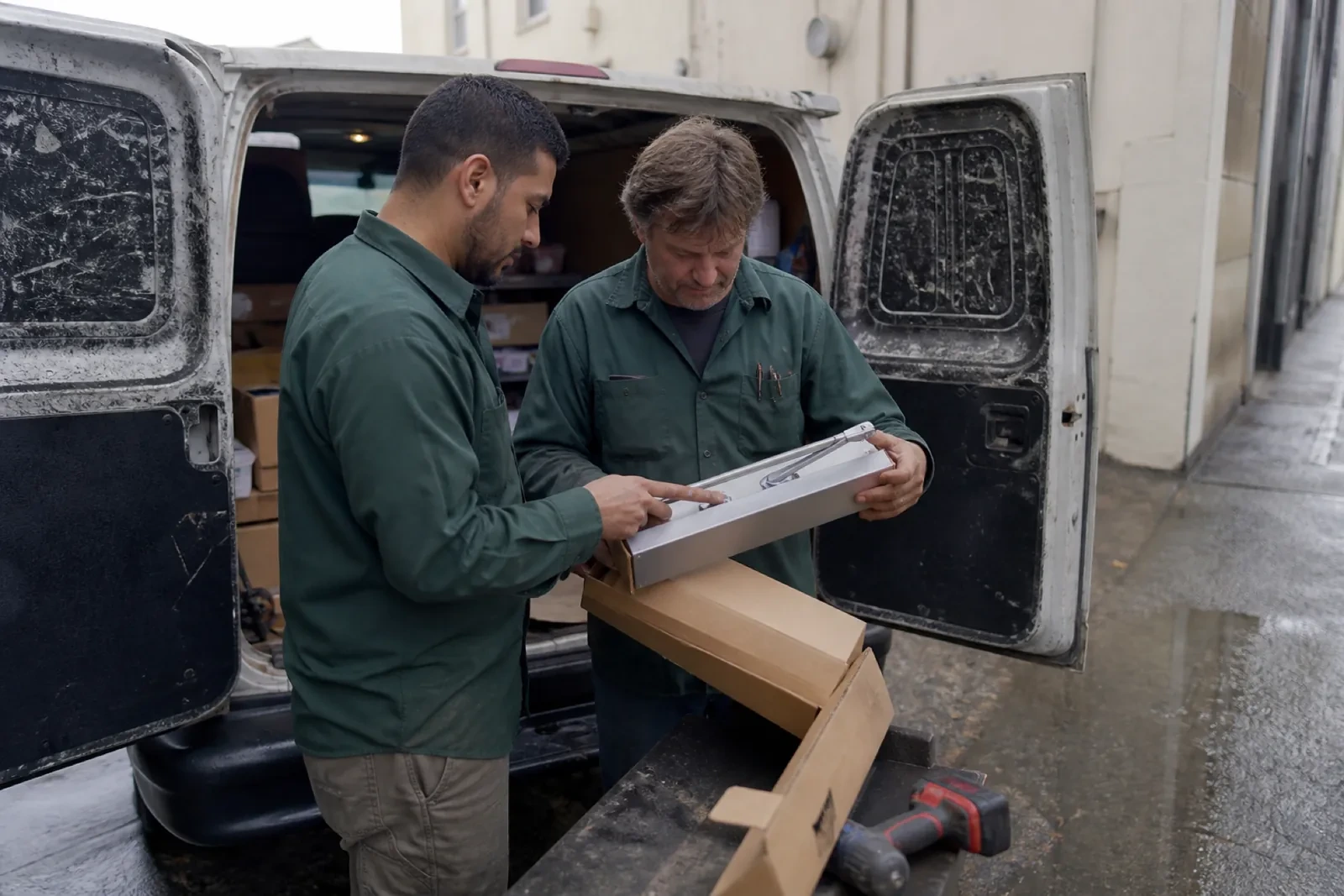
Getting a heavy unit to its final spot
A commercial safe can weigh several hundred pounds before anything is inside it, so the route from the door to the final position matters as much as the safe itself. The locksmith measures doorways, hallway turns, stairs, and any tight corner along the path, and checks whether an elevator, loading dock, or ramp is involved. A safe that cannot clear a doorway in one piece, or a floor that struggles to bear that weight partway up a building, changes the plan before delivery day rather than becoming a problem on site.
Fitting and setting the lock
A mechanical dial lock is installed and set to a combination chosen privately by the owner, then run through a full sequence of locking and unlocking several times before anyone calls the job finished. An electronic keypad is programmed with a new code, its low-battery warning is tested rather than assumed to work, and any secondary user codes the owner wants are added at the same time. Where a hidden mechanical override sits behind the keypad, its key is handed over separately and its location explained.
Paperwork worth keeping somewhere other than inside the safe
The model number, the burglary and fire ratings, and a note of how and where the unit was anchored are all details worth keeping on file, ideally somewhere other than locked inside the safe itself. An insurer asking about coverage for cash or valuables will often want exactly this information, and having it ready saves a search through old boxes later. A few photographs taken during installation, showing the anchoring and the rating label, cover most of what gets asked for afterward.
Safe Installation & Servicing
In the van
Wood subfloor lag bolts and washers
Torque wrench and socket set
Moving dolly and floor protection
Level and floor shims
Mechanical or electronic lock
Safe Installation & Servicing
What affects the quote
Access route to the final position
Stairs, narrow doorways, tight corners, and whether an elevator or loading dock is involved all affect how the safe gets to its spot and how much handling that route requires.
What the safe will store
Cash, jewelry, firearms, paper records, and digital backups each call for different priorities between burglary resistance and fire resistance, and that decision shapes which unit is recommended before anything else is considered.
Battery and accessory needs
An electronic lock needs a battery of the correct type on hand, and a fire-rated unit benefits from desiccant supplied at installation, both small additions to the visit.
What to have ready
- Which room or level of the building will it go in?
- Is this a new safe or an existing one needing service?
- Is that floor concrete, wood subfloor, or tile?
Safe Installation & Servicing: questions
QuestionsWhat happens if a previous owner's combination is unknown?
That situation calls for opening the safe first, which is handled as its own service using non-destructive methods wherever the lock allows, before a new combination or code is set. Once open, the installation or servicing continues as normal: the lock is checked, the anchoring is confirmed or fitted, and a fresh combination known only to the current owner is set before the visit ends.
Can a safe be installed above the ground floor?
Often, yes, though the floor construction and the safe's weight both need a look first. A lighter document safe rarely raises a concern on an upper level, while a large, heavily built unit may need the floor's load capacity checked before it goes up, particularly in an older building. The route to get it there, including stairs, elevators, and doorway widths, gets measured at the same time.
What kind of floor can a safe be anchored to?
Solid concrete is the most straightforward surface, taking a masonry anchor bolt directly. A wood subfloor works too, provided the anchoring reaches into the floor joists beneath the surface layer rather than just the plywood or the flooring on top. Tile is the awkward case, since a bolt through it tends to crack the surrounding tiles, and an alternative anchoring point or a different spot in the room is usually the better route there.