High security · Springwater
Safe Installation & Servicing in Springwater
A dinner service ends with a stack of bills and a handful of credit slips, and right now they sit in an unlocked cash box on a shelf until morning, because nobody has gotten around to anything sturdier.
In plain words
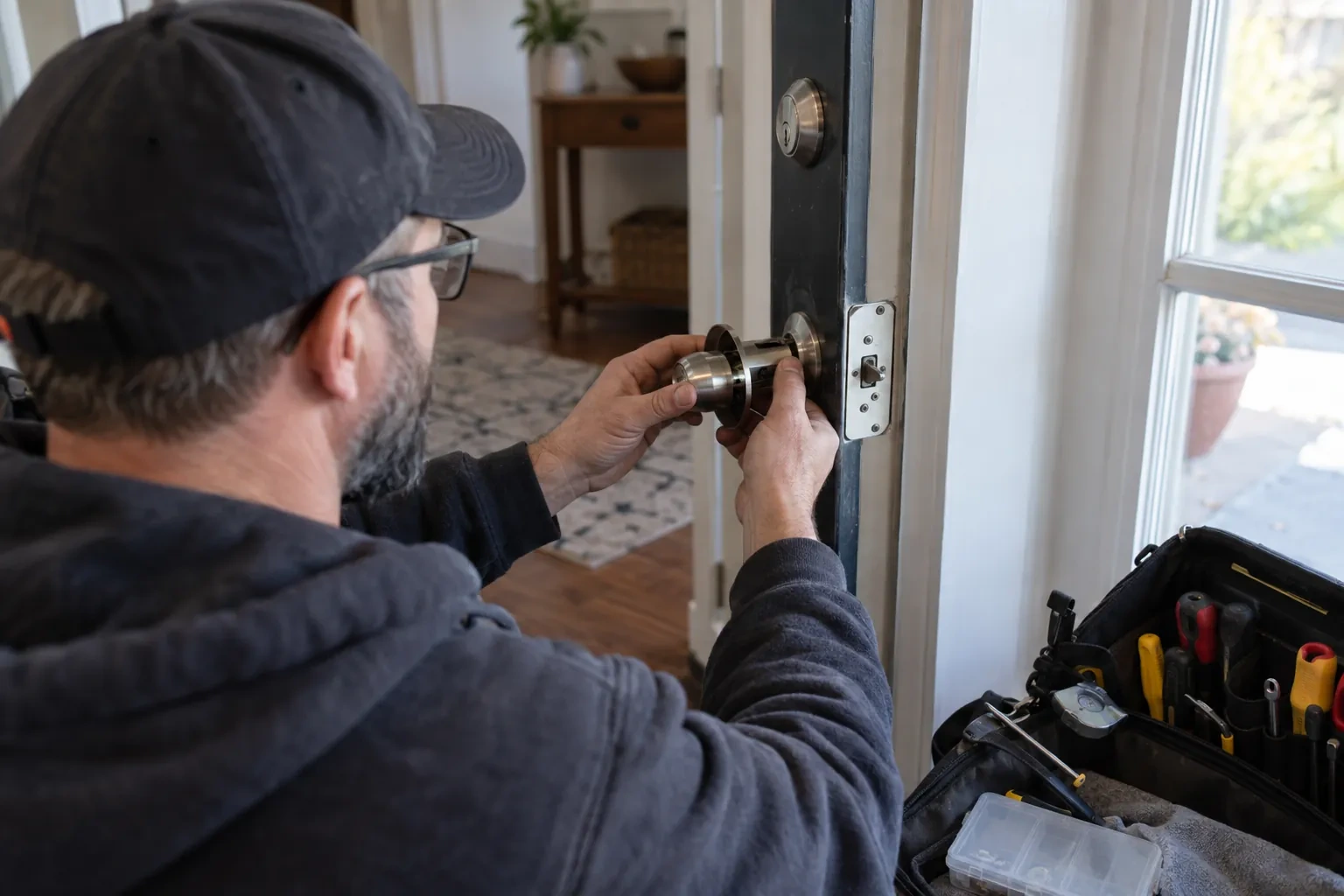
Relocating an existing safe is closer to a small structural project than a simple carry. The unit is unbolted, moved on proper equipment rather than dragged, and protected through doorways and stairwells that were never designed with several hundred pounds of steel in mind. At the new address the floor or wall construction is checked again from scratch, because a slab that held the safe at the old office may be entirely different from the one at the new address, and anchoring hardware is chosen to match rather than reused automatically.
How the visit goesThe keypad on the office safe blinks a low-battery warning every morning now, and whoever notices it first quietly hopes someone else deals with it before the batteries finally give out mid-week.
Safe Installation & Servicing
How the visit goes
What the safe actually needs to hold
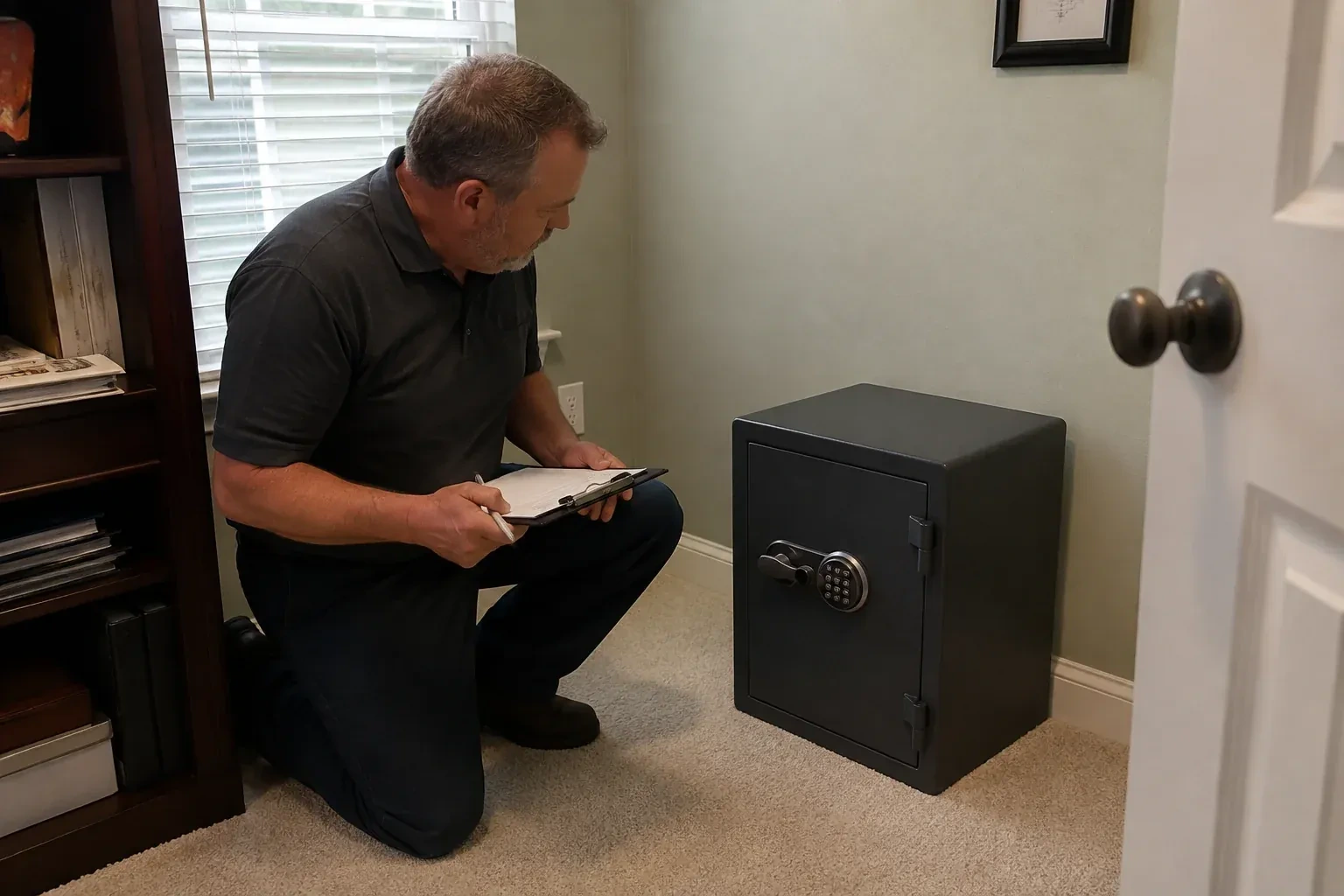
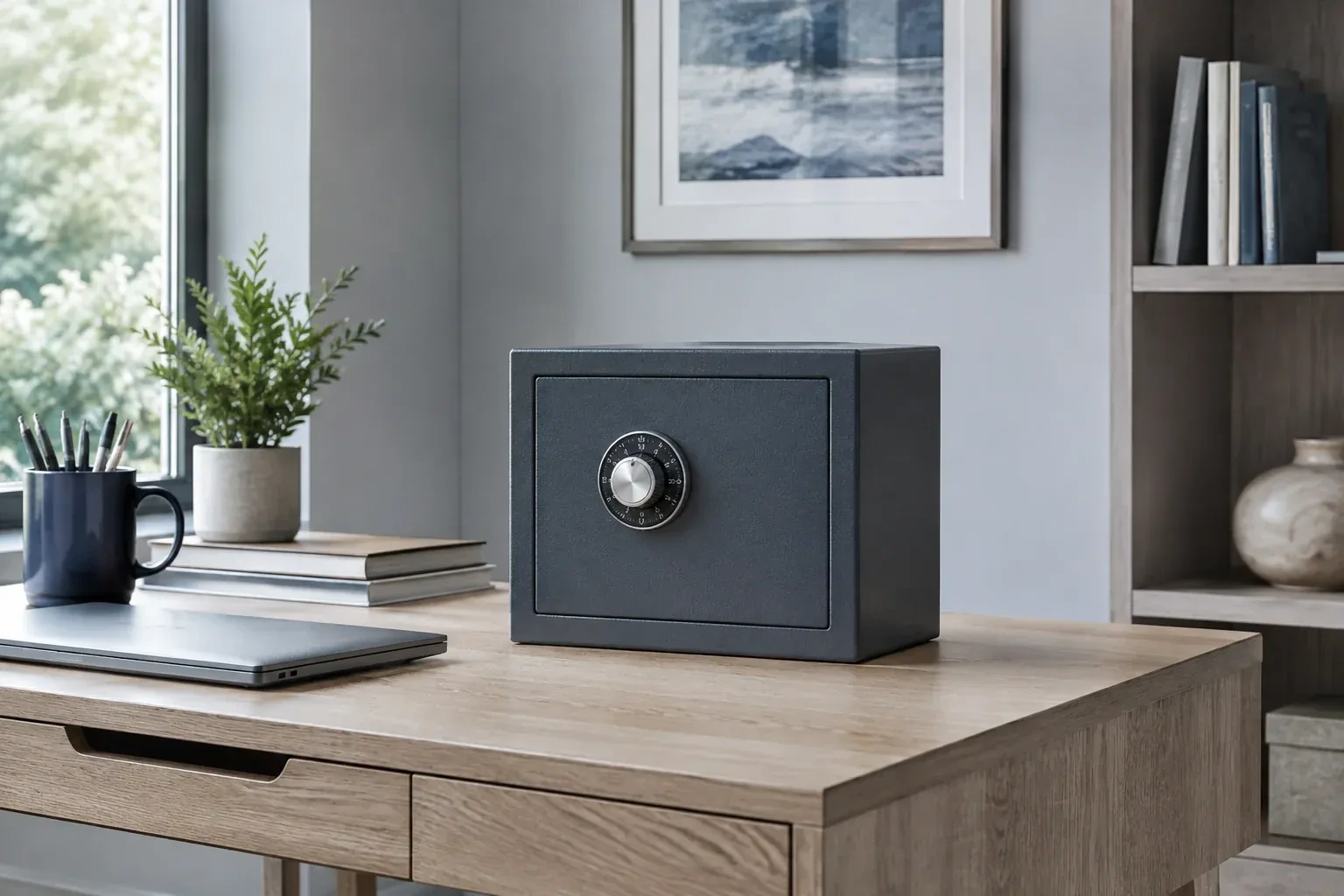
Before any hardware is chosen, the locksmith asks what will actually sit inside: cash from a till, jewelry, firearms, paper contracts, backup drives, or some mix of all of it. Each of those has a different enemy. Cash and jewelry are mainly at risk from tools and time, so a burglary rating matters most. Paper is mainly at risk from heat, so a fire rating matters most, and digital media needs a much lower internal temperature than paper to survive the same fire. Answering this question first is what keeps the rest of the visit from guessing.
Anchoring into a wood subfloor
A wood subfloor calls for a different approach, since a bolt into surface plywood alone pulls out under real weight. The locksmith locates the floor joists beneath the finished surface, drills pilot holes through the subfloor into solid framing, and drives long lag bolts or structural screws with washers that spread the load across the wood. Carpet, vinyl, or laminate over the subfloor is worked around rather than through wherever possible, so the finished floor is left as close to undisturbed as the anchoring allows.
Paperwork worth keeping somewhere other than inside the safe
The model number, the burglary and fire ratings, and a note of how and where the unit was anchored are all details worth keeping on file, ideally somewhere other than locked inside the safe itself. An insurer asking about coverage for cash or valuables will often want exactly this information, and having it ready saves a search through old boxes later. A few photographs taken during installation, showing the anchoring and the rating label, cover most of what gets asked for afterward.
Safe Installation & Servicing
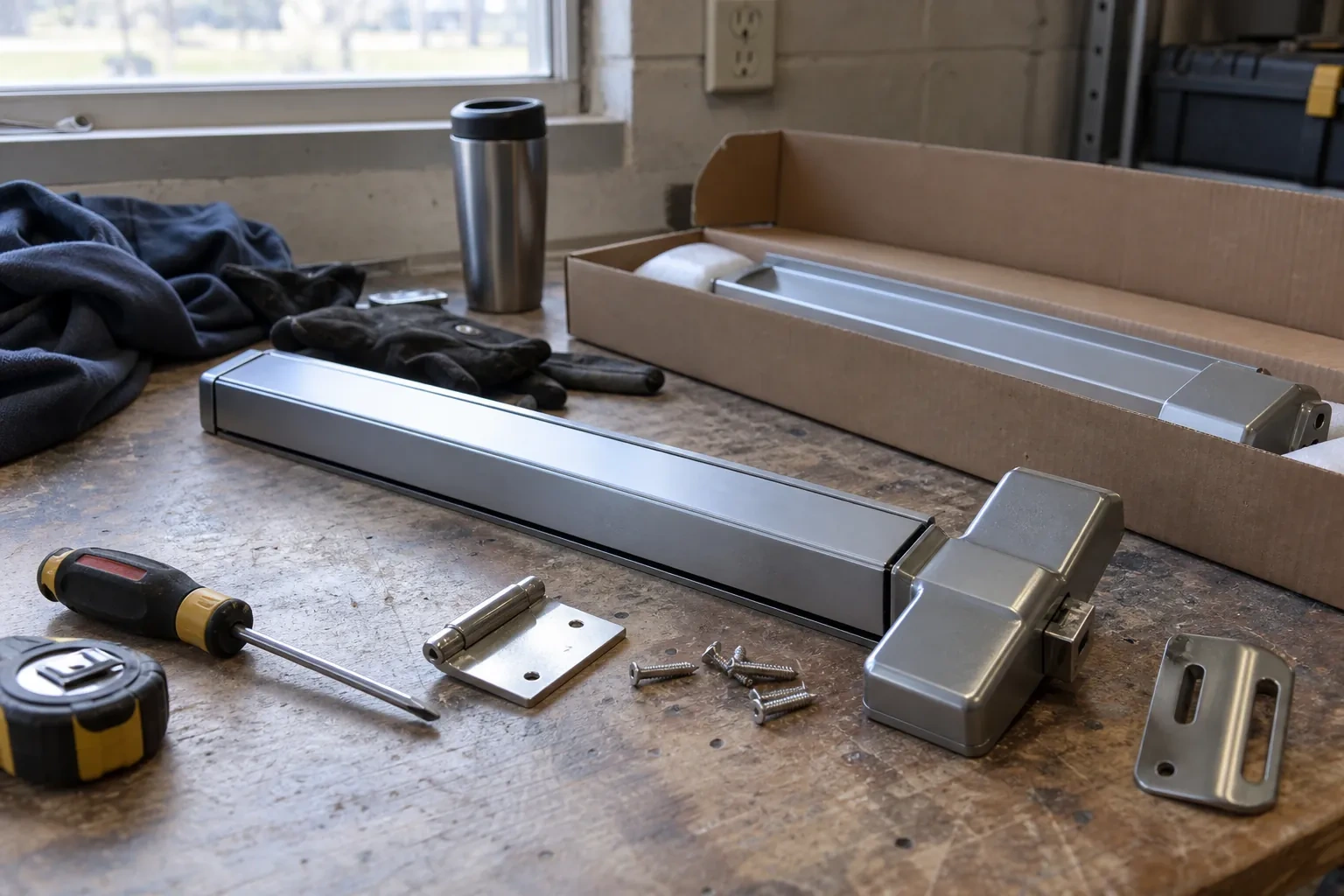
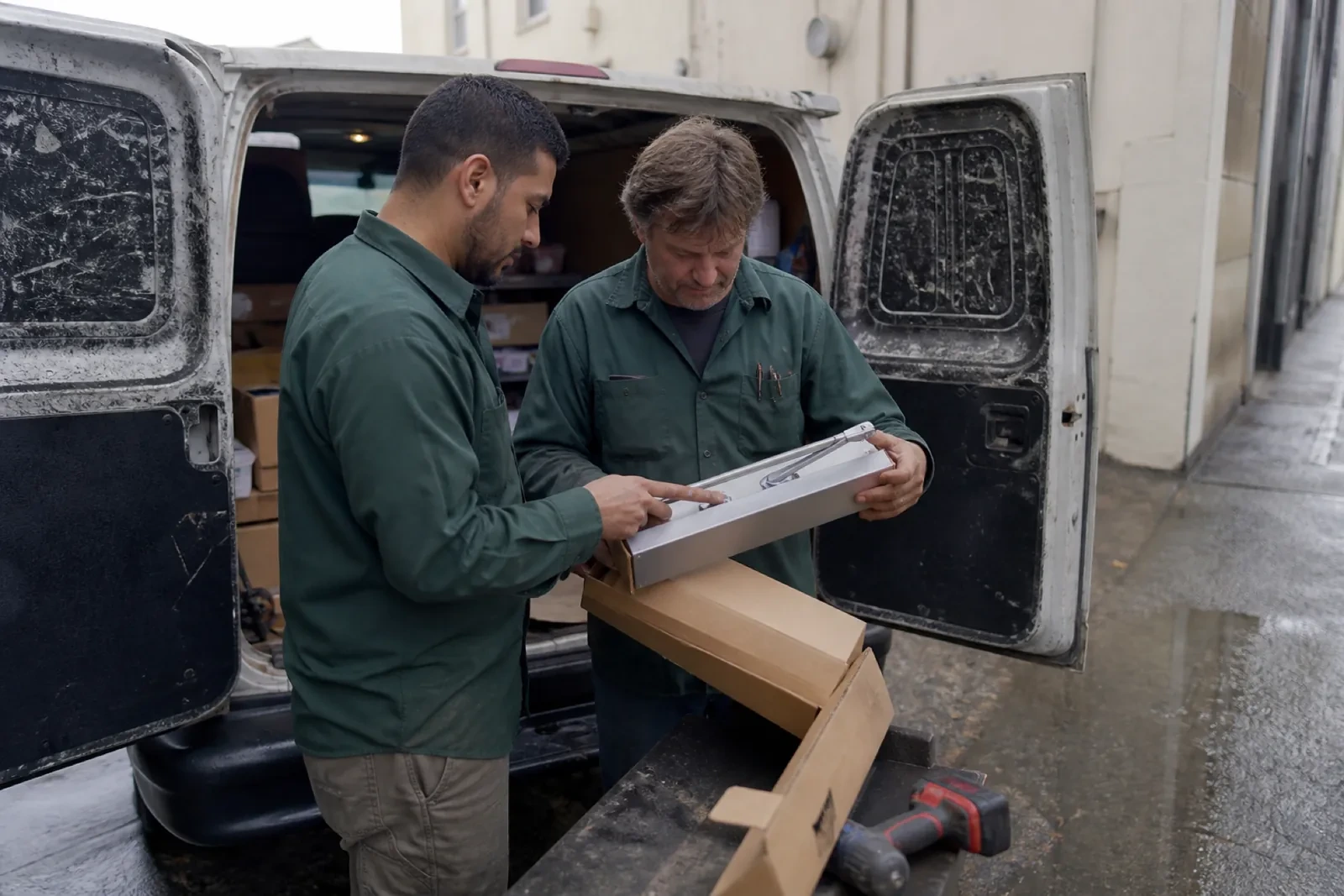
In the van
Wood subfloor lag bolts and washers
Torque wrench and socket set
Moving dolly and floor protection
Level and floor shims
Mechanical or electronic lock
Safe Installation & Servicing
What affects the quote
Condition of an existing safe
Rust on hinges, stiff or grinding bolt-work, a lock that hesitates, or anchoring that was never done all add work beyond a routine check on a servicing visit.
Fire rating and duration chosen
A longer fire-rated duration or a lower protected temperature for digital media generally means thicker insulation and a larger overall footprint for the same interior storage space.
Size and weight of the safe
A larger, heavier unit needs more capable moving equipment and more time to position safely than a compact document safe, which shows up in the labour involved rather than the hardware itself.
What to have ready
- What will the safe mainly store?
- Is that floor concrete, wood subfloor, or tile?
- Is this a new safe or an existing one needing service?
Safe Installation & Servicing: questions
QuestionsWhat happens if a previous owner's combination is unknown?
That situation calls for opening the safe first, which is handled as its own service using non-destructive methods wherever the lock allows, before a new combination or code is set. Once open, the installation or servicing continues as normal: the lock is checked, the anchoring is confirmed or fitted, and a fresh combination known only to the current owner is set before the visit ends.
Can a safe be installed above the ground floor?
Often, yes, though the floor construction and the safe's weight both need a look first. A lighter document safe rarely raises a concern on an upper level, while a large, heavily built unit may need the floor's load capacity checked before it goes up, particularly in an older building. The route to get it there, including stairs, elevators, and doorway widths, gets measured at the same time.
What kind of floor can a safe be anchored to?
Solid concrete is the most straightforward surface, taking a masonry anchor bolt directly. A wood subfloor works too, provided the anchoring reaches into the floor joists beneath the surface layer rather than just the plywood or the flooring on top. Tile is the awkward case, since a bolt through it tends to crack the surrounding tiles, and an alternative anchoring point or a different spot in the room is usually the better route there.