Change or rekey · Wyebridge
Lock Replacement & Upgrade in Wyebridge
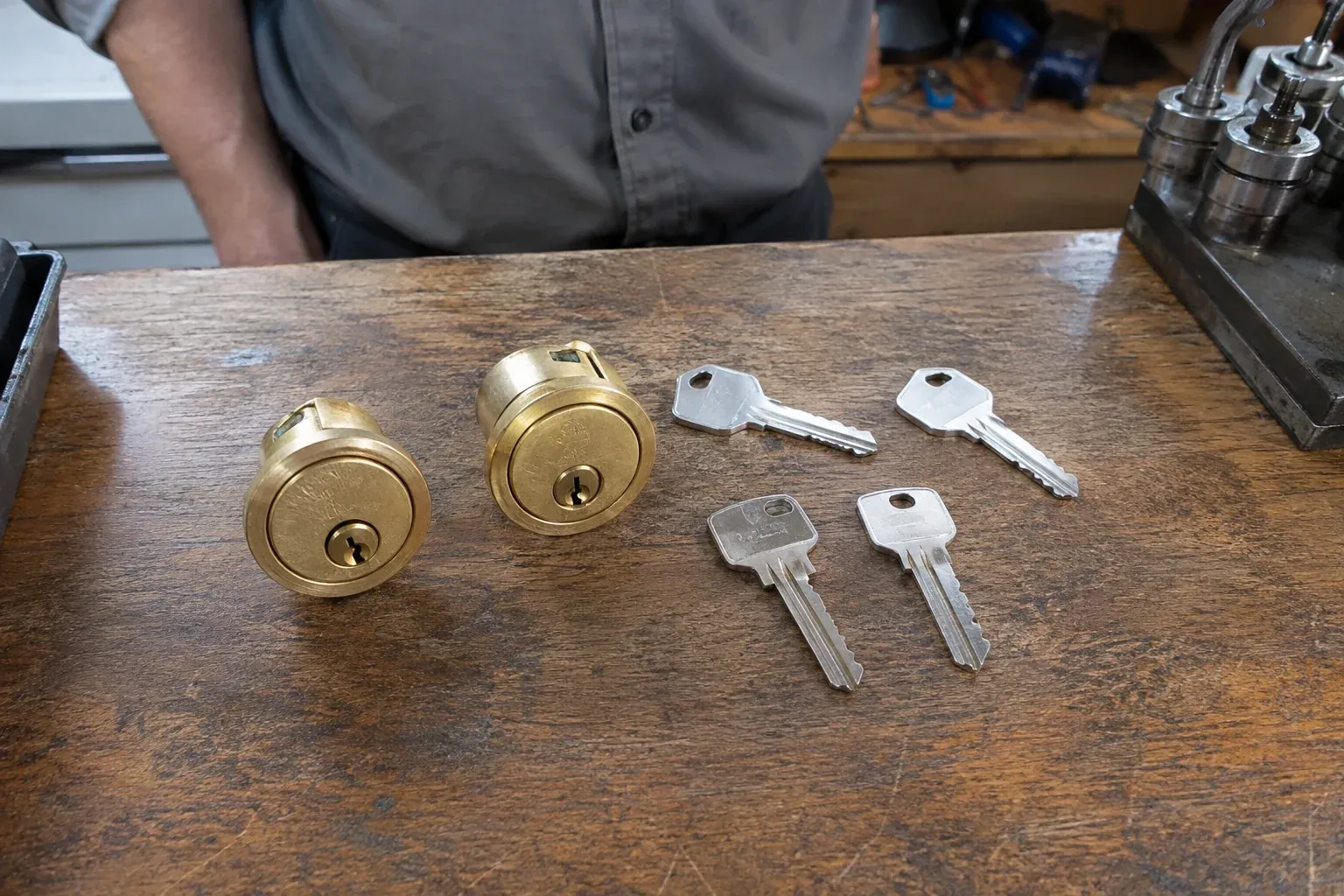
The keys the seller handed over came in a sandwich bag: six unlabelled copies for two locks of different makes from different decades.
In plain words
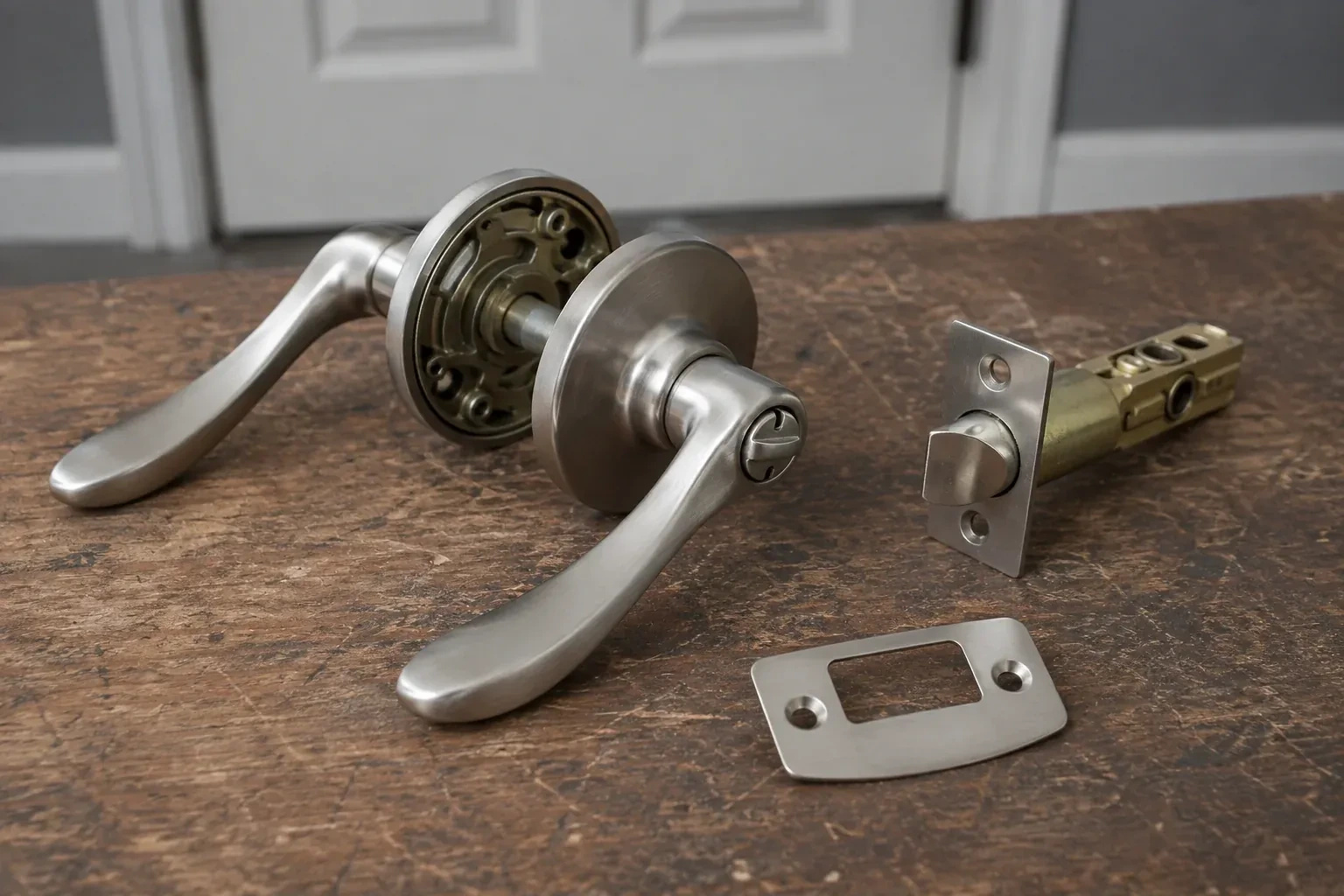
A replacement lock has to fit holes that already exist, and that is where the visit begins. The locksmith measures the backset, the distance from the door edge to the centre of the bore, which on most doors is 60 or 70 millimetres, checks the cross-bore diameter and edge-bore size, notes door thickness and handing, and looks at the strike cut-out. Most residential hardware is made to these standard preparations, so the new lock usually drops into place with no new drilling. Where a mortise lock or a thick door departs from the norm, filler plates, extension kits or a careful new bore bring the door up to standard.
How the visit goesThe keys the seller handed over came in a sandwich bag: six unlabelled copies for two locks of different makes from different decades. You have no idea how many more copies exist or who is holding them.
Lock Replacement & Upgrade
How the visit goes
Measuring the existing preparation
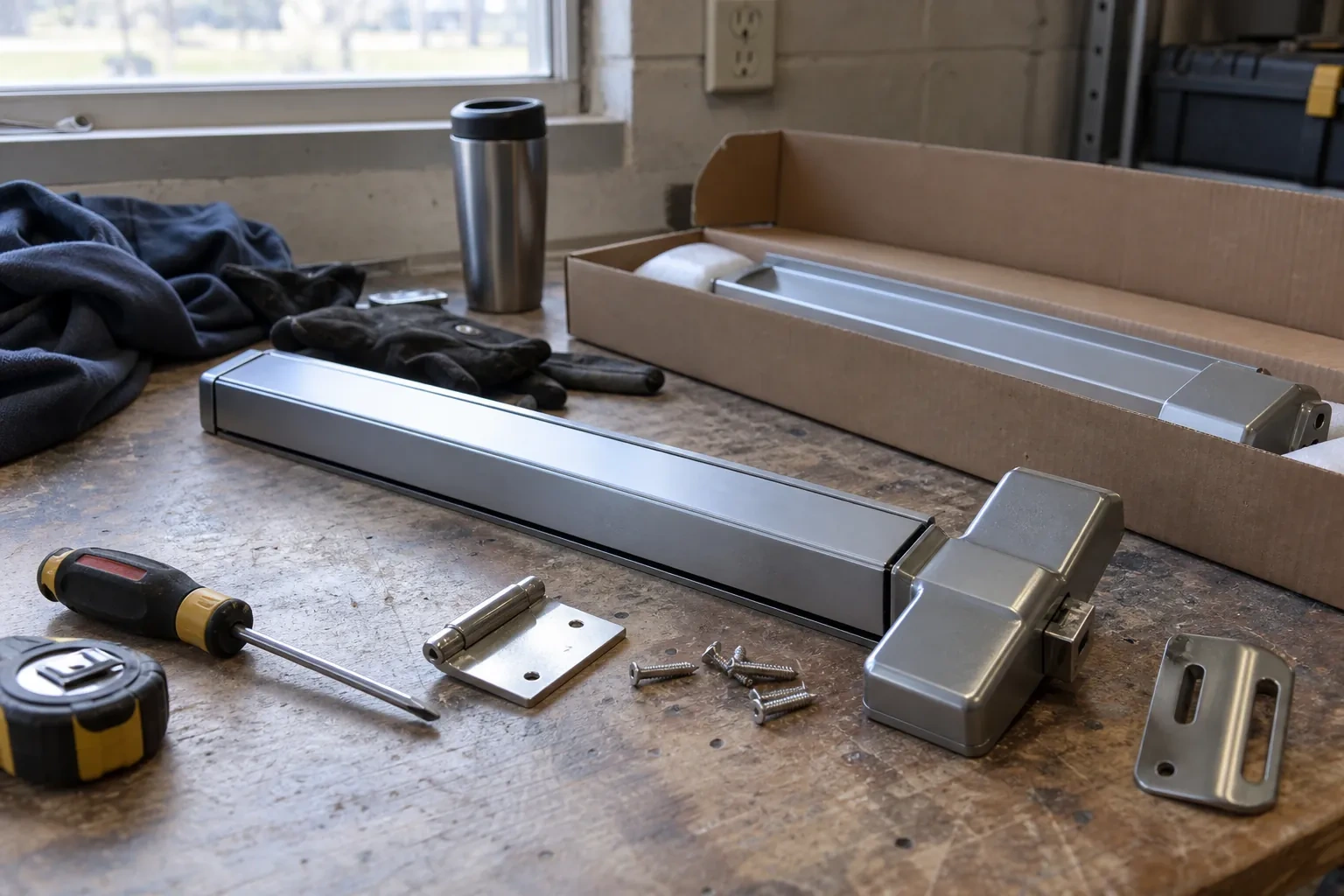
Before any product is chosen the door is measured. Backset first, the distance from the door edge to the centre of the bore, which on most doors here is 60 or 70 millimetres. Then the cross-bore diameter, the edge-bore size, the shape of the latch faceplate, the door thickness and the handing. The strike cut-out and any glass, trim or storm door that limits where hardware can sit are noted too. These few numbers decide which locks will drop straight into the door and which would need a filler plate, an extension kit or fresh drilling, so they are written down before the catalogue is opened.
Setting and reinforcing the strike
The strike side is where a replacement earns most of its value. With the door closed, the bolt is thrown and its mark checked against the pocket so the strike can be positioned to accept the full throw without rubbing. A shallow pocket is deepened until the bolt seats to its stop. Then a reinforced strike or a strike box is fitted using 75 millimetre screws that pass through the jamb and bite into the framing behind it, which is what stops a jamb splitting under a kick. Where an old forced entry has cracked the wood, it is glued and dowelled or a repair plate is fitted first.
A record of what went on the door
You are told plainly what was fitted: the maker and model, the grade, the function and finish of each lock, whether the strike was reinforced, and how the doors are keyed. The instruction sheets and packaging stay with you, since they carry the model numbers needed for a matching lever or a spare cylinder later. The old hardware is handed over or taken away as you prefer; a sound old cylinder can be worth keeping as a spare. For a rental, this account doubles as the note a landlord or property manager will want about the new keys.
Lock Replacement & Upgrade
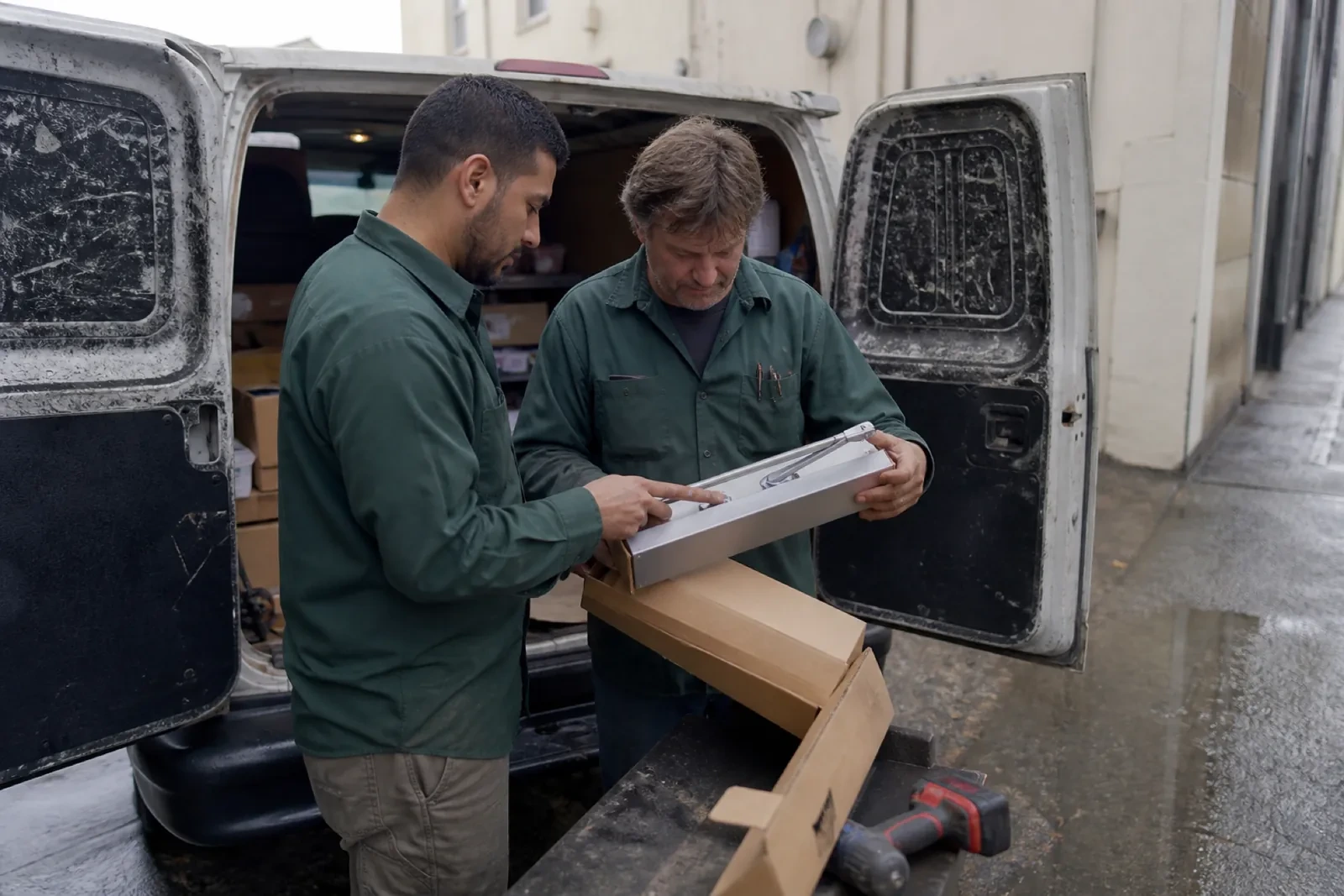
In the van
Adjustable latch or bolt
Reinforced strike plate and strike box
Graded deadbolt
Boring jig and hole saws
Key blanks and key cutter
Lock Replacement & Upgrade
What affects the quote
Strike reinforcement and jamb repair
A reinforced strike with long screws is a modest addition; repairing a jamb split from a forced entry, or fitting a strike box into a frame that has never had one, adds labour and materials.
Authorization needed from a property manager or landlord
A rental or condominium unit sometimes needs sign-off from a property manager or landlord before a lock is changed, and new keys may need to reach more than one party afterward. Confirming who is authorized and who receives keys is worked out before the new hardware goes in.
Finish and style
Standard satin nickel or brass is one line; specialty finishes, matched suites across several doors and designer handlesets are others. The finish you choose for exposure and looks is priced as the maker prices it.
What to have ready
- Do you want every exterior door to open with one key?
- Which doors are you thinking about, and what is on each one now?
- Are you interested in a keypad or smart lock on any door?
Lock Replacement & Upgrade: questions
QuestionsWill a new lock fit the holes already in my door?
Usually, yes. Most residential doors are prepared to standard sizes, a 54 millimetre cross bore and a backset of 60 or 70 millimetres, and most modern hardware adjusts between those backsets. The locksmith measures before choosing, so the new lock is matched to the door rather than the other way around. Where an older mortise lock or an unusual bore is found, filler plates, extension kits or a carefully jigged new bore bring the door to standard.
What does a higher grade of lock actually give me?
Grades follow ANSI/BHMA standards, with Grade 1 the highest and Grade 3 the lightest, and residential hardware carries a separate label that scores security, durability and finish. The grade reports how the lock performed on the standard's own operational, strength and security tests; a higher grade often comes with a longer bolt, a sturdier housing, pins that resist picking and a strike built to anchor into the framing, but those features are worth confirming on the specific model rather than assumed from the grade alone.
My deadbolt only locks if I push the door. Will a new lock cure that?
The push is a sign the bolt and the strike pocket are out of line, which is a door and frame matter more than a lock fault. A new deadbolt is welcome if the old one is worn, but the visit also adjusts the strike, deepens the pocket or tightens hinges so the bolt throws freely with the door simply closed. Done together, the door locks with a fingertip and the new hardware works as designed.
Related services
- Deadbolt InstallationThe front door has a handsome lever and a keyed knob, and that is all.
- Vintage Mortise Lock ServiceYou bought a house with its original hardware and a bag of loose keys.
- Smart Lock InstallationThe rental turns over every few months and each time you drive across town to swap keys, then wonder whether copies were made.