Car keys · Midhurst
Transponder Key Programming in Midhurst
The remote fob has gone silent, the doors won't unlock with a button press, and the little emergency blade tucked inside it has not been used since the day the car was bought.
In plain words
Transponder-based immobilizers became mandatory equipment on new vehicles sold across the country from September 2007 onward, though many manufacturers had already been fitting them for years before that date. Practically, this means most vehicles on the road today, whatever their age, already expect a key that carries a chip rather than a plain metal blade. A locksmith working on an older, pre-transponder vehicle follows a noticeably different process than one working on a car built after that standard became routine.
How the visit goesIt is a cold morning and the fob has to be pressed twice, sometimes three times, before the doors respond, and one week later it stops answering entirely. The metal key still turns the lock by hand, but the dashboard security light stays lit through the whole drive.
Transponder Key Programming
How the visit goes
Reading the vehicle's own system
Every vehicle answers a question the locksmith asks before touching a key: what generation of chip does this immobilizer expect, and where can its key list be reached? A simple fixed-code chip behaves differently from a rolling-code or encrypted one, and some models allow a key to be added through the onboard diagnostic port while others gate that list behind a manufacturer-level security session. Reading this correctly first avoids wasted effort later and tells the locksmith exactly which chip family the new blank needs to carry.
Programming through the diagnostic port
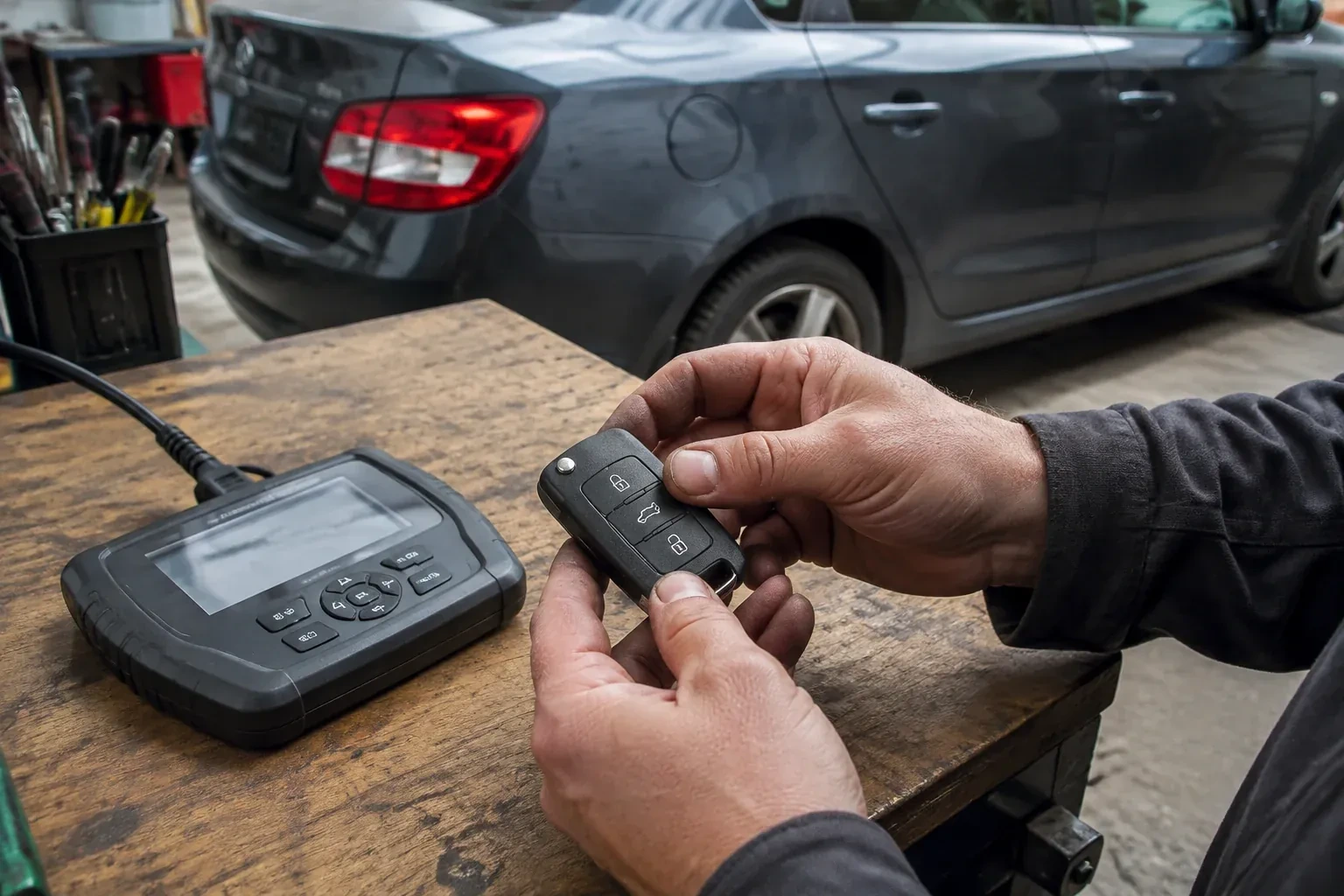
On most vehicles, the new chip's identity is written into the immobilizer through the onboard diagnostic port using equipment built for that vehicle's own protocol. The programmer talks to the vehicle's module in its own language, adds the new key without erasing the others unless asked, and confirms the write was accepted before the tool disconnects. This is the routine path for a spare, an extra key, or a straightforward replacement where at least one working key is still available to authorize the addition.
Room for the next driver
Most vehicles can hold more than one or two keys in memory, so adding a second household member later is usually a smaller job than the first visit was, provided at least one working key remains to authorize the addition. Knowing that in advance changes how a household treats an existing key: less like the only copy in the world, more like the first of what could reasonably become several, each one traceable to the same visit that started the list.
Transponder Key Programming
In the van
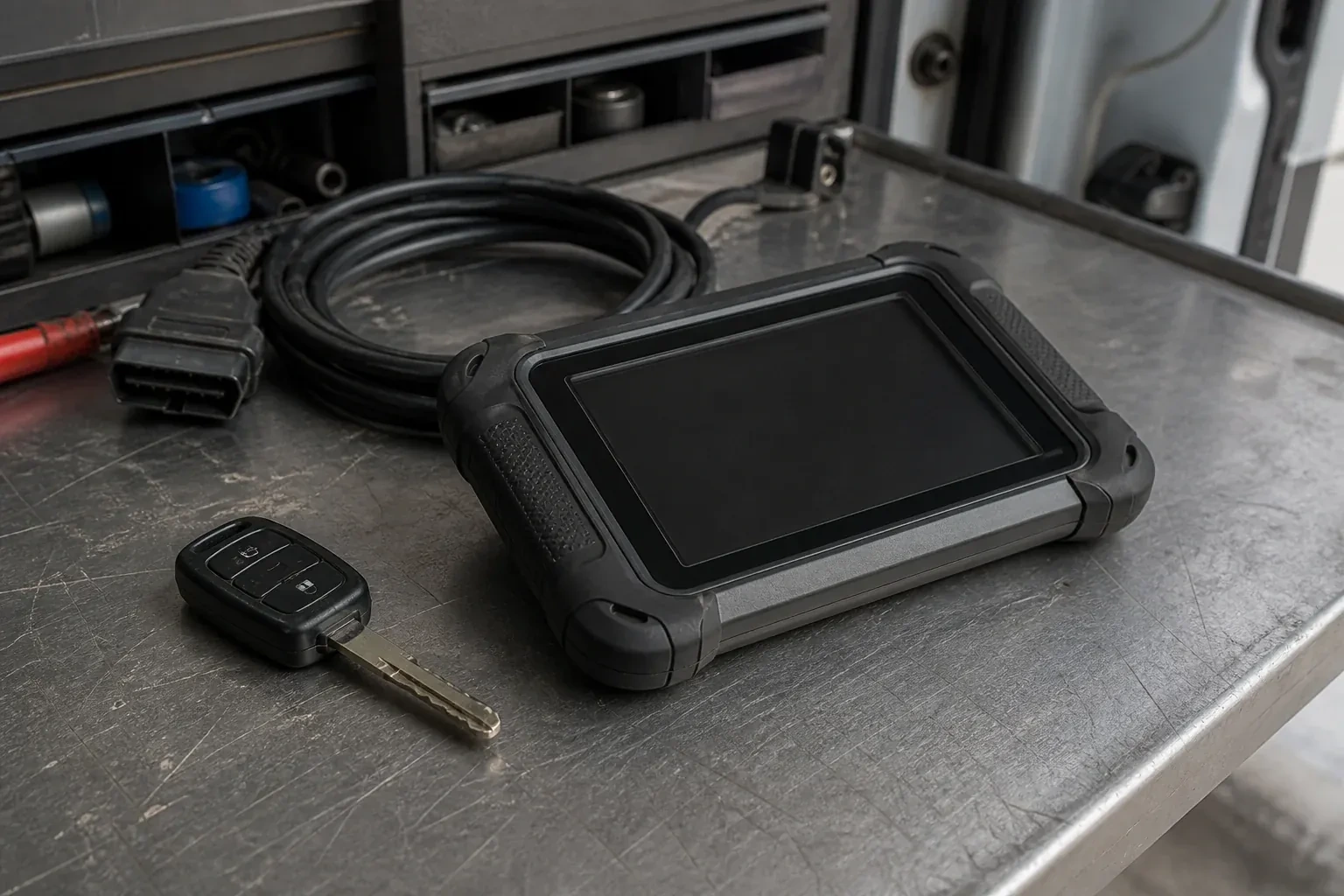
OBD-II key programmer
Diagnostic laptop or tablet
Fob battery
Proximity smart key
Replacement remote-head fob
Transponder Key Programming
What affects the quote
Cutting method: by code or by duplication
Cutting from a manufacturer code tends to be more direct than duplicating from a worn or damaged working key, where extra care is needed to read the original cuts accurately before a blank is shaped to match.
Manufacturer-gated security access some newer vehicles require
A number of newer vehicles require an additional secure session with the manufacturer's own network before a key can be added, which is a real step in the process on those models rather than an optional add-on.
Whether any working key remains
Adding a spare or a driver's key with an existing key on hand is a more contained job than an all-keys-lost situation, which needs its own extended process to re-establish trust with the vehicle before anything new can be written.
What to have ready
- Is the key a basic blade, a remote-head, or push-button proximity?
- Do you have photo identification available?
- Is this a lost, stolen, damaged or spare-key situation?
Transponder Key Programming: questions
QuestionsHow do I know if this is a key problem rather than something else?
The clearest sign is the engine cranking normally, meaning the starter motor turns it over, but never catching, often alongside a flashing security light. A fuel or mechanical fault usually behaves differently, such as cranking slowly or making unusual noise. Describing exactly what happens when the key is turned helps the locksmith tell the two apart before arriving.
How many keys can one vehicle hold in its memory?
It varies by make and model; some systems hold only a handful of identities, while others allow considerably more. Many vehicles let one working key on hand authorize adding another, though some ask for two working keys and others use a different programming route entirely, which is why all-keys-lost situations are handled differently from adding a spare or a second driver's key.
What identification should I bring to a key programming visit?
Photo identification, along with something that connects you to the vehicle: the vehicle permit or registration, or paperwork for a leased, financed or company vehicle if your name is not the one on file. Having this ready before the locksmith arrives keeps the visit moving directly to the vehicle itself rather than pausing partway through.
Related services
- Car Key ReplacementThe engine cranks, catches for a second and dies, and a small key-shaped light keeps blinking on the dash.
- Spare Car Key DuplicationOne key opens the car, starts the car, and rides in one pocket every day.
- Key Fob ProgrammingA fob went missing weeks ago somewhere between a coat pocket and a parking lot, and a spare has covered the gap since.